
The worrying challenge of jungle justice in today’s Nigeria By Chief Sir Emeka Asinugo

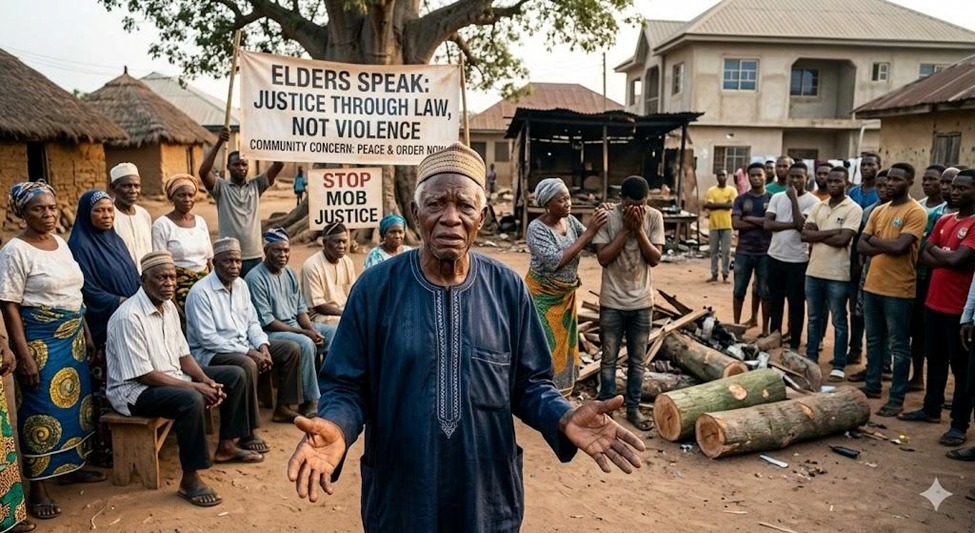
In recent years, the disturbing rise of mob or jungle justice in Nigeria has become a deeply troubling social phenomenon. Across cities, towns, and even rural communities, reports have surfaced of individuals accused of crimes being brutally beaten, lynched, or set ablaze by angry crowds without any form of investigation or legal process. These incidents, often fueled by suspicion, fear, and collective anger, reflect a dangerous erosion of trust in the rule of law and a growing tendency toward instant, extrajudicial punishment.
Several recent cases illustrate how alarming the situation has become. In different parts of the country, suspected thieves have been apprehended and killed by mobs within minutes, sometimes based on mere allegations. In one widely reported incident, a young man accused of stealing a mobile phone was chased, beaten, and burned by a crowd before any verification of the claim could be made. In another case, individuals travelling through a community were mistaken for kidnappers and lynched by residents acting on rumours circulating on social media. By the time the truth began to emerge, the victims had already lost their lives. Even more disturbing are cases where the victims later turned out to be completely innocent. There have been situations where mentally ill persons, unable to explain themselves, were accused of suspicious behaviour and subsequently killed by mobs. Similarly, individuals unfamiliar with a particular environment, such as travelers or migrants, have been targeted simply because they could not communicate effectively in the local language. In such cases, jungle justice becomes not only an act of violence but a tragic miscarriage of justice that destroys innocent lives.
The speed at which jungle justice occurs is one of its most frightening aspects. Once a crowd gathers and emotions begin to escalate, rational thinking is quickly replaced by collective hysteria. Individuals who might not ordinarily engage in violence become swept up in the moment, driven by fear, anger, or a desire to conform to the group. In this state, there is no room for evidence, no opportunity for defence, and no mechanism for appeal. The accused is judged, sentenced, and executed within minutes.
One of the key reasons behind the persistence of jungle justice in Nigeria is the widespread lack of confidence in the criminal justice system. Many citizens believe that reporting crimes to the police is often ineffective, as suspects may escape punishment due to corruption, delays, or lack of proper investigation. This perception has led some people to take the law into their own hands, believing that immediate punishment is the only way to deter crime. While this frustration is understandable, it does not justify the abandonment of legal processes.
Another contributing factor is the prevalence of misinformation, particularly through social media platforms. False alarms about kidnappers, ritualists, or armed robbers can spread rapidly, inciting panic and prompting communities to act hastily. In many cases, individuals are attacked based on unverified claims or misinterpretations of innocent behaviour. The combination of fear and misinformation creates a volatile environment in which jungle justice can easily occur.
Poverty and unemployment also play a role in fueling mob actions. In communities where economic hardship is widespread, there is often heightened sensitivity to theft and other crimes. People who feel vulnerable and unprotected may react aggressively when they believe their limited resources are under threat. This heightened tension can quickly escalate into violence, especially when a suspected offender is caught.
Cultural attitudes toward punishment and justice further complicate the issue. In some contexts, there is a deeply rooted belief in immediate retribution, where wrongdoing must be punished swiftly and visibly. This mindset, when combined with distrust of formal institutions, creates fertile ground for mob justice. And so, such practices undermine the very principles of fairness and due process that are essential for any just society.
Despite the reasons behind its occurrence, jungle justice must never be tolerated under any circumstances. At its core, it represents a complete breakdown of law and order. The fundamental principle of justice is that every individual is presumed innocent until proven guilty. Jungle justice reverses this principle, treating suspicion as proof and accusation as conviction. In doing so, it denies individuals their basic human rights and strips them of dignity.
The irreversible nature of mob violence makes it particularly dangerous. Once a person has been killed by a mob, there is no possibility of correcting a mistake. If the victim is later found to be innocent, no amount of regret can bring them back to life. Families are left devastated, communities are scarred, and the perpetrators often go unpunished. This creates a cycle of injustice where violence begets more violence, and accountability is absent.
Furthermore, jungle justice undermines the authority of the state and weakens societal institutions. When people take the law into their own hands, it signals a lack of trust in the police, the courts, and the government. Over time, this can lead to a situation where lawlessness becomes normalized, and individuals feel empowered to act as judge, jury, and executioner. Such a society is inherently unstable and unsafe for everyone.
Another critical concern is the psychological impact on those involved in mob actions. Participating in or witnessing such extreme violence can have lasting effects on individuals, particularly young people. It can desensitize them to brutality, normalize aggression, and erode empathy. This not only affects the immediate community but also shapes the values and behaviours of future generations.
Addressing the challenge of jungle justice requires a multifaceted approach. Strengthening the criminal justice system is essential to restoring public confidence. This includes improving police responsiveness, ensuring thorough and impartial investigations, and expediting court processes. When people see that justice can be achieved through legal means, they are less likely to resort to mob action.
Public education is also crucial. Citizens need to be continuously reminded of the dangers and consequences of jungle justice, both for victims and for society as a whole. Community leaders, religious institutions, and the media have important roles to play in promoting a culture of patience, tolerance, and respect for the rule of law. Emphasis should be placed on the importance of verifying information before acting and on the value of human life.
In addition, there must be accountability for those who participate in mob violence. Perpetrators should be identified, arrested, and prosecuted to serve as a deterrent to others. The notion that individuals can disappear into a crowd and escape responsibility must be challenged. Modern technology, such as surveillance and mobile phone recordings, can aid in identifying those involved and ensuring that the course of justice is served.
Community policing initiatives can also help bridge the gap between law enforcement and the public. By fostering trust and collaboration, communities can work with the police to prevent crime and address concerns without resorting to violence. This approach encourages collective responsibility while maintaining respect for legal processes.
Ultimately, the fight against jungle justice is a fight for the soul of society. It is about reaffirming the value of human life, upholding the principles of fairness and justice, and ensuring that no individual is deprived of their rights without due process. While the frustrations that drive mob actions are real, they must be addressed through constructive and lawful means.
Nigeria, like any nation striving for progress and stability, cannot afford to allow jungle justice to persist. The consequences are too severe, the risks too great, and the moral cost too high. Every life lost to mob violence is a reminder of the urgent need for change. But it is only through collective effort, strengthened institutions, and a renewed commitment to justice that this worrying challenge can be overcome.