

RECLAIMING AFRICAN CIVILIZATIONAL VOICES:
The Arochukwu Renaissance and the Future of Indigenous Knowledge in a Global Information Age
A Lecture by
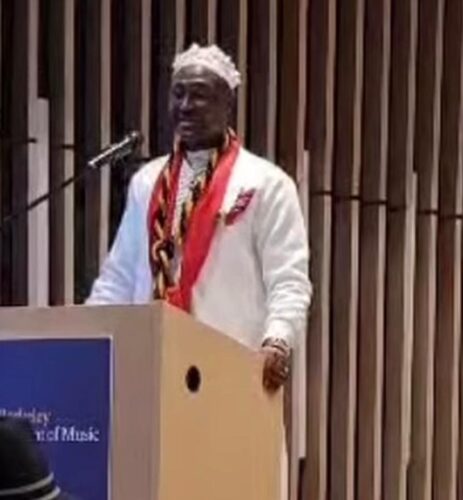
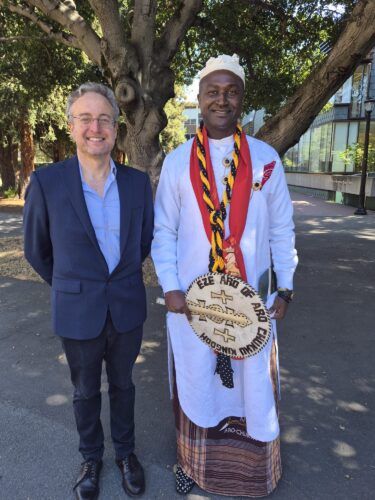
His Eminence, Dr. Eberechukwu Oji,
Eze Aro, King of the Ancient Kingdom of Arochukwu and Paramount Head of the Aro People, Southeastern Nigeria
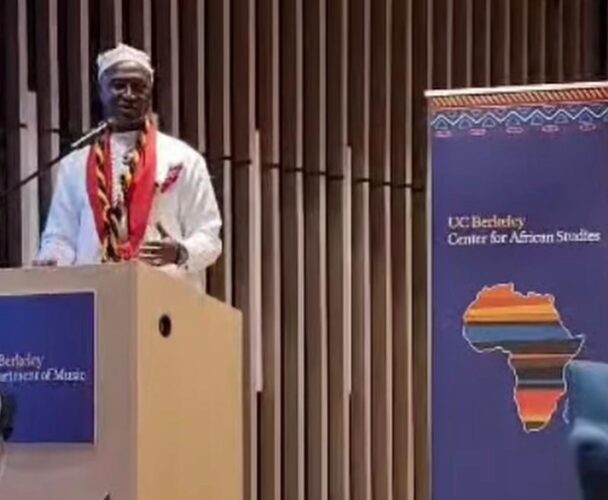
Presented at the University of California, Berkeley
Preamble
Distinguished faculty members, eminent scholars, researchers, students, members of the African diaspora, ladies and gentlemen:
I bring you warm greetings from the ancient Kingdom of Arochukwu in Southeastern Nigeria — a land of deep historical memory, enduring cultural traditions, intellectual resilience, and one of the most influential indigenous civilizations in precolonial West Africa.
It is both an honour and a profound intellectual responsibility to stand before this distinguished academic community at Berkeley — an institution globally respected for rigorous scholarship, critical inquiry, and the courage to interrogate inherited assumptions about history, power, identity, and civilization.
Interestingly, the acclaimed global excellence of this iconic institution had been known to Aro Kingdom many decades ago through one of Aro’s eminent sons. I’m referring to Professor Humphrey Nwosu who was a distinguished alumnus of UC Berkeley, Set of 1976, with an impressive academic record. He conducted Nigeria’s most free, fair and credible election in 1993.
Today, I invite us into a conversation that transcends geography and goes beyond Africa alone. It is ultimately a conversation about humanity itself:
Who produces knowledge?
Whose histories survive?
Which civilizations are permitted to define themselves?
And what happens when indigenous voices are excluded from the architecture of global intellectual history?
These questions lie at the center of my lecture today:
“Reclaiming African Civilizational Voices: The Arochukwu Renaissance and the Future of Indigenous Knowledge in a Global Information Age.”
The Crisis of Historical Representation
For centuries, Africa appeared within dominant global scholarship not as a producer of civilization, but largely as an object of external interpretation.
Colonial literature frequently portrayed African societies as static, fragmented, primitive, or ahistorical. Indigenous governance systems were dismissed as unsophisticated. African spirituality was reduced to superstition. Oral traditions were treated as unreliable folklore rather than legitimate repositories of historical consciousness and civilizational memory.
Yet one of the most important intellectual developments of the contemporary era is the growing recognition that these narratives were profoundly incomplete.
Today, historians, anthropologists, political theorists, linguists, archaeologists, digital humanists, and scholars of decolonial studies are revisiting long-suppressed questions concerning:
* indigenous epistemologies,
* historical memory,
* oral archives,
* alternative systems of governance,
* cultural legitimacy,
* and the politics of knowledge production.
This shift creates an extraordinary opportunity — not merely to “include” Africa within existing intellectual frameworks, but to fundamentally rethink how global knowledge itself has been constructed.
Africa is not entering history for the first time.
Africa has always been part of history.
What is changing is the willingness of global scholarship to listen more carefully.
Introducing Arochukwu: A Civilizational Archive
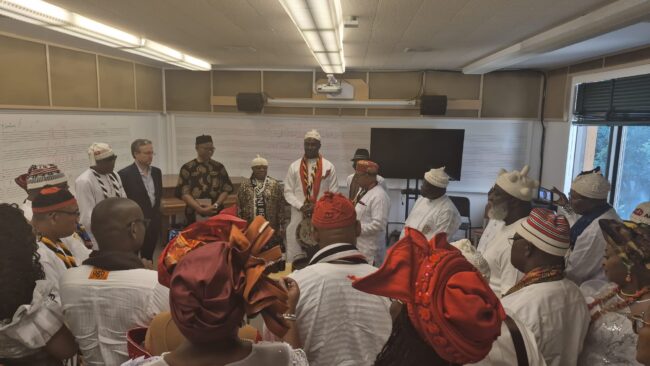
Permit me therefore to introduce to this distinguished audience a remarkable African civilization whose political innovations, spiritual systems, intellectual traditions, commercial networks, and diplomatic structures profoundly shaped the evolution of southeastern Nigeria and left enduring imprints across the Atlantic world: the ancient Kingdom of Arochukwu.
Nestled in the forested heartland of Southeastern Nigeria, Arochukwu is not merely a town.
It is a civilizational archive.
It is a meeting point of memory, spirituality, diplomacy, commerce, migration, resistance, adaptation, and intellectual continuity.
To speak of Arochukwu is to speak of one of the most consequential centers of indigenous African statecraft and transregional influence in precolonial West Africa.
From approximately the seventeenth century, Arochukwu emerged as the spiritual and political nucleus of the historic Aro Confederacy — a sophisticated network of allied communities, merchant families, diplomats, ritual authorities, warriors, and cultural institutions extending influence across large portions of present-day Southeastern Nigeria and beyond.
Unlike centralized empires built solely on military conquest, the Aro system combined:
* spirituality,
* commerce,
* diplomacy,
* kinship alliances,
* decentralized governance,
* and institutional networks.
Its influence radiated through extensive trade routes and settlement systems linking the Igbo hinterland with the Niger Delta, Cross River basin, Cameroon region, and Atlantic coast.
In many respects, the Aro Confederacy represented an indigenous African model of regional integration centuries before modern federalism, globalization, or transnational diplomacy became fashionable concepts in political theory.
The Eze Aro Institution: Continuity Across Centuries
No introduction to Arochukwu is complete without reference to one of the oldest surviving hereditary traditional institutions in West Africa — the revered throne of the Eze Aro.
The Eze Aro institution represents an extraordinary continuity of African governance, legitimacy, culture, diplomacy, and civilizational memory stretching back over three centuries.
Emerging from the political evolution of the Aro Confederacy in the seventeenth century, the throne developed not merely as a political office, but as a sacred institution embodying:
* judicial wisdom,
* communal cohesion,
* spiritual legitimacy,
* diplomatic stewardship,
* and cultural guardianship.
What makes the institution particularly unique is its remarkable balance between monarchy and republican consultation.
Though hereditary in succession, the authority of the Eze Aro historically evolved within a highly consultative network of:
* councils of elders,
* titled men,
* lineage heads,
* spiritual custodians,
* age-grade institutions,
* and communal consensus mechanisms.
In essence, Arochukwu developed an indigenous governance model that balanced royal continuity with participatory consultation long before modern constitutional theories emerged in Africa.
Across centuries marked by:
* the Atlantic slave trade,
* colonial disruption,
* missionary encounters,
* civil conflict,
* postcolonial transitions,
* globalization,
* and modern state formation,
the institution survived — adapting without losing its identity.
Its resilience is perhaps best illustrated in the extraordinary reign of His Majesty, Eze Kanu Oji, who ruled from 1914 to 1987, totalling an astonishing 73 years, making him widely recognized as the longest-serving monarch in Africa during his era.
His reign spanned multiple historical epochs:
* late colonial administration,
* nationalist movements,
* Nigerian independence,
* the Nigerian Civil War,
* and post-war reconstruction.
He became a symbol of continuity, reconciliation, stability, and cultural preservation at moments when many indigenous African institutions faced existential disruption.
In July 2024, the current custodian of this ancient heritage ascended the throne as the Eze Aro in a dynastic tradition that has endured continuously for centuries.
His ascension symbolizes more than succession.
It represents the transmission of memory, legitimacy, identity, and civilizational responsibility across generations.
Ibini Ukpabi and the Spiritual Geography of Power
At the center of this civilization stood the famed Ibini Ukpabi oracle — historically referred to by colonial observers as the “Long Juju.”
Pilgrims, litigants, rulers, merchants, and seekers of justice travelled from distant communities to consult the oracle, making Arochukwu one of the most influential spiritual centers in precolonial West Africa.
But beyond mysticism, Ibini Ukpabi functioned as a powerful institution of moral arbitration, conflict mediation, ritual diplomacy, and intercommunal legitimacy.
In many respects, it represented an indigenous judicial and spiritual framework through which trust was maintained across fragmented political landscapes.
British explorer William Balfour Baikie reportedly described Arochukwu as a place held in extraordinary reverence, where people declared, “God lives there.”
Complexity, Memory, and Historical Honesty
Yet like all great civilizations, Arochukwu’s history is layered and morally complex.
The same networks that facilitated migration, diplomacy, commerce, and cultural exchange also became entangled in the tragic machinery of the trans-Atlantic slave trade.
Serious scholarship acknowledges that aspects of the Aro system participated in slave-trading structures linking the African interior to Atlantic commercial networks.
History therefore demands honesty without simplification.
Arochukwu cannot be reduced solely to the slave trade any more than Europe can be reduced solely to colonialism or America solely to slavery.
Civilizations are rarely morally singular.
What distinguishes mature societies is their capacity for reflection, reinvention, resilience, and historical self-awareness.
The Ekpe Society and Indigenous Institutional Sophistication
To understand the Aro Confederacy is to encounter one of Africa’s most sophisticated indigenous systems of governance, symbolism, diplomacy, law, and cultural organization.
Among the most remarkable of these institutions was the famed Ekpe Society.
Known in some regions as Mgbe or Leopard Society, Ekpe was far more than the simplistic colonial label of a “secret society.”
It was, in reality, a highly organized transregional institution regulating commerce, social order, judicial authority, ritual diplomacy, and intercommunal relations.
The leopard — strategic, disciplined, observant, and powerful — symbolized sacred authority and social regulation within African cosmology.
Within the Aro world, Ekpe functioned simultaneously as:
* a judicial institution,
* a diplomatic corps,
* a regulatory authority,
* a communication network,
* and a cultural preservation system.
Its graded initiations, coded symbols, ritual performances, masks, drum languages, and ceremonial structures created a shared institutional culture transcending geography and ethnicity.
In modern political language, Ekpe represented a sophisticated indigenous framework for regional governance and conflict mediation.
Its influence extended beyond Arochukwu into Efik, Ibibio, Annang, Ejagham, and Cross River societies, creating one of the most interconnected institutional networks in precolonial West Africa.
Even more remarkably, elements of Ekpe survived the Middle Passage and re-emerged in Cuba as the Abakuá Society, preserving fragments of African ritual systems, symbols, music, language, and brotherhood traditions across centuries of displacement.
Thus, Arochukwu’s cultural footprint crossed the Atlantic and became part of the wider story of Black Atlantic civilization.
Indigenous Governance and Political Philosophy
The Aro Confederacy also cultivated sophisticated traditions of consensus governance and decentralized political legitimacy.
Authority depended not merely on coercion or inheritance, but on persuasion, consultation, communal trust, and moral credibility.
This raises an important question for contemporary governance studies:
What makes institutions legitimate?
Modern states often emphasize legal authority.
Indigenous systems often emphasized relational legitimacy.
The Aro experience demonstrates that societies can sustain political order through cultural trust, shared norms, symbolic authority, and negotiated consensus.
These are lessons contemporary societies increasingly neglect.
Indigenous Knowledge in the Modern World
One of the greatest misconceptions of modernity is the assumption that indigenous knowledge belongs only to the past.
But indigenous systems are not relics.
They are living frameworks of meaning.
Across the world today, societies confront profound crises:
* institutional distrust,
* ecological instability,
* identity fragmentation,
* mental dislocation,
* declining social cohesion,
* and moral uncertainty.
Ironically, many communities are now rediscovering principles long embedded within indigenous traditions:
* restorative justice,
* communal responsibility,
* intergenerational continuity,
* sacred relationship with nature,
* and socially embedded accountability.
The Aro experience therefore raises global questions:
How is trust sustained?
How is memory preserved?
How do communities survive disruption?
How do societies maintain continuity across centuries?
These are not merely African questions.
They are human questions.
Berkeley and the Globalization of African Intellectual Traditions
It is deeply symbolic that this conversation is taking place here at the University of California, Berkeley.
Institutions such as Berkeley influence how history is written, whose voices are amplified, and which civilizations enter global intellectual discourse.
Among the distinguished sons of Arochukwu who have carried the Kingdom’s intellectual heritage into global scholarship is G. Ugo Nwokeji, internationally respected historian and scholar at Berkeley.
His pioneering scholarship on the Bight of Biafra, Atlantic commerce, migration, slavery, and African political economy has significantly expanded global understanding of Aro civilization and Africa’s role within Atlantic history.
Similarly, Humphrey Nwosu, earlier mentioned as the architect of Nigeria’s historic Option A4 electoral system, exemplifies the enduring Aro tradition of innovation in governance and democratic thought.
Distinguished public servants such as Dr. Ochi Achinivu further demonstrate the continuing contributions of Arochukwu sons and daughters to public administration, fiscal governance, institutional reform, and national development.
These great products of this great University who are proudly of Aro origin remain enduring examples and remind us that Arochukwu is not merely a historical memory but has strong affiliation with Berkeley through learning, teaching, research and scholarship.
It remains a living intellectual tradition.
The Digital Age and the Danger of Cultural Erasure
We now live in a world increasingly shaped by algorithms, artificial intelligence, data systems, and digital infrastructures.
But here lies a profound danger.
Entire civilizations risk digital invisibility.
Most AI systems today are trained overwhelmingly on Western archives, Western languages, and Western epistemologies.
Thousands of African languages remain poorly digitized.
Oral traditions disappear daily with the passing of elders.
Sacred knowledge systems remain undocumented.
Historical archives decay in vulnerable local repositories.
Without urgent intervention, many indigenous African knowledge systems may become excluded from the architecture of future global knowledge production.
This is why the Arochukwu Renaissance is not merely cultural nostalgia.
It is also:
* a digital humanities project,
* an archival project,
* a technological project,
* a research project,
* and a civilizational preservation project
The Center for Arochukwu History and Cultural Renaissance
At the center of this vision is the proposed Center for Arochukwu History and Cultural Renaissance.
The Center is envisioned as an interdisciplinary institution dedicated to:
* oral history preservation,
* digital archiving,
* indigenous language documentation,
* historical research,
* cultural preservation,
* diaspora engagement,
* museum partnerships,
* and collaborative scholarship.
The objective is not isolation.
The objective is intellectual partnership.
We seek collaboration among:
* historians,
* anthropologists,
* linguists,
* archivists,
* digital humanists,
* museums,
* universities,
* diaspora institutions,
* and global research centers.
For Berkeley specifically, opportunities for collaboration are immense:
* digital preservation initiatives,
* oral history projects,
* archival partnerships,
* faculty exchange,
* comparative governance research,
* and interdisciplinary scholarship connecting African systems to global intellectual debates.
This is not merely about preserving the past.
It is about shaping the future.
Reclaiming Africa as a Producer of Knowledge
Perhaps the most important point I wish to leave with this audience is this:
Africa must increasingly be understood not merely as a site of extraction, crisis, or humanitarian intervention, but as a producer of intellectual traditions relevant to humanity’s future.
The world urgently needs alternative frameworks for thinking about:
* ethics,
* identity,
* spirituality,
* ecological balance,
* restorative justice,
* leadership,
* and social cohesion.
African civilizations possess important contributions to these global conversations.
The task before contemporary scholarship is therefore not charity toward Africa.
It is intellectual completeness.
Human knowledge remains incomplete when African civilizational voices remain marginalized.
Conclusion
As I conclude, let me return to the central idea of this lecture.
The Arochukwu Renaissance is not merely about one kingdom in Southeastern Nigeria.
It is part of a broader global effort to recover suppressed histories, restore intellectual balance, and reconnect indigenous memory with contemporary relevance.
This project is ultimately about dignity.
About voice.
About historical justice.
About ensuring that future generations inherit not only technological advancement, but also cultural meaning, historical wisdom, and civilizational continuity.
The future of humanity cannot be built solely on artificial intelligence or technological innovation.
It must also be built on historical wisdom, ethical memory, cultural diversity, and indigenous knowledge systems accumulated across centuries of human experience.
Perhaps one of the greatest responsibilities before our generation is to ensure that ancient knowledge systems are not erased by modern progress, but integrated into a richer and more inclusive understanding of human civilization.
The Arochukwu Renaissance therefore invites the world toward something larger:
A new global conversation in which African civilizations participate not as forgotten margins of history, but as active contributors to humanity’s shared intellectual future.
And it is in that spirit of rediscovery, scholarship, dialogue, and civilizational renewal that we proudly bring the story of Arochukwu to Berkeley.
Thank you very much.