
Celebrating excellence: An appraisal of the contributions of Isaac F. Megbolugbe By Prof. Bola Ayeni


1. Introduction.
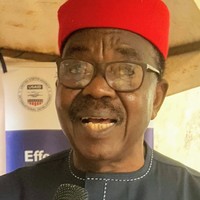
On March 13, 2024, Isaac F. Megbolugbe was included in Marquis Who’s Who, the world’s premier publisher of biographical profiles. According to Marquis’ Who is Who, Isaac was selected on the basis of current reference value taking into consideration factors such as position, noteworthy accomplishments, visibility, and prominence in a field during the selection process. A retired professor, Dr. Megbolugbe previously worked for Johns Hopkins University’s Carey School of Business, where he conducted considerable research on the economics and business of hospitals, nursing homes, public buildings, smart cities, and communities. Over the years, he has also served in leading roles with Fannie Mae and the Fannie Mae Foundation, and as a practice leader with PricewaterhouseCoopers. During the early stages of his career, Dr. Megbolugbe gained valuable expertise with the National Association of Home Builders, Florida State University, the University of Ibadan, and the Kwara State Town Planning Authority.
On February 27, 2026 Marquis Who’s Who, also presented Isaac F. Megbolugbe, with the Albert Nelson Marquis Lifetime Achievement Award. According to the publishers, Prof. Megbolugbe celebrates many years’ experience in his professional network and has been noted for achievements, leadership qualities, and the credentials and successes he has accrued in his field. These recognitions are rare honours for native born Americans and a greater honour to a first generation migrant into the American system. It is therefore appropriate to appreciate this illustrious African, nay Nigerian American. The paper traces the imperceptible struggle of Prof Isaac Folusho Megbolugbe on how he achieved this recognition.
2. Who is Isaac F. Megbolugbe?
Isaac F. Megbolugbe, retired professor at Johns Hopkins University, is a highly accomplished Nigerian-American academic, real estate executive, and consultant. With over 40 years of experience, he is recognized for his leadership in real estate, education, and economic research. Additionally, since 2014, Dr. Megbolugbe has served as the vice president of product and market development at Linneman Associates LLC. where he has contributed to the firm’s growth by leveraging his deep knowledge of real estate markets and economic trends. He is currently the principal and senior advisor at GIVA International LLC, where he provides management consulting services to governments and businesses. He also provides strategic guidance and innovative solutions to complex challenges faced by clients worldwide.
Prof. Megbolugbe was born in Kabba, Nigeria to the illustrious family of Majji Megbolugbe, a royal family that resided at Odo Aofin Neighbourhood Quarters, in Kabba in present day Kogi State of Nigeria. Kabba was, headquarters of the then KabbaProvince in old Northern Nigeria, and is an ancient town in Kogi State. It is presently, the headquarters of the Kabba/Bunnu Local Government Area of Kogi state.
Isaac’s father was Prince Samuel Gbadebo Megbolugbe, known prominently as the Majji, a pivotal leader who navigated the transition from Nupe hegemony to British indirect rule, and managed the reigns of five Obaros from the early 1920s to the 1950s. As Majji Samuel Megbolugbe left a multidimensional imprint on the ethos, economy, and governance of the Owe civilization that remains unmatched in its consequence. However, Isaac was merely 3 years old when the father died. Fortunately, the impact of this chaos on his upbring and welfare was mediated by the playgroup that loomed large in his life as a youngster and the vibrant and compassionate village that raised him and many of his friends. Odo-Afin neighborhood was the village that raised him until he started primary school.
After years of setbacks, he regained footing as a student and active learner. In 1965 at the age of 12, he restarted elementary school in primary one at Effo Amuro, Kogi State. The Late Dr. Jide Maiye taught and challenged him to study every night and was promoted to Primary 3 within a year. Megbolugbe relocated to Baptist Elementary School, Ileteju at Mopa, Kogi State to begin Primary 4 where he took first position throughout Primary 4-7. Throughout his stay at Mopa, he also took correspondence courses in Bible Studies from Sudan Interior Missions (SIM Bible College at Igbaja. He got to Government Teaching Training School at Okene in 1969 to complete a 5-year curriculum. Subsequently, he successfully sat for his GCE “O” Level at the end of Form passing six subjects with straight As. By the end of Form 3, he sat for the GCE “A” Level which he passed when the results came out the following year. By 1973, he had succeeded in collapsing a 14-year schooling required to move from Primary 1 at the elementary education level to Part one at the university level education to 8 years! He started his undergraduate education at the University of Ibadan in September of 1973.
Isaac Megbolugbe earned a Bachelor of Science in Geography and Economics from the prestigious University of Ibadan. Though a few years older in age, I was privileged to have been one of his lecturers at the undergraduate school of the University. Subsequently, he received a Master of Science in Urban and Regional Planning from Ahmadu Bello University, Zaria, Nigeria. For a much longer relationship, we reunited in the eighties and early in the nineties jointly conducted research, into and made a publication with two other colleagues, J.W. May and G. Hepner on Computerized Forecasting System for Planning Infrastructure, An Exploratory Study for Homer Hoyt Institute, and Fannie Mae Office of Housing Policy Research, Washington DC. Shortly before this research collaboration, he had moved to the US, and obtained a Master of Arts in City and Regional Planning from the University of Pennsylvania; and subsequently a PhD in Urban and Real Estate Economics and Finance. He later on obtained a certificate in Accounting from Lewis and Clark Community College.
Prof. Megbolugbe is a Fellow of the Royal Institution of Chartered Surveyors, the American Real Estate Society, the Urban Land Institute, the Nigerian Institution of Town Planners, and the Society of Environment Management and Planning. He is also affiliated with the Lambda Alpha International Land Economics Society, the Nigerian Economics Society, the Society of International Development, the African Finance and Economics Association. Dr. Megbolugbe serves on the editorial board of the Journal of Real Estate Research, Real State Economics and Journal of Housing Research and has been featured in numerous publications, including Economic and Social Measurement, Journal of Regional Science, Real Estate Economics, Real Estate Finance, and Real Estate Research and Housing Economics.
3. The Marquis Honors’ Award Program
Established in 1898, Marquis Who’s Who in America began publishing biographical data in 1899. Since then, Marquis has remained the standard for reliable and comprehensive biographical data. Albert Nelson Marquis, more than 120 years ago printed the first publication of Who’s Who in America. Since then, Marquis Who’s Who® has chronicled the lives of the most accomplished individuals and innovators from every significant field of endeavor, including politics, business, medicine, law, education, art, religion and entertainment. Who’s Who in America® remains an essential biographical source for thousands of researchers, journalists, librarians and executive search firms around the world.
The family of Marquis Who’s Who publications presents unmatched coverage of the lives of today’s leaders and achievers from the United States and around the world, and from every significant field of endeavor. Librarians, students, researchers, corporate executives, journalists, personnel recruiters, and many others rely on Marquis Who’s Who every day for in-depth biographical information they can use with confidence. Professionals from fields such as law, medicine, academia and science rely on Marquis’ customized services and comprehensive data in its print and online publications in order to obtain accurate industry information, foster important connections, and share their accomplishments with the world.
The Marquis Who’s Who Honors program is thus a prestigious recognition system that identifies and profiles accomplished professionals across various industries, including law, medicine, engineering, and academia. As of 2026, the organization continues to highlight individuals who have demonstrated leadership and noteworthy accomplishments. Individuals are selected based on current reference value, taking into account factors such as position, visibility, noteworthy accomplishments, and prominence in their field. There are three types of recognition namely:
• Spotlight Series: Highlights selected professionals’ careers and accomplishments.
• Albert Nelson Marquis Lifetime Achievement Award: Recognizes individuals with 35+ years of professional service.
• Who’s Who of Emerging Leaders: Focuses on high-achieving professionals under the age of 40.
Marquis continues to feature professionals for contributions to informatics and for executive coaching. As the needs of listees evolved, Marquis Who’s Who strives to develop new and more convenient ways to provide access to biographical data while maintaining quality.
The Marquis Who’s Who awards recognize individuals who have demonstrated exceptional achievement and leadership in their fields. For those who receive this honor, it’s a testament to their hard work, dedication, and impact. These awards acknowledge “the best of the best” – those who have risen to the top through their expertise, innovation, and commitment.
4. The Road to the Marquis Awards
Prof. Isaac F. Megbolugbe began his career with the Kwara State Town Planning Authority. He later on took a position as assistant professor at the University of Ibadan from 1983 to 1985, Florida State University from 1985 to 1988, and the American University from 1990 to 1991. He served as senior director of research and development at Fannie Mae from 1992 to 1996 before transitioning to the role of practice leader at PwC from 1996 to 1999. At Fannie Mae, he found success as vice president from 1999 to 2002.
Dr. Megbolugbe continued his career as an adjunct professor at the University of Pennsylvania from 2000 to 2003. At Johns Hopkins University, he garnered a stellar reputation as a real estate professor and director from 2003 to 2008 and a business and real estate professor from 2008 to 2013. He was active as program director at Ascendant Program Services from 2013 to 2016. At Linneman Associates, LLC, he established himself as vice president of product and market development since 2014.
Beyond his responsibilities within the field, Dr. Megbolugbe has participated in numerous endeavors outside of his professional circles. He sat on the editorial board of the Journal of Real Estate Research. He was featured in publications on economic and social measurement, real estate economics, finance, economics, and research, housing economics and research, and fixed income.
In addition to his primary vocation, Dr. Megbolugbe remains affiliated with various organizations in relation to his areas of expertise. He was a fellow of the Royal Institute of Chartered Surveyors and the American Real Estate Society and was a member of the Land Economics Society, the Nigeria Economics Society, the Society of International Development, the Society of Environment Management and Planning, the African Finance and Economics Association, the International Union for Housing Finance, and the Nigerian Institution of Town Planners.
Dr. Megbolugbe’s career which spans high-level roles in both the private sector and prestigious universities has been summarized as follows:
• Academic Roles: He served as a business and real estate professor at Johns Hopkins University’s Carey School of Business (2003–2013) and held faculty positions at the University of Pennsylvania (Wharton), American University, Florida State University, and the University of Ibadan in Nigeria.
• Industry Leadership: He spent a significant portion of his career at Fannie Mae, where he rose to Vice President and Senior Director of Research and Development. He is credited with introducing mortgage scoring to mortgage markets and spearheading the use of GIS technology in the industry. [1, 2]
• Consulting: He was a practice leader at PwC from 1996 to 1999.PwC was formerly PricewaterhouseCoopers. 4.1. Contributions & Recognition
• Research: He has authored numerous publications on housing demand, econometric analysis, and urban development, including studies on the housing markets in Jos, Nigeria and racial differences in housing demand.
• Professional Fellowships: He is a fellow of several organizations, including the Royal Institution of Chartered Surveyors (FRICS) and the Urban Land Institute.
• Awards: Isaac was first listed in 2024 in Marquis Who’s Who. In 2026, he was presented with the Albert Nelson Marquis Lifetime Achievement Award by for his contributions to the field of economics and real estate.
4.2. Legacies
For much of life’s undertakings, Prof. Isaac F. Megbolugbe left legacies. Some of these are:
(i). Reverse Mortgages:
In the area of housing and housing market liquidity in the US, he championed the thorny problem of reverse mortgages. The reverse mortgage market has undergone a significant transformation over the years, evolving into a vital component of the US mortgage market landscape. At the forefront of this transformation is Professor Isaac Megbolugbe, a renowned expert in housing finance and real estate. His groundbreaking work, particularly the 1993 publication “Proceedings: Reverse Mortgages: Improving Housing Market Liquidity,” co-edited with Jide L. Iwarere, shed light on the potential of reverse mortgages to unlock housing wealth for elderly homeowners. This publication explored the role of reverse mortgages in increasing liquidity within the housing market, providing a vital resource for financial literature. This work espouses the development of reverse mortgages, its impact on the US housing market, and its enduring legacy in the field of housing finance. It also addressed how elderly homeowners can convert home equity into income, a topic frequently analyzed in financial studies. Through his influential research, leadership roles, and innovative approaches, Megbolugbe played a pivotal role in enhancing liquidity in the reverse mortgage market.
(ii). Academic and Institutional Leadership:
Beyond his technical innovations, Megbolugbe shaped the field through high-level institutional roles: At Johns Hopkins University, as a Professor of Practice, he mentored a generation of real estate leaders, focusing on the intersection of urban land use and finance. While at Fannie Mae & National Association of Home Builders (NAHB), his leadership placed him at the center of policy debates, where he advocated for market-based solutions to affordable housing. Professor Megbolugbe’s legacy lies in his ability to quantify risk in ways that encouraged private and public investment, ultimately making the secondary mortgage market more resilient and accessible.
(iii). Urban Development Finance:
Professor Isaac Megbolugbe’s contributions to urban redevelopment finance center on the integration of sophisticated risk modeling, spatial data, and institutional capital to revitalize distressed urban areas. His work transitioned the field from speculative development to a more structured, data-driven discipline that balances private-sector efficiency with public-sector housing goals.
(iv). Innovative Financial Frameworks for Urban Markets
Megbolugbe’s approach to urban finance emphasizes “market-making” in areas traditionally viewed as high-risk by commercial lenders.
(a). Risk Mitigation in Distressed Zones: He leveraged his expertise in mortgage scoring to create frameworks that accurately price risk in urban redevelopment projects. By standardizing how risk is measured, he encouraged institutional investors to provide the liquidity necessary for large-scale urban revitalization.
(b). Secondary Market Access: During his tenure as Vice President at Fannie Mae, he was instrumental in developing financial products that allowed urban redevelopment loans to be packaged and sold in secondary markets. This process lowered the cost of capital for developers working on affordable and mixed-income housing in core city neighborhoods.
(c). Consumption and Demand Modeling: His research on housing demand helped urban planners and developers understand the specific economic drivers of city-center growth, moving beyond broad suburban models to address the unique demographics of urban renters and buyers.
(v). Spatial Intelligence and Urban Investment
A hallmark of Megbolugbe’s work is the pioneering use of Geographic Information Systems (GIS) to drive investment decisions. Besides this introduction he also championed the integration of spatial dependence, a topical issue in GIS into house price estimation. In a path-breaking paper, he wrote” Accurate estimation of prevailing metropolitan housing prices is important for both business and research inves- tigations of housing and mortgage markets. This is typically done by constructing quality-adjusted house price indices from hedonic price regressions for given metropolitan areas. A major limitation of currently available indices is their insensitivity to the geographic location of dwellings within the metropolitan area. Indices are constructed based on models that do not incorporate the underlying spatial structure in housing data sets. In this article, we argue that spatial structure, especially spatial dependence latent in housing data sets, will affect the precision and accuracy of resulting price estimates. We illustrate the importance of spatial dependence in both the specification and estimation of hedonic price models. Assessments are made on the importance of spatial dependence both on parameter estimates and on the accuracy of resulting indices”. Spatial dependence continues to be a challenging area of research in Geography and Geographic Information Science that is fundamental to issues of locational or spatial intelligence, another research frontier. Nonetheless, the results of Megbolugbe’s efforts immediately led to the articulation of the following:
(a) Targeted Revitalization: He championed GIS as a standard tool for identifying “undelivered” urban markets where infrastructure existed but capital was lacking. This allowed for hyper-local investment strategies that could target specific blocks for redevelopment.
(b). Predicting Neighborhood Change: Building on the work of scholars like William G. Grigsby, Megbolugbe developed models to forecast neighborhood change and turnover. This predictive capability is essential for urban redevelopment finance, as it helps investors identify areas poised for growth before land values peak.
(vi). Bridging Policy and Practice
Megbolugbe has consistently applied these financial theories to real-world urban challenges through his roles at Johns Hopkins University and Linneman Associates. Through GIVA International, he has provided strategic guidance to governments on urban land use and finance, particularly focusing on how to use public funds to leverage private investment. 5. Conclusion Nigeria is blessed with illustrious men and women who are making or have made significant contributions to knowledge in and outside of the country. In my view, such men and women are without honour in this country. However, the recent discovery of the potentials of our sons and daughter in diaspora provide encouragement at least in that direction. Prof Antonia Taiye Simbine, the Director General of NISER, Nigeria’s foremost research and policy institute, at a recent national workshop on A Six-Continent Survey of Nigerian Professionals in Diaspora: Policy Measures for Harnessing Contributions to National Development. notes that these persons in diaspora remain “one of the country’s most strategic assets, contributing significantly through annual remittances exceeding 20 billion US dollars, making Nigeria one of Africa’s top remittancereceiving countries”. Beyond remittances, she emphasized that Nigerians abroad contribute immensely through knowledge transfer, skills development, innovation, technology transfer, specialist expertise, mentorship, and international networks that continue to support Nigeria’s economic growth and global competitiveness”. Prof. Isaac F. Megbolugbe is one such asset.
Beyond the rhetorics of academic discourse, Isaac is a very humble, unassuming, disciplined, very hardworking, generous and sociable person. He is gregarious as he continues to develop friendship with colleagues and associates in his academic and professional practice. This association cuts across races and ages. The list of professional colleagues he collaborated doing research, with which range from classmates to seniors and juniors is one evidence. In the same line of reasoning, it is gratifying to not that he was closely associated with late Prof. Akin Mabogunje whom he described as his personal teacher, a mentor and a research associate. doing research have been able to work with Prof. Akin Mabogunje is in itself a very rare privilege reserved for the bet brains and most assiduous workers.
I take the opportunity of this article to convey a personal deep sense of gratitude and pride to be among those fortunate enough to be associated with Isaac. I first met Isaac in 1973 at the University of Ibadan. We remained in touch subsequently. When I delivered my inaugural lecture titled “Ä Place for Everything” at the University of Ibadan in 1992, he with another student of mine, Dr. Fredrick Lee De Cola, now retired, but formerly of the USGS undertook its publication. We again jointly researched in 1992 on developing “A Computerized Forecasting System for Planning Infrastructure, for the Homer Hoyt Institute, and Fannie Mae Office of Housing Policy Research, Washington DC. Furthermore, we also shared similar feelings when our joint mentor, Professor Akin Mabogunje passed onto glory on 4, August 2022. The Department of Geography of the University selected us as members of the Tribute Committee. In addition to our contributions to that committee, we produced a tribute highlighting Prof. Akin Mabogunje’s and the Vautrin Lud Prize (the Nobel Prize of Geography) in Geography as part of a review titled Mabogunje’s Legacy: Urbanisation, Geography and more, which appeared in the Nigerian Guardian, of 5 August 2024 and is being published in Benin Journal of Geography, Planning and Environment (BJGPE, ISSN: 2971-6039). Isaac has left a legacy in the fields of Housing, Urban and Regional Studies, and more. He is a man of unique analytical mind’ and ‘enlightened scholarship’, who deserves ‘a place of honour in the roll of outstanding scholars, teachers and mentors of our generation’. Above all else, Isaac is a good man, indeed a very good man.
*Ayeni, FCG, FIMC, FANG, CMC, MNIM, JP, B.Sc, PhD, a retired Professor of Geography from the University of Ibadan, Nigeria, was also the Pioneer Vice-Chancellor of Covenant University, Canaan Land Ota, Nigeria. He lives in Ibadan.