Last Sunday, I indicated that this week’s edition of The Sunday Stew would pay tribute to the late political economist and public intellectual, Claude Ake. That tribute remains, but its timing has shifted. Later this year will mark the 30th anniversary of his passing — a more fitting moment to revisit the life and legacy of one of Africa’s most consequential intellectual minds. Until then, this column turns to a related but less discussed tradition in Nigerian thought: the rare lineage of framework builders who operated outside the academy yet reshaped how society understood itself.
Nigeria’s intellectual landscape faces a persistent challenge: not the total absence of indigenous frameworks, but their relative scarcity and limited institutional consolidation. Much of our analytical vocabulary still arrives pre-assembled from elsewhere — adapted to Nigerian conditions rather than born from them. We reach habitually for tools forged in other fires, calibrated for other crises, and carrying the residue of other civilisational assumptions. The consequence is not merely intellectual dependency. It is explanatory incompleteness. Borrowed frameworks, however sophisticated, can illuminate local realities, but they do not always capture the structures beneath them.
Yet Nigeria has never been entirely without its own framework builders. What it has lacked is not indigenous conceptual production itself, but its sustained institutionalisation. Alongside the academy, it has historically produced another tradition — rarer, more independent, and deeply sovereign in character.
It is a tradition built largely beyond university faculties and disciplinary boundaries. Its practitioners did not merely interpret events; they created new conceptual vocabularies. They refused inherited explanatory tools when those tools proved insufficient, choosing instead to engineer indigenous frameworks for immediate national and civilisational questions. Their objective was not institutional approval but conceptual sovereignty.
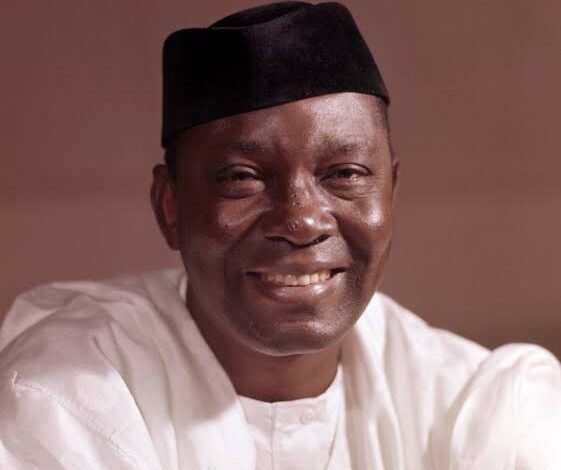
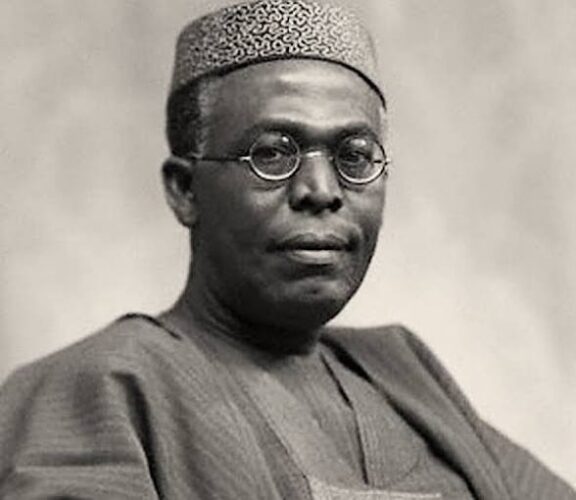
This is the elite class of Nigeria’s framework builders. And it is within this largely extra-academic lineage — one operating beyond the formal boundaries of university production and disciplinary gatekeeping — that figures such as Azikiwe, Awolowo, and Chinweizu emerge — not merely as statesmen or writers, but as framework builders. Each refused the role of interpreter. Each chose, instead, the more demanding vocation of architect.
Nnamdi Azikiwe: The Newsroom as Primary Laboratory
To understand what Azikiwe accomplished, one must resist the temptation to reduce him to his political biography — to the president, the governor-general, the nationalist icon. These are accurate descriptions, but they obscure the more foundational achievement. Before Azikiwe was any of those things, he was a theorist of communications power.
His intellectual contribution extended beyond communications infrastructure into explicit framework construction. Through Zikism in Africa and works such as Renascent Africa and Liberia in World Politics, he advanced a political philosophy centred on spiritual balance, social regeneration, mental emancipation, economic reconstruction, and political resurgence. Zikism was not merely nationalist rhetoric. It was an indigenous ideological framework — an attempt to articulate a distinctly African vocabulary for liberation, modernity, and civilisational renewal.
Azikiwe understood, with unusual clarity for his era, that newspapers were not passive instruments of reportage. They were engines of consciousness formation. Through The West African Pilot, launched in 1937, he built a mass communications infrastructure designed not merely to inform but to manufacture national awareness where none yet existed in consolidated form. The newsroom became a laboratory of political imagination.
The West African Pilot therefore functioned not only as a newspaper but as the transmission mechanism for Zikism itself — a vehicle through which ideas moved from theory into public consciousness.
This was framework building in the most consequential sense: the creation of a conceptual technology — the politically purposive newsroom — that could transform the relationship between a population and its own self-understanding.
Azikiwe drew from global traditions of activist journalism but adapted them into a distinctly West African instrument of nationalist mobilisation.
The lesson for the contemporary era is unmistakable, and uncomfortable. The modern digital newsroom has, in large measure, abandoned this mandate. Optimised for traffic, calibrated for virality, and disciplined by the imperatives of advertising revenue, it has become a largely reactive institution — faster than its predecessors, but shallower in purpose. Azikiwe’s example issues a rebuke and a challenge in equal measure: the newsroom cannot survive, in any meaningful civilisational sense, as a purely commercial machine. It must recover its older mandate as a theory laboratory — a place where original socio-political frameworks are serialised, tested, refined, and introduced into the public square. The medium has changed. The obligation has not.
Obafemi Awolowo: The Geometry of State Architecture
Where Azikiwe worked through the newsroom, Awolowo worked through the monograph. And where Azikiwe’s primary instrument was consciousness, Awolowo’s was structure.
Awolowo approached the Nigerian state with something that can only be described as geometric discipline. He did not merely criticise colonial administration or lament political dysfunction. He subjected the Nigerian project to systematic, structural examination. Through works such as Path to Nigerian Freedom (1947) and Thoughts on Nigerian Constitution (1966), he mapped constitutional arrangements, regional balances, socio-economic organisation, and the friction points embedded within the federation with a precision that distinguished him from his contemporaries. He treated governance as architecture — as a designed system with load-bearing elements, stress points, and the capacity to collapse if its internal logic was violated.
This temperament is what separates framework builders from analysts. The analyst produces interpretation. The framework builder produces a map of the system generating the events that require interpretation. Awolowo was interested not in the headline but in the structure producing the headline — and he was willing to do the painstaking intellectual labour of rendering that structure visible and legible.
The diagnosis of state fragility demands this same architectural temperament today. Nigeria’s security crisis is narrated, almost universally, at the level of events: the attack, the abduction, the reprisal, the press release, the lament.
But events are symptoms. Framework builders map systems. They move beneath the surface of occurrence to identify the structural arrangements generating those occurrences — the incentive structures, the sovereignty vacuums, the institutional failures that are not aberrations but outputs of a deeper logic.
His engagement with federal design, regional autonomy, and constitutional engineering reflected an understanding of governance not as administration alone, but as institutional geometry.
Awolowo’s method remains not only valid but urgently necessary.
Chinweizu Ibekwe: The Mandate of the Intellectual Border Guard
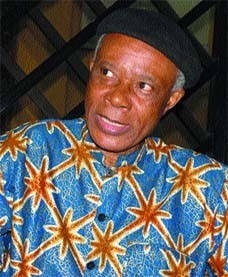
If Azikiwe built the communications laboratory and Awolowo built the architectural method, Chinweizu performed a different but equally indispensable function. He stood watch.
Chinweizu’s role was expressed not only through critique but through conceptual production. Among his notable interventions was Culturecide — his framework describing the systematic erosion, displacement, and destruction of indigenous cultural systems through external domination and internalised dependency. It was an attempt to name a process that conventional political language often failed to capture: the destruction of a people’s civilisational software while the institutional hardware of the state remained formally intact.
Through works such as The West and the Rest of Us (1975) and Decolonising the African Mind (1987), Chinweizu issued one of the sharpest warnings in Nigerian — and indeed African — intellectual history: the danger of mental capture. He challenged imported analytical vocabularies with a directness that was, by design, confrontational. He questioned the dependence on external civilisational lenses for interpreting African realities. He argued, with sustained rigour and deliberate provocation, that a society which cannot explain itself to itself in its own conceptual terms is a society that remains, whatever its formal independence, intellectually colonised.
His role was that of an intellectual border guard. Not merely a critic — a guardian of the threshold between conceptual sovereignty and conceptual dependency.
The challenge Chinweizu issued has not expired. It has, if anything, intensified. For every contemporary Nigerian thinker, his questions remain active and uncomfortable: Where are your own tools? What indigenous vocabulary explains your society? What framework have you built rather than borrowed? What analytical structure emerges from your own reading of your own conditions — rather than from the application of a foreign theoretical template to a local dataset?
These are not rhetorical questions. They are the standard by which any serious tradition of framework building must measure itself.
The Lineage and Its Continuation
Azikiwe built both the communications laboratory and the ideological architecture of Zikism. Awolowo built the architectural method of state design. Chinweizu defended conceptual sovereignty while naming the dangers of civilisational erosion through frameworks such as Culturecide.
Together, they constitute a tradition — dispersed across time, never formalised as a school, but coherent in its underlying conviction: that the most consequential intellectual work is the construction of original frameworks capable of explaining a society to itself.
The Insecurity Triad is offered in continuity with that tradition. It is an attempt, specific to this moment and these conditions, to construct an indigenous diagnostic framework for Nigeria’s security crisis and its relationship to state decay — one that does not merely apply existing theory but builds the conceptual architecture from the ground up, from the evidence of Nigerian and Sahelian experience, on its own terms.
The tradition is older than any single framework. What matters is that it continues — that each generation of Nigerian thinkers refuses the false comfort of borrowed explanation and accepts, instead, the more demanding obligation of original construction.
Nations are sustained not only by institutions, but by the concepts through which they understand themselves.
That obligation is not academic. It is civilisational.
A Note on This Moment
This is the twelfth edition of The Sunday Stew.
Three months ago, this column launched with a single ambition: to occupy a different intellectual space — one between journalism and scholarship, between immediate events and deeper structures, where Nigeria’s crises could be examined not only through reportage or theory, but through original reflection and framework construction. What has emerged from that ambition has exceeded the original brief.
In twelve editions, this column has produced two original analytical frameworks. The Insecurity Triad — theorising the mechanism by which armed networks sustain themselves relative to state authority through the convergence of a ransom economy, land contestation, and ideological capture — has been presented and deposited across six scholarly repositories, and has received scholarly engagement.
It has increasingly moved beyond commentary toward contribution within debates on the Nigerian state.
The Trinity of State Decay, developed as its companion diagnostic, theorises the structural condition that the Triad sustains: a decoupling into rival sovereignties, in which the state performs authority it no longer possesses while shadow orders exercise authority the state has vacated.
These are not borrowed frameworks dressed in local language. They were built here, in this column, for this crisis.
That is what this lineage — from Azikiwe to Awolowo to Chinweizu — ultimately demands: not admiration, but continuation. The Sunday Stew is, in its modest but deliberate way, an attempt to honour that demand.
Twelve editions. Two frameworks. The work continues.
Trust is Sacred. Stay Seasoned.
Dr. Amuchie is the CEO of Sundiata Post and architect of The Insecurity Triad and Trinity of State Decay. He writes The Sunday Stew, a weekly syndicated column on faith, character, and the forces that shape society, with a focus on Nigeria and Africa in a global context.
X — @MaxAmuchie | Email: max.a@sundiatapost.com | Tel: +234(0)8053069436