
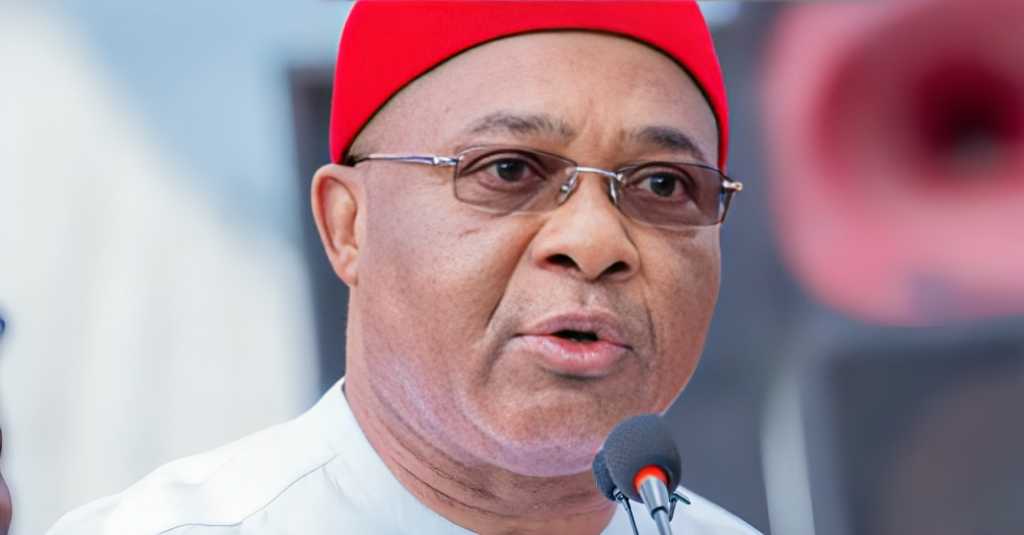
A British-Nigerian who has lived in London with his family for more than a quarter of a century, I am a veteran journalist, the first Features Editor of the Nigerian Statesman way back in 1979. We had just come back from Enugu where I had first been a Features Writer and later, the Deputy Editor of the Academic Star. But as an nwa afò Imo state, a son of Imo state soil, I was not really surprised to learn that His Excellency, Governor Hope Uzodinma was aspiring to get back to the Senate, from where he had served his native Orlu constituency for eight good years before he became governor of Imo state. I have known over the years in my profession that in Nigeria, political transition does not usually happen with a clean break from power, relevance and influence. Why should it, anyway?
We often find former governors moving automatically from the State House to the Senate, into ministerial appointments, or party leadership structures. It has become a pattern that is so entrenched in the system that it is virtually expected, as if life after a political office had no meaning unless one still remained visible and relevant within the political space. Yet, the history of nations shows that social relevance does not necessarily end with political office. It can change in form. And when we calmly view the circumstances, we discover that the most remembered political leaders were often those who understood that social relevance can deepen outside the walls of political office. And so, if I were to advise His Excellency, Governor Hope Uzodimma even before the end of his current tenure, I would not start with politics, or with party calculations. I would start with the familiar rhythm of senatorial ambition that so often defined post-governorship experience in Nigeria. I would begin with simple but interesting questions like: what kind of social relevance can possibly outlive political office? What would Mr. Governor love to identify with in life, money or history: because some are busy making money while others are busy making history? In the US, for example, the Republicans are busy making money, increasing tariffs while the Democrats are busy making history, producing the first black African President, producing the first female Vice President and first female black Secretary of State among others.
With eight years in the Senate from June 2011 to June 2019 and six years as Governor of Imo State from 15 January 2020, Hope Uzodinma stands at familiar crossroads that many Nigerian politicians walked before him. The common path is already well marked: a return to Senate, a continuation of political visibility, another cycle of relevance within the established architecture of power. Of course, that path is absolutely legitimate. It is constitutionally valid, politically understandable to a reasonable extent, and consistent with the norms of Nigeria’s political environment.
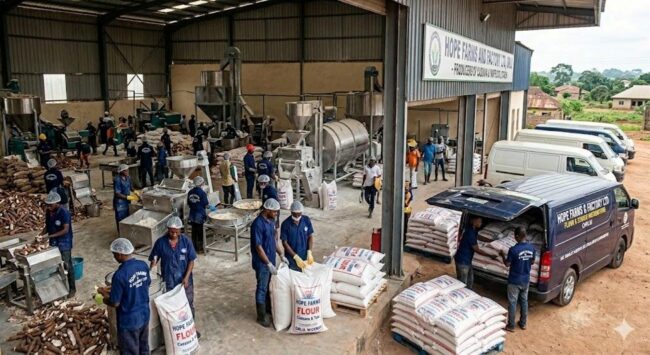
And so, if I were to advise His Excellency, I would say there is nothing inherently wrong with contesting for the Senate. It is a legitimate ambition, constitutionally permitted and politically rational. But I would also suggest that he should consider whether repetition of the same political ecosystem is the most valuable use of the authority, networks, and experience he has accumulated over decades in public service. Six years as governor, after eight years in the Senate, already places him among the most experienced political actors in his state. The question becomes whether the next chapter should simply be another seat within the same architecture of power, or whether it should have to shift to something else, something that builds an entirely new structure of impact.
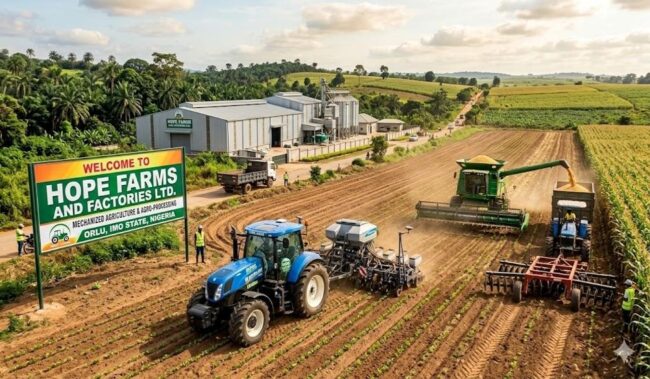
His Excellency, Governor Uzodinma should be reflecting on the fact that there is a different non-political path that I believe deserves his consideration. He might be tempted to see it as a rejection of politics, especially now that he has publicly shown his interest in going back to the Senate but that is not what it is. In actual fact, it is an expansion of what social relevance can mean from a totally different platform. It is a compelling alternative that Nigerian politicians are yet to fully embrace at elite level: the deliberate transition of senior political figures into large-scale production enterprises that directly transform local economies. In this case, agro-industrial development anchored in his home region. The idea is straightforward and powerful. Instead of viewing retirement from executive office as withdrawal from public relevance, it can be reimagined as an entry into a fresh angle of nation-building through production.
A large-scale agricultural and agro-processing complex focused on such crops as cassava, yam, maize, and vegetables, with integrated factories for processing garri, starch, yam and cassava flour, animal feed, vegetable oil extraction, and packaging, could become not just a business venture, but an economic institution for his people.
Such would be a structural model. A properly developed agro-industrial ecosystem in his rural local government area would employ thousands of youths and women directly and indirectly. It would create supply chains for farmers, transport opportunities for logistics operators, and technical roles for engineers, processors, and agronomists. It would also stimulate auxiliary economic activities such as packaging, retail distribution, and export logistics. In a country where youth unemployment remains one of the most pressing challenges, this kind of intervention is not merely economic, it is stabilizing. It is transformative. It will be exemplary and it will make history.
It is important to consider that this is a familiar idea globally. In Brazil, large agribusiness estates and agro-processing conglomerates have historically been used by industrialists and former political figures to transform vast rural regions into productive economic zones. These ventures are not small-scale farms, they are industrial ecosystems that connect agriculture to manufacturing and export markets. In the United States, several former governors and public officials have transitioned into large-scale farming, energy production, or foundation-led economic development projects, leveraging their networks to build long-term productive systems rather than embrace what would later become short-term political relevance.
In parts of Asia, particularly in countries like Indonesia and Thailand, former political elites and business leaders often invest heavily in agricultural processing zones that anchor regional development. These zones are not treated as private hobbies but as industrial policy extensions driven by private capital. The result is a form of development where leadership influence is expressed not only through legislation but through production capacity. Even within Africa, though less common, there are examples of political figures who have invested in agriculture and agro-processing as a legacy strategy. In South Africa, some former public office holders have moved into commercial farming and agribusiness investments that support food supply chains and export markets. In Ghana and Kenya, there are growing examples of politically connected entrepreneurs investing in large agricultural value chains that bridge rural production with urban and international markets.
What is striking is that these models are not yet mainstream in Nigeria among former state executives. The dominant post-office trajectory remains political: Senate seats, party leadership roles, advisory positions, or quiet retirement into real estate portfolios. While none of these are inherently negative, they often recycle influence rather than transform it. They maintain presence within the political system but rarely extend impact beyond it. This is why the suggestion of agro-industrial investment is not a rejection of political ambition, but an expansion of what leadership can mean. If I were advising him, I would say that the real question is not whether he should remain influential, but how that influence can be made generative rather than positional.
There is also a deeper dimension to this idea: legacy. Political office is temporary by design. Even the most powerful governor is constrained by constitutional time limits, electoral cycles, and institutional transitions. But production systems, once properly established, can outlast their founders by decades. A well-structured agro-industrial complex becomes part of the economic geography of a region. It shapes livelihoods, settlement patterns, educational opportunities, and even cultural identity around work and production.
In practical terms, the proposed model would require careful structuring. It should not be treated as a personal project managed informally or directly controlled by political associates. That would defeat its purpose and introduce inefficiencies common to politically influenced enterprises. Instead, it should be entrusted to professional hands. This means hiring experienced agribusiness executives, agricultural economists, engineers, factory managers, and supply chain specialists. Governance of the enterprise should be separated from personal political networks and placed under transparent corporate structures with clear performance metrics.
The role of the former governor, in this vision, would not be operational control but strategic sponsorship and institutional backing. His influence would be used to secure land access, facilitate regulatory alignment, and attract institutional partners, while leaving day-to-day management to professionals. This distinction is critical. Many large-scale projects fail in environments like Nigeria not because the idea is wrong, but because execution is compromised by over-centralized control or political interference.
If properly executed, such a model could also become a demonstration effect for other political leaders. It could challenge the assumption that retirement from executive office must lead either to political redundancy or continued political contestation. Instead, it could present a third path: productive reinvestment of political capital into economic transformation.
The social implications would also be significant. Youth engagement in agriculture is often discussed in abstract terms, but rarely implemented at scale in ways that are attractive to younger generations. A modern agro-industrial complex, equipped with mechanization, digital supply chain systems, processing technology, and export orientation, would look very different from subsistence-farming. It would be industrial, structured, and professionally managed. That difference is what can shift perception and participation.
There is also the question of regional development equity. Many rural areas in Nigeria remain underdeveloped not because of lack of potential, but because of lack of catalytic investment. Government infrastructure projects are important but often uneven. Private-sector driven industrial agriculture, when properly structured, can act as a stabilizing force for regional economies. It can anchor roads, power investments, education partnerships, and healthcare outreach around an economic hub.
Of course, such a transition requires a certain discipline of mind. Politics rewards immediacy, visibility, and negotiation. Industrial development rewards patience, systems thinking, and long-term commitment. It requires acceptance that results may take years to fully materialize. That is not always aligned with the culture of political ambition. But it is precisely why such a shift, if undertaken, would be noteworthy. If I were to advise Governor Uzodinma directly, I would not frame it as abandoning politics for agriculture. I would frame it as evolving from political leadership to economic statecraft. One operates through institutions of governance; the other through institutions of production. Both shape society, but in different time horizons.
There is also a moral dimension that cannot be ignored. Societies often judge leaders not only by the offices they held, but by what they left behind in tangible form. Roads decay, policies are revised, political alliances shift. But factories that employ people, farms that feed communities, and industrial systems that create value tend to endure longer in public memory than speeches or electoral victories.
Ultimately, whether or not Governor Uzodinma chooses such a path is a personal and political decision. The structure of Nigerian politics makes the Senate an attractive and familiar option, and it would not be unusual for him to pursue it. But innovation in leadership often begins precisely where expectations end. There is nothing wrong with following established political pathways, but there is also nothing inherently correct about assuming they are the only dignified continuation of public life.
If leadership is about shaping society, then the tools of leadership need not remain fixed to electoral office alone. In a changing world, influence is increasingly measured not only by the positions people hold, but by the systems they build. If he were to embrace that broader definition of impact, then his post-governorship years could become not a continuation of political rotation, but a redefinition of what it means to serve. And in that possibility lies a quieter but more enduring form of power: one that does not depend on elections, but on transformation; not on office, but on outcome; not on political survival, but on economic creation. My Governor, will you give this shift from “normalcy” a chance in your life? The ball is in your court.
Chief Sir Asinugo, PhD., M.A., KSC is a U-based veteran journalist.