
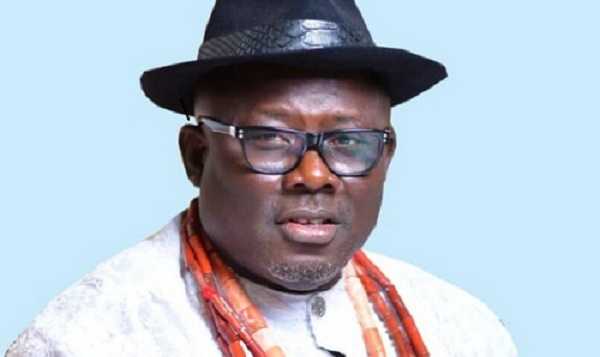

His Excellency,
Rt. Hon. Sheriff Oborevwori
Governor, Delta State
Your Excellency,
I write with the utmost respect for your office and with a deep sense of responsibility to the people whose daily lives are shaped by decisions taken in the Government House. I write also as someone who has spent considerable time reflecting on the relationship between infrastructure, human dignity, economic opportunity, and the future of the Niger Delta.
A Personal Experience That Brought the Problem Into Sharp Focus
Our mother passed away a few months ago and was laid to rest on June 13, 2026, in Torugbene, Burutu Local Government Area of Delta State. On behalf of my family and the people of Torugbene Urban Community, I sincerely appreciate Your Excellency and your administration for the support extended to us during the burial, as well as the significant appointments given to sons and daughters of Torugbene Urban Community. These gestures were deeply appreciated and demonstrated a welcome recognition of the community and its people.
It was, however, during that solemn occasion that the deplorable condition of the road into Torugbene became painfully impossible to ignore. Political appointees of your administration, traditional rulers from different parts of the country, and guests who traveled from the United States and the United Kingdom to pay their final respects to our mother personally witnessed the condition of the route.
Most distressingly, three buses carrying mourners from Cross River and Benue States became stranded along the route, forcing their occupants to abandon the disabled vehicles. For a family already grieving the loss of a mother, witnessing guests undertake such a difficult journey and become stranded on their way to her burial added another painful dimension to an already emotional occasion.
That experience transformed what might otherwise have been viewed as an infrastructure concern into a deeply personal and human reality. It demonstrated, in the most tangible way, how inadequate transportation infrastructure can affect not only commerce and mobility but also the ability of families and communities to receive visitors, access essential services, and participate fully in social life.
I therefore make this appeal not simply as a request for a road, but from a place of genuine concern, empathy, and lived experience. The people of Torugbene Urban Community deserve safe and dependable access to the wider State. They deserve infrastructure that reflects their dignity, acknowledges their contribution, and assures them that their community is an integral part of Delta State’s development.
The Missing Eight Kilometers
The approximately eight-kilometer stretch linking Bomadi to the beginning of the Torugbene–Ojobo Phase 1 project deserves urgent attention. Its present condition is difficult to reconcile with the broader objective of connecting riverine communities to the economic and social life of Delta State.
The importance of this stretch becomes clearer when it is viewed as part of a larger transportation network. A road does not create its full value simply because one section has been constructed. Its economic usefulness depends upon continuity. Where an otherwise functional corridor is interrupted by a critical section that is unsafe or difficult to traverse, the benefits of the completed infrastructure are substantially diminished. This is precisely the situation confronting the Bomadi–Torugbene corridor.
The approximately eight-kilometer stretch remains in a dangerously deteriorated condition, characterized by deep, water-filled potholes, severely uneven terrain, and hazardous passage that poses serious challenges to heavy-duty vehicles, commercial transporters, and other road users.
The consequences extend well beyond inconvenience. During repeated journeys along this corridor, trucks have reportedly been encountered immobilized by the condition of the road, with some unable to proceed without assistance. Such incidents, recurring over more than a decade, provide tangible evidence of the economic burden created by inadequate access.
Transportation becomes slower and more expensive. Vehicles sustain avoidable damage. Agricultural and fisheries products face difficulty reaching markets efficiently. Commercial activity is constrained, and emergency movement becomes more difficult. Over time, these cumulative costs become a silent tax imposed upon the communities that depend on the corridor.
From a Road Project to an Economic Corridor
Your Excellency, this is where I believe we must rethink how riverine infrastructure is conceptualized. The question should not simply be, “Is this road politically important?” It should be: “What economic activity is being prevented, constrained, or lost because this road remains impassable?” That question changes the conversation.
A fisherman may harvest valuable fish, but struggle to transport the catch efficiently to market. A farmer may produce agricultural goods, but lose part of the economic value because transportation costs consume the margin. A trader may have customers, but lack dependable access to suppliers and markets. A construction company may have the capacity to deliver materials, but encounter unnecessary delays and vehicle damage. A community may have young people willing to work while businesses remain reluctant to invest because reliable access is uncertain. This is why the missing link should not be assessed simply as an eight-kilometer road project. It should be understood as a critical economic connection.
The proposed intervention would connect communities, facilitate movement, reduce transportation friction, improve access to markets and services, and strengthen the economic value of infrastructure already being developed in the surrounding area.
Building on Delta State’s Existing Development Vision
The case for intervention is strengthened by the fact that Delta State has already recognized the relationship between infrastructure and economic activity. The State’s development literature notes that improved road networks facilitate the smoother and less costly movement of goods and services, improve the ease of doing business, and strengthen business confidence.
The implication is straightforward: strategically rehabilitated roads do not simply improve transportation. They reduce economic friction and create the conditions under which businesses, households, and communities can participate more effectively in the wider economy.
The Delta State Government has also recognized the developmental importance of connectivity in riverine communities. The State’s investment framework identifies rural and riverine road development as an important component of improving accessibility, stimulating economic activity, and opening communities to wider opportunities.
It should therefore be placed on record that we sincerely appreciate the inclusion of the rehabilitation of the Bomadi–Gbaregolor Road among the State’s infrastructure priorities. This recognition demonstrates an understanding that reliable transportation networks are essential to the economic and social integration of riverine communities.
The appeal before Your Excellency, is therefore, not inconsistent with the State’s development vision. Rather, it seeks to advance and complete the connectivity that the State has already identified as important.
A Regional Precedent for Strategic Connectivity
There is also a compelling precedent within the same geographical region. The Trans-Warri–Ode-Itsekiri project demonstrates what strategic connectivity can accomplish in the riverine Niger Delta. The project, which includes approximately 25.8 kilometers of road and 19 bridges, was designed to connect several riverine communities with Warri.
During its development, the Delta State Government acknowledged that even before full completion, the project had begun opening previously isolated areas to increased economic activity. That experience offers an important lesson: strategic infrastructure can transform the economic geography of riverine communities.
The Bomadi–Torugbene–Ojobo corridor should therefore be considered within the same broader philosophy of connectivity. The objective should not be to construct isolated pieces of infrastructure but to create a functioning network through which communities, markets, waterways, roads, businesses, and people can interact efficiently.
The Value of Completing the Network
The practical reality is that infrastructure must function as a network rather than as a collection of disconnected projects. A beautifully constructed road that terminates at a severely degraded eight-kilometer stretch cannot deliver its full economic value. Infrastructure operates much like a chain: when one critical link is broken, the efficiency of the entire system is compromised. This point is particularly relevant given the ongoing development of the Torugbene–Ojobo corridor.
Setraco Nigeria Limited is currently undertaking the 9.463-kilometre Torugbene–Ojobo Road, Phase II, Section B, under a 24-month contract awarded in May 2026. According to the officially published project scope provided for this discussion, the work includes sand filling, construction of a crushed-stone base, drainage infrastructure, road-base reinforcement, and asphalt surfacing.
The Delta State project-monitoring platform indicates that the intervention is intended to improve transportation, facilitate the movement of people and goods, and strengthen economic activities, including fishing, farming, and local trade. These objectives reinforce the strategic importance of ensuring that adjoining sections of the corridor do not become bottlenecks that undermine the value of the investment already being made.
An Opportunity for Continuity and Efficiency
Setraco’s own project portfolio also records the completed Bomadi Bridge as part of the Ojobo–Bomadi Road and Bridges project. This history is relevant because it indicates that the contractor has experience with the geographical, engineering, logistical, and community conditions associated with this corridor. That familiarity may have practical value when considering the most efficient means of addressing the missing link. A contractor already familiar with the terrain may possess knowledge that can reduce avoidable learning curves and implementation difficulties.
However, I want to make this point with complete clarity: I am not advocating that any contractor should receive preferential treatment outside the law or established procurement procedures. Any consideration of Setraco or another contractor should remain subject to Delta State’s procurement laws, technical evaluation, transparency requirements, value-for-money considerations, competitive processes where applicable, and appropriate public-sector safeguards.
My argument is pragmatic: where a contractor has demonstrated competence in difficult terrain, understands the surrounding communities, and is already executing adjoining infrastructure, the State should examine whether continuity of technical knowledge could contribute to greater efficiency, reduced implementation risk, and faster delivery, without compromising due process.
Engineering for Durability, Not Simply Completion
The engineering requirements also deserve careful consideration. The State’s description of the adjoining Torugbene–Ojobo Phase II works includes raising the road formation with suitable fill, constructing an appropriate road base, providing drainage infrastructure, reinforcement, and asphalt surfacing. The missing eight-kilometer section should similarly be subjected to a professional engineering assessment to determine the appropriate formation level, drainage requirements, soil conditions, pavement design, traffic loading, and lifecycle costs.
This is particularly important in a riverine environment where soil conditions, water movement, flooding, and heavy vehicle traffic can significantly affect infrastructure performance. The objective should therefore not be simply to build the road. The objective should be to build a properly engineered and durable road capable of serving the community for many years. The people of Torugbene and the surrounding communities deserve infrastructure designed for longevity, reliability, safety, and sustained economic value.
This presents Your Excellency with an opportunity to demonstrate an important principle of governance: development should be measured not only by the number of projects delivered, but by the opportunities those projects create.
A Strategic Corridor in the Emerging Blue Economy
The significance of this corridor extends well beyond local transportation. This potential becomes even more compelling when the corridor is considered in relation to Agge, which lies in close proximity to Torugbene and occupies an increasingly important position in the emerging maritime economy of the Niger Delta. The proposed Agge Deep Sea Port in Bayelsa State is being advanced by the Federal Government as a potentially transformative maritime gateway capable of attracting investment, generating employment, strengthening logistics, and accelerating economic activity across the region. On June 5, 2026, the Minister of Marine and Blue Economy, Dr. Adegboyega Oyetola, reaffirmed the Federal Government’s commitment to the actualization of the project, describing it as a major component of Nigeria’s strategy to expand maritime infrastructure and deepen the blue economy.
This development has direct implications for the economic logic of rehabilitating the Bomadi–Torugbene road. Torugbene should not be viewed as an isolated riverine community at the end of a neglected road; it should be understood as part of a wider geographical and economic ecosystem whose proximity to Agge could become increasingly significant as maritime infrastructure develops. The proposed Agge Deep Sea Port is expected to stimulate activities in logistics, fisheries, shipbuilding, maritime services, tourism, and related industries, while creating direct and indirect employment and attracting local and foreign investment.
The strategic implication is clear: infrastructure connecting communities around this emerging maritime axis should be developed before economic expansion arrives, not after it has already exposed the inadequacy of existing transportation networks. Immediate rehabilitation of the Bomadi–Torugbene link would therefore represent more than a response to present hardship. It would constitute a forward-looking investment in regional connectivity, positioning Torugbene and surrounding communities to participate in the economic opportunities that could emerge from the development of Agge and the wider blue economy.
The Federal Government’s renewed emphasis on Agge makes this argument particularly timely. The project is being positioned not simply as a port development but as a catalyst for wider trade, industrialization, logistics, investment, and employment across the Niger Delta. It would therefore be strategically shortsighted to develop major maritime infrastructure in the region while leaving critical terrestrial access routes connecting nearby communities in a state of prolonged deterioration.
The fundamental challenge, therefore, is not a lack of economic potential. It is the infrastructure gap between potential and participation. The blue economy provides an opportunity to redefine the riverine environment, not as a geographical disadvantage, but as an economic asset. But that transformation will require an interconnected infrastructure system in which roads, waterways, ports, communities, markets, and industries reinforce one another.
In this context, the approximately eight-kilometer Bomadi–Torugbene link assumes an importance far greater than its length suggests. Eight kilometers of reliable road could become a strategic connector between communities, markets, emerging maritime infrastructure, and the wider economy of the Niger Delta. Its immediate rehabilitation should therefore be viewed not simply as a local road intervention, but as a modest infrastructure investment with the potential to support a much larger regional economic vision.
The Cost of Continued Isolation
Your Excellency, the question before us is not simply whether riverine infrastructure is expensive.
The more important question is whether the cost of continued isolation is even greater. Every truck damaged on a bad road represents a cost. Every trip delayed represents a cost. Every agricultural or fisheries product that reaches the market late represents a cost. Every investor discouraged by unreliable access represents a lost opportunity. Every young person who leaves because economic activity cannot flourish represents a social cost.
These costs rarely appear together in a government budget. Yet communities bear them every day. After more than a decade of these conditions, decisive intervention has become both a developmental imperative and a matter of human dignity.
A Practical Path Forward
Your Excellency, we believe this is precisely where forward-looking leadership must intervene. The best infrastructure policy does not simply respond to political demands; it anticipates economic possibilities.
Accordingly, we respectfully propose that the State Government consider the following:
- Commission an immediate technical assessment of the approximately eight-kilometer Bomadi–Torugbene link, including geotechnical, drainage, pavement, traffic-loading, and lifecycle-cost assessments.
- Evaluate the road as part of an integrated Bomadi–Torugbene–Ojobo economic corridor, rather than as an isolated rehabilitation project.
- Examine the feasibility of completing the missing link concurrently with, or in close coordination with, the Torugbene–Ojobo Phase II works, subject to available funding, procurement requirements, and technical considerations.
- Evaluate contractors with demonstrated experience in the terrain, including Setraco, while maintaining all applicable procurement safeguards, competitive requirements, technical evaluation, transparency, and value-for-money standards.
- Establish measurable performance indicators for the intervention, including reductions in travel time and vehicle operating costs, improved freight movement, expanded agricultural and fisheries market access, enhanced community connectivity, and long-term road durability.
- Establish a structured community-engagement mechanism involving traditional institutions, local communities, transport operators, traders, farmers, fishermen, and other stakeholders so that local communities become partners in protecting and sustaining the infrastructure.
Eight Kilometers That Could Change Much More Than a Road
Your Excellency, history will not remember every contract number, but it will remember whether a generation of leadership succeeded in opening places that had remained isolated for decades.
Eight kilometers may appear insignificant when measured on a map. In economic and human terms, however, those eight kilometers can be enormous.
They can determine whether a truck reaches its destination, whether fish reaches the market in time, whether agricultural produce generates income, whether a patient reaches healthcare, whether a child travels safely to school, whether a business considers investing, and whether a community feels connected to the wider State. This is why I respectfully urge Your Excellency to look beyond the kilometers.
Look at the people. Look at the commerce. Look at the fishermen. Look at the farmers. Look at the traders. Look at the children travelling to school. Look at the elderly and vulnerable who need access to healthcare. Look at the businesses waiting for reliable connectivity. Look at the communities waiting to become meaningfully connected to the wider Delta economy. And above all, look at the future.
Your administration has already articulated a commitment to improving connectivity in riverine communities. The opportunity now is to translate that commitment into a practical intervention that completes an existing infrastructure network, unlocks economic activity, reduces transportation costs, and gives communities a dependable pathway into the wider economy of Delta State. A government builds a road with concrete and asphalt. A visionary government builds what the road makes possible.
I therefore respectfully urge Your Excellency to make the Bomadi–Torugbene missing link part of that larger vision. Eight kilometers can be a short distance. But eight kilometers can also be the distance between isolation and opportunity, hardship and mobility, exclusion and inclusion, and a community’s unrealized potential and its economic transformation.
I respectfully appeal to Your Excellency to seize this opportunity to make those eight kilometers a lasting symbol of responsive, inclusive, and forward-looking leadership in the riverine Niger Delta.
Yours faithfully,
Professor (Amb.) Mondy Selle Gold, PhDs, CFP, MPA, FCILG, FEBS
- Recipient, United States President’s Lifetime Achievement Award
- Chairman, Ijaw Diaspora Council BOT USA
- Co-Chairman, African Policy and Research Consortium
- Former BOT Chairman of NADECO USA
- Authorized Biographer, Isaac Adaka Boro: The Unfinished Project