
CANEX WKND 2026 puts finance, ownership, market access at the centre of Africa’s creative economy

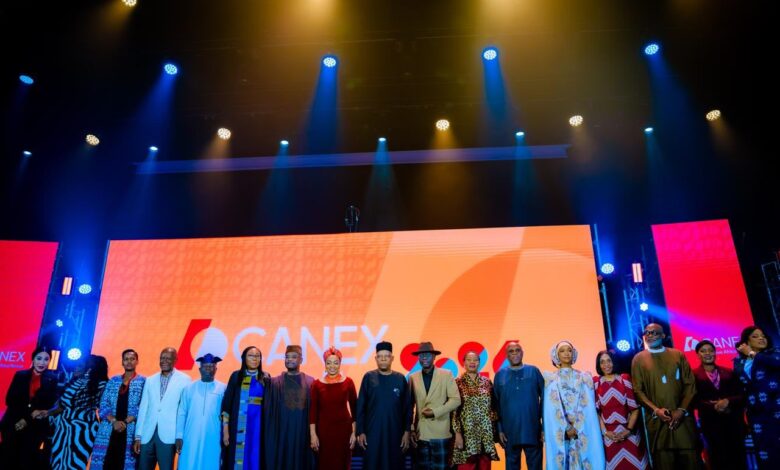
Lagos, Nigeria, 6 November 2026
Creative Africa Nexus (CANEX) WKND 2026 opened in Lagos with African leaders calling for stronger financing, intellectual property protection, distribution and market access to ensure the continent retains more of the economic value generated by its creative industries.
Opening the four-day gathering on behalf of President Bola Ahmed Tinubu, Nigeria’s Vice President, H.E. Senator Kashim Shettima, said Africa must move beyond global cultural recognition towards building commercially competitive creative businesses.
“In 1977, we came to celebrate our culture. In 2026, we come to capitalise on it. We come to turn the world’s applause into contracts, its admiration into markets, and the talent of our young people into enduring wealth,” he said.
He also called for stronger intra-African market access for creative businesses saying, “We cannot continue to celebrate African creativity while making it difficult for African creators to access African markets,” he said.
Afreximbank has committed US$2 billion through 2027 to support Africa’s creative and cultural industries, building on earlier financing commitments as demand across the sector has expanded. CANEX WKND 2024 in Algiers brought together participants from 81 countries and facilitated more than US$540 million in trade and investment deals.
In Nigeria, more than US$600 million in financing is being unlocked for digital and creative enterprises through the Investment in Digital and Creative Enterprises programme, iDICE. Dr Jumoke Oduwole, Nigeria’s Minister of Industry, Trade and Investment, said proposed transactions worth more than US$500 million were already being discussed between Nigerian entrepreneurs, buyers and investors in deal rooms co-curated with Afreximbank during CANEX.
“We promised to bring buyers and investors here. Today, Nigerian creatives are negotiating with them in Lagos. Our ambition is a deal for every part of the creative economy, from sports and gaming to creative technology and infrastructure, the arts and gastronomy,” Dr Oduwole said.
Nigeria has also introduced a series of measures aimed at strengthening the commercial environment for creative businesses. These include the country’s first National Intellectual Property Policy and Strategy, approved in 2025, and the Creative Sector Investment Playbook launched in January 2026 to guide investment into areas including studios, content production and distribution.
Nigeria, alongside Kenya and South Africa, is also a co-champion of the African Continental Free Trade Area (AfCFTA) Protocol on Digital Trade. Afreximbank President and Chairman of the Board of Directors, Dr George Elombi, said increasing production finance alone would not be sufficient unless Africa also strengthens ownership and value capture across the creative-industry supply chain.
Citing estimates from the United Nations Economic Commission for Africa, Dr Elombi said Africa’s creative economy is valued at approximately US$60 billion, representing around 2% of the global creative industry. “We can put these financing schemes into music and movie productions. Yet the value we derive will still be low. We must therefore focus on building the creative ecosystem,” he said.
CANEX WKND 2026 brings together over 15,000 delegates spanning governments, investors, financial institutions, creators and businesses from across Africa, the Caribbean and the wider diaspora. The programme includes the CANEX Deal Room, Creative Economy Finance Summit, African Producer Accelerator, CANEX Music Factory, CANEX Book Factory, CANEX CreaThon and sector programmes spanning film and television, music, fashion, sport, literature and publishing, gastronomy, visual arts and technology.


