Algeria, third largest economic power in Africa; IATF 2025, a resounding success – Prof. Kouachi

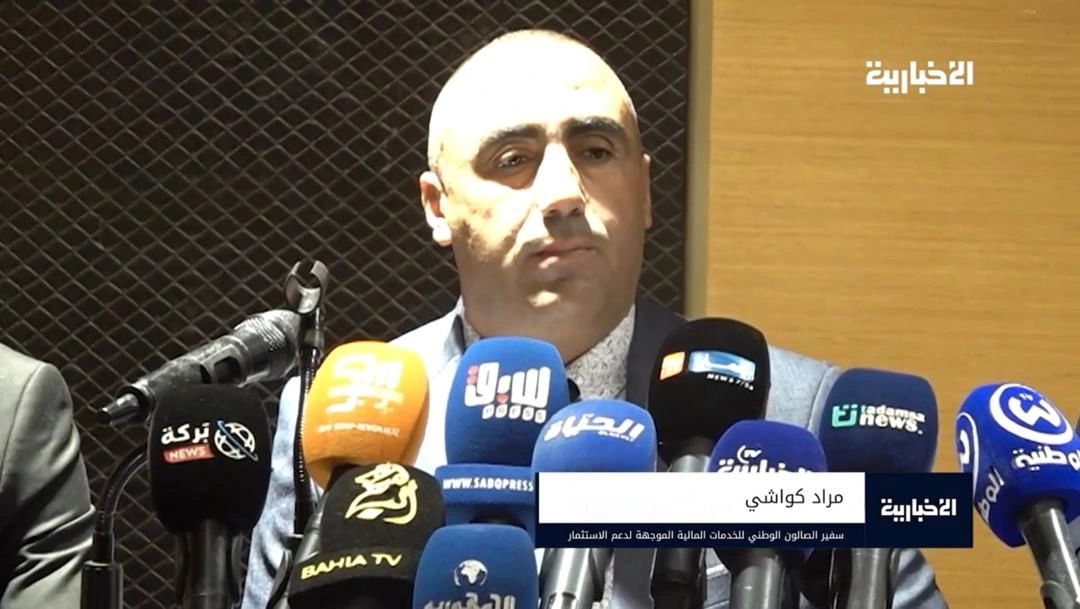
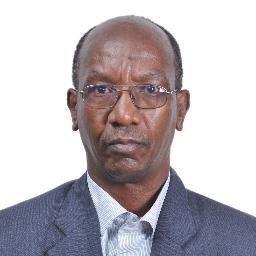
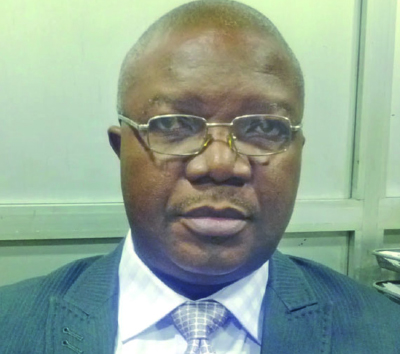
Dr. Mourad Kouachi, a University Professor, economics expert and member of the National Economic, Social, and Environmental Council (CNESE) of Algeria, recently responded to questions fielded by Senior Ethiopian journalist, Berhanu Tessema, on different aspects of the economy of Algeria.
He also assessed the 4th edition of the Intra-Africa Trade Fair (IATF), organized by the African Export-Import Bank (Afreximbank) and hosted by the government of Algeria.
Here are excerpts:
How would you rate the Algerian economy?
Based on international financial institutions like the World Bank and the International Monetary Fund, the Algerian economy currently shows positive macroeconomic indicators. The growth rate of the Algerian economy has exceeded 4% in recent years, positioning it among the best performing in the Maghreb and Middle East regions.
Algeria’s foreign exchange reserves stand at approximately 70 billion dollars, while the gross domestic product surpasses 260 billion dollars, making Algeria the third-largest economic power in Africa, after Egypt and South Africa. The government has successfully controlled the inflation rate, which has decreased from 9% to 4%.
Overall, these very positive indicators demonstrate that Algeria has achieved these results through a clear strategy and a precise plan focused on promoting investment, particularly in wealth-generating sectors such as industry, agriculture, and mining.
How did Algeria transition from being an importing country to an exporting one?
This change is the result of numerous reforms introduced to improve the business climate. Notably, the investment law No. 22-18 aims to enhance the business environment, invigorate the national economy, create jobs, and promote innovation. This law introduced tax incentives, reinstated single-window systems for major investments and foreign direct investments, strengthened guarantees for the transfer of capital and dividends, and created incentive schemes for priority sectors, promotional zones, and structural investments.
To modernize its financial system, Algeria implemented a major monetary and banking reform in 2023. In the same year, the country enacted a law setting the conditions and procedures for granting state-owned economic land intended for investment projects and recently regulated the activity of micro-importation.
In summary, the number of laws enacted over the past six years exceeds that enacted in the previous twenty years. Furthermore, to boost the national economy, the government has worked to develop its infrastructure, including road, air, and maritime networks, as well as modernizing its rail network.
What about the state and exporters?
The Algerian government has also established a policy to support non-hydrocarbon exports to promote domestic products.
To stimulate the national economy and enable economic operators to integrate into the African continent, Algeria has developed its infrastructure. This includes the construction of the African unity road spanning nearly 10,000 km and connecting six African countries, the trans-Saharan fiber-optic backbone to enhance connectivity and foster digital development, and a 890-kilometer road linking the city of Tindouf in Algeria to Zouiret in Mauritania, with Algeria responsible for constructing the section crossing Mauritania. Additionally, direct air routes have been opened with several African capitals to facilitate people’s mobility and intra-African trade.
The country has also opened branches of national banks in Nouakchott and Dakar. Algeria announced in 2024 the creation of five free trade zones with neighboring countries: Mauritania, Tunisia, Libya, Mali, and Niger.
These initiatives aim to strengthen African economic integration, diversify Algerian industry beyond hydrocarbons, and stimulate trade with its neighbors. The country organizes and participates in both national and international fairs to showcase its local products. Thanks to these efforts, Algeria has moved from being an importing country to an exporting one for certain products such as cement, which is now exported to several countries, including the United States.
Algeria has become a major supplier of iron and steel products, as well as phosphate. Once dependent on food product imports, like pasta, Algeria is now capable of exporting these items. Projects are also underway to export electrical, electronic, and household appliances to many African countries.
What are Algeria’s main exports and which countries import these products?
The three main Algerian exports include energy sources such as oil, gas, and liquefied gas. Beyond the energy sector, various products are also exported, including phosphate, iron, cement, as well as semi-finished products like clinker and other petrochemical products and foodstuffs, such as beverages. Additionally, in the electrical industry, Algeria exports electricity meters and household appliances, primarily to Mauritania, Senegal, and other countries.
According to statistics from 2024, there are about 120 countries worldwide, including 30 in Africa that import Algerian products.
Algeria has around 2,000 exporters. The country’s exports to Mauritania amount to 135 million dollars. For all Arab countries, nearly 535 million dollars worth of products have been exported.
As of 2025, hydrocarbons remain the top export, representing 91% of our exports abroad, valued at 52 billion dollars. Fertilizers follow, with 1.4 billion dollars, and iron and steel represent 1.1 billion dollars of our exports.
In fourth place are chemical materials, totaling about 160 million dollars, followed by cement, stones, sulfur, and salt, which total approximately 760 million dollars. Exports of sugar and confectionery reach 187 million dollars, followed by fruits valued at around 130 million dollars, and then machinery, including computers, worth about 66 million dollars. This summarizes the value of Algerian exports in terms of both amount and type.
This economic transformation results from the Algerian government’s strategy to reduce dependence on hydrocarbons and shift from a rentier economy to a diversified one, resilient to shocks caused by falling oil prices.
Aware of this situation, the government has turned to other wealth-generating sectors, particularly agriculture, which has become the second-largest contributor to GDP, accounting for 15%, or about 37 billion dollars.
Algeria is moving closer to its goal of food self-sufficiency, particularly through projects focused on strategic and smart crops, as well as cereal cultivation. Major projects have also been initiated, such as the Algerian-Qatari dairy production project valued at 3.5 billion dollars, which will produce 50% of the national demand for powdered milk, supply the local market with red meat, and contribute to cereal and fodder production through a crop rotation system in the three agricultural perimeters related to the project. Similarly, a project valued at 420 million dollars has been concluded with Italy for the integrated production of cereals, legumes, and pasta.
In the mining sector, while we previously imported iron and cement for about one billion dollars annually in mining resources and ores—this sector contributed only 1% to the national economy. However, the government has launched several projects in the last four years. These include the Gara Djebilet iron mine project, which began operations in July 2022; it is one of the largest iron mines in the world, with reserves estimated at 3.5 billion tons, of which 1.7 billion tons are exploitable. An Integrated Phosphate Project (PPI) has also been launched in the eastern part of the country, along with a project for the extraction of zinc and lead deposits in Bejaia. All these projects are expected to make the mining sector a true alternative to the hydrocarbons sector in Algeria.
Moreover, considerable effort has been made to develop industries in Algeria, particularly the pharmaceutical industry. Algeria aims to achieve Level 3 Maturity (ML3) from the World Health Organization (WHO), which will allow it to easily register its medicines in export circuits and export its pharmaceutical products.
On collaboration between the government and the private sector.
Regarding collaboration between the government and the private sector, significant efforts have been made by various parties, particularly by the government. It has implemented numerous incentives to encourage both foreign and domestic investment, as well as to promote exports outside of hydrocarbons.
Algerian exporters benefit from the unwavering support of the state, notably through the opening of branches of national banks abroad and the organization of several fairs, both inside and outside the country, to promote Algerian products and position Algeria as an attractive destination for investment.
Furthermore, the number of air and maritime routes to many African capitals has been increased. Recently, a meeting took place between President Abdelmadjid Tebboune and economic operators who had signed contracts during the Intra-African Trade Fair (IATF) held last September in Algiers. The President committed to facilitating the implementation of these trade and investment agreements concluded at the event.
Economic operators also play a crucial role by striving to integrate into the African market, developing quality products that comply with international standards, and thus meeting the requirements of different global markets. These results would not have been possible without the synergy of efforts between the government, economic actors, and various institutions in Algeria.
Your assessment of the 4th edition of the Intra-African Trade Fair (IATF) held in Algiers?
The 4th edition of the IATF broke all records and exceeded all expectations, given the volume and value of agreements and contracts concluded during the event, which was a resounding success. Indeed, contracts valued at 48.3 billion dollars were signed, while the organizers, African Export Import Bank (AfreximBank) had set a target of 44 billion. Algeria, as the host country, distinguished itself by concluding agreements valued at 11.4 billion dollars, representing 23.6% of the total volume. The success of this event demonstrates Algeria’s strong commitment to achieving the goals of the African Union Agenda 2063 and promoting sustainable development and prosperity on the continent.
The sectors that benefited from these contracts fall within strategic areas such as industry, startups, and agriculture – sectors that Algeria seeks to develop.