In Oyo State, a woman has four grandchildren and a daughter-in-law abducted from a school by terrorists. They are still in the bush; their abductors are unyielding.
An Ekiti man took N10.5 million to kidnappers and still failed to secure the release of his 80-year-old mother.
On Saturday in Katsina, a Major General, former spokesman of the Nigerian military and his wife were abducted in broad daylight and dragged into the bush.
The woman with four grandchildren and a daughter-in-law in captivity was a ghostly sight to behold. Sobbing, she told Governor Seyi Makinde during his visit to her village on Saturday:
“E nwo mi? As you are looking at me like this, I am naked; my four grandchildren and daughter-in-law who teaches at the school were taken away. My son’s wife is the one with a child in the video (released by the terrorists). We have never witnessed anything like this in our community. It is so sad. My grandchildren are there in the bush. The government should help bring them back safely. You are the only one who can do it.”
As the woman sobbed, her tears echoed across the field. Even if you have feasted on the tortoise’s jinxed head and become immune to pity, the video I watched and the photographs of victims’ relatives who met the governor should still break your heart.
Nigeria personifies Shakespeare’s words in Hamlet where we learn that grief with its synonym – heartache – can be unremitting in occurrence. The playwright writes that “sorrow comes not single spies, but in battalions.” What bandits have put in the Ogbomoso area is a full barn of woes.
Death brings grief; unresolved abduction brings endless torment. Disappearance keeps hope and despair locked in a ceaseless struggle. As the Yoruba say, “Ọmọ ẹni kú, ó sàn ju ọmọ ẹni nù lọ”—painful as the death of a child may be, it is still better than the agony of knowing that the child lives in the house of death.
As in the classical elegies, grief moved through the Oyo community like a dark procession, leaving behind shattered families, yet unanswered prayers and cries heavy with loss.
Like Macduff’s Scotland, Nigeria weeps and bleeds; each day adds a fresh wound to its many scars.
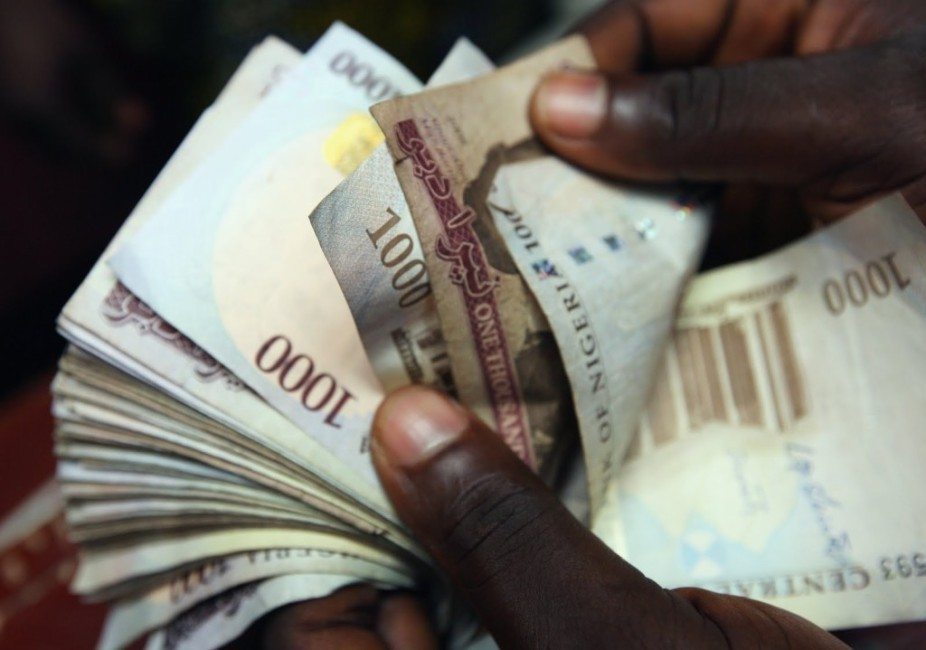
In April, the kidnappers in Ekiti demanded N10.5 million. They collected the money in a Kwara forest and still refused to release the 80-year-old woman and other captives, insisting that the community must produce another N40 million. Ogundele Ojo, the man who led the team that took the ransom to the bandits, is from a village called Eda Oniyo in Ekiti State. His ordeal was narrated to a radio presenter and is captured in a video now circulating online.
The man said his mother, Rachael Aina, his younger brother’s wife, her only child, and several other villagers were abducted during a church service. The presiding pastor was shot in the back, the bullet tearing through his chest. In 2026 Nigeria, a place of prayer became a house of mourning; a gathering for worship ended in tears, terror and blood.
“This is my mother’s photo, she just came back from the hospital the day she was abducted,” the man said and broke down in tears.
Two weeks ago, Emeritus Professor Toyin Falola told me in an interview that Nigeria suffers from an epidemic of insecurity and an epidemic of death. He was right; his words perfectly capture a country where every day brings fresh tragedy.
Shakespeare, writing in Macbeth, describes a broken nation where “each new morn, new widows howl, new orphans cry, new sorrows strike heaven on the face that it resounds…and yelled out like syllable of dolor..” Four centuries after Macbeth was written, the line reads like a dispatch from Nigeria. Each new morning in Nigeria brings fresh widows, new orphans and new griefs. Sorrow, in relentless fury, seems to strike heaven itself in the face, compelling even the skies to cry out in anguish.
The dam has broken.
A friend and I asked ourselves last night: how many Nigerians are chained in forests, camps and hideouts across this country? Nobody knows. Not the communities. Not the security agencies. Not the government. If a figure is announced at 8 a.m., it becomes obsolete by nine.
The abduction statistics are more elusive than Nigeria’s ‘faithless’ primary election figures. We have become a nation counting victims without knowing their number. Horror has become our country’s daily companion.
Even as we speak, the epidemic spreads. Before Oyo, Ekiti and Katsina came other afflictions, arriving in waves like the plagues of Egypt, each one more frightening than the last.
The tragedies are so many that one easily loses count. But Amnesty International, made of sterner stuff, keeps a tally. I have here some of the entries in its ledger of Nigerian sorrow:
On 3 January 2026, gunmen attacked Kasuwan Daji community in Niger State’s Borgu Local Government Area and abducted 57 people.
On 3 February 2026, armed men invaded Woro village in Kaiama Local Government Area of Kwara State, killing about 200 people and abducting 176 others.
On 3 March, Boko Haram fighters attacked Ngoshe town in Borno State’s Gwoza Local Government Area, abducted more than 400 people and laid siege to the town.
In the first week of March, gunmen stormed Kurfa Danya and Kurfan Magaji villages in Zamfara State’s Bukkuyum Local Government Area and abducted 150 people, most of them women and children.
On 19 March, Boko Haram fighters seized more than 100 displaced persons working in Kumbul Forest near Mafa in Borno State.
On 22 March, gunmen attacked three churches in Kaduna State’s Kachia Local Government Area and abducted 30 worshippers.
The list is long, as long as the line of hungry almajirai waiting for food in a northern town. These are not mere statistics. They are fathers and mothers, sons and daughters, neighbours and friends. They are Nigerians swallowed daily by a widening geography of fear.
The dead are not worse off than the living; the abducted are as traumatised as the spared. The grief of the afflicted is beyond words. Yet Amnesty International captured some of their voices:
“They didn’t just kill; they stole our lives away. They abducted 176 people, including my second wife and my three daughters. One of them is only two years old. I have seen the video they posted on social media. I heard my wife’s voice. I saw my people. It has been almost two months now, and they are still in that forest,” said a man from Woro community in Kwara State.
Another resident described the wider tragedy:
“In almost all cases of these abductions, people were also killed while homes and shops were looted and razed. In some cases, families have had to dispose of everything they own to pay ransom, while villages often crowd-fund to rescue their people. Those who cannot pay are sometimes killed, disappeared or subjected to further torture. What we are witnessing in northern Nigeria today is an abduction crisis that increasingly endangers lives.”
Those northern voices were recorded in April 2026. We are now in June, and the tears have spread beyond the North. The West is drenched. Last week, I said I feared a convulsion or a combustion. I still do. Each day of anxiety, grief and pain deepens a dangerous perception in the South: that the violence tormenting its communities is being imported from elsewhere. Every fresh abduction, every killing, every shattered family pushes more people towards a conclusion that the terror afflicting their communities comes from outside their homeland. That is a dangerous road for any country to travel.
And the Nigerian state appears helpless—stuck and sinking in the mud of unregulated violence. Where do we go from here? Should citizens be trained and licensed to carry arms for self-defence? Increasingly, these are questions which frightened communities are asking.
History offers an intriguing parallel to what we suffer. The Spanish countryside of the eighteenth century was insecure and poorly policed. Farmers and their harvests, travellers and their wares, were easy prey for bandits. In 1769, King Charles III of Spain responded by issuing a decree prohibiting the carrying of arms in the countryside after the hunting season. But he exempted farmers and travellers.
The exemption was revealing. As Henk Driessen (1983) notes, it amounted to an implicit admission that rural areas were insecure and could not be efficiently policed by the state. The king restricted weapons, but he also understood that those who worked the land and travelled lonely roads deserved safety and needed the means to defend themselves.
The question for Nigeria is whether we have reached the same point as eighteenth-century Spain, where the state tacitly admitted its inability to secure the countryside, or whether our rulers still refuse to accept that much of the country beyond the cities is unsafe and effectively abandoned to its fate.
Above, I quoted Shakespeare’s “syllable of dolor.” In today’s English, the phrase means a cry of grief, a sound made by sorrow itself. As I write this elegy for a wounded country, the feeling is that every abduction, every ransom demand and every fresh grave adds another note to Nigeria’s long song of dolor.
Something must change before that sad song becomes our permanent national anthem.
Also published in the Nigerian Tribune on Monday June 1, 2026.