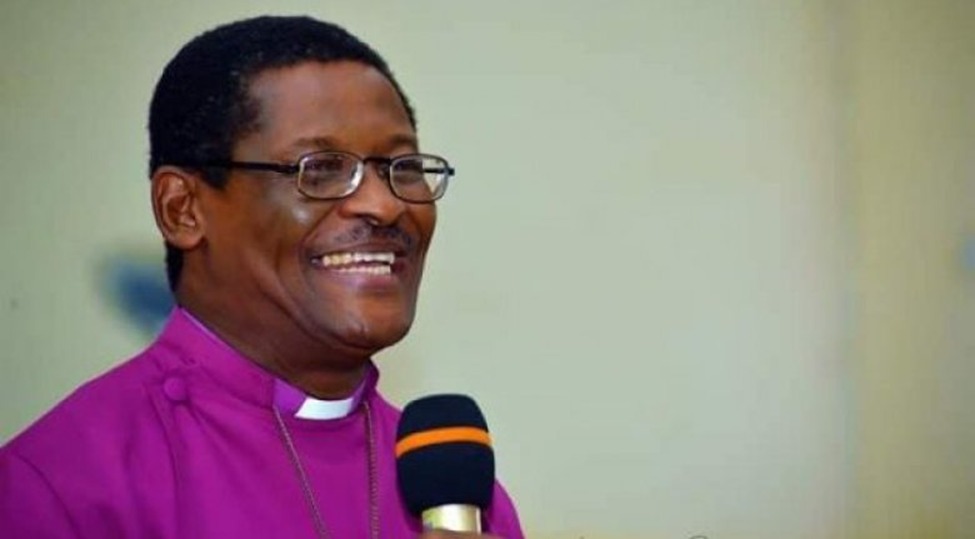
Your Grace,
I am writing this letter to you with a deep sense of respect but also with a burdened heart about the challenges that have wrestled with our beloved global Anglican Communion in recent times. Today, the Church of Nigeria and many of its sister provinces in Africa and Asia stand at a crossroad, because the authority of Scripture, the realities of culture, and the pressures of political laws are colliding in ways that can potentially fracture our global Anglican Union. At the centre of this crisis are the issues of the ordination of women and the acceptance of same-sex relationships within the Church. These matters have become the fault lines of division between the Church of England, the Episcopal Church of the United States, and much of the Global South. And for some of us Nigerians who have dual citizenships and are Knights of the Anglican Church, the situation needs to be normalized.
I want Your Grace to see that this crisis is not simply theological as many of us emotionally think. It is a political imposition and the sooner we accept this truth, the more able we shall be to deal effectively with the challenge. We live in a world where the Church exists under the supremacy of civil authority. This is why, in Britain for example, we have the Church of England, not England of the Church. And in Nigeria, it is the Anglican Church of Nigeria, not Nigeria of the Anglican Church. The nation, in each case, is supreme. The Church whether in Britain or Nigeria has no option than to function within the boundaries of its national laws. For Britain, this means that once the state recognized same-sex marriage, the Church of England must fall into compliance. Therefore, any attempt to refuse wedding gay couples in the UK risks being accused of discrimination under civil law. Naturally, the Church would not want to be seen at loggerheads with the government or people it serves. In Nigeria, where the opposite reality applies, same-sex relationship is a criminal offence that attracts a prison sentence of up to 14 years. Therefore, any attempt to bless or celebrate such a union would not only offend cultural and moral sensibilities but also invite legal sanctions. In both Nigeria and Britain, we see that the Church is caged by opposing political frameworks and consequently thrown into this dilemma that is not of its own making.
Your Grace, in moments like these, the temptation could be strong to walk away from the global Communion, to let the bonds of affection snap, and to stand apart from brothers and sisters whose choices we cannot accept from our own understanding. Indeed, many in the Global South have already taken steps toward separation. Yet I plead that we do not succumb to despair or division. This dilemma, painful as it is, must not break the global Anglican fraternity. Rather, it should be a call for us to rediscover our mission, to face the challenge with courage, and to overcome it with faith rather than yield to the pressure of political exigency.
History reminds us that this is not the first time the Church has been tested. From the earliest days, Christians have continued to live under the shadow of political authority. The apostles themselves declared, “We must obey God rather than men,” when they were ordered to stop preaching Christ. Across the centuries, believers have been imprisoned, exiled or martyred because they chose fidelity to the gospel over compliance with worldly powers. The Church endured the persecutions of Rome, the upheavals of the Reformation, the struggles over slavery, and countless cultural revolutions. Each time, the body of Christ was stretched and tested, and each time it also found renewal and strength. Should we, in our generation, shrink from the test that has come to us?
The ordination of women and the question of same-sex relationships are, of course, not trivial issues. They go to the heart of how we understand Scripture, tradition, and human identity. Yet we must also recognize that it is political law that is shaping the context in which these issues are debated. In Britain and America, civil law compels the Church toward inclusivity of women and homosexuals. In Nigeria, civil law forbids such inclusivity and enforces strict penalties against it. The Church in each context is therefore under political pressure. It has not lost its faith, only that it is constrained by the legal and cultural environment in which it lives. This understanding, therefore, should compel us, as Anglicans, not to judge one another harshly, but to bear one another’s burdens and so, fulfill the law of Christ to love our neighbours as we love ourselves.
Your Grace, I believe the Church of Nigeria can and should play a redemptive role in this regeneration. Our calling is not to cut off our brothers and sisters, or to surrender hopelessly to the dictates of politics, but to chart a faithful path that holds together truth and grace. Without apology, we must affirm the authority of Scripture as we have received it. We must teach our people to live holy and upright lives, even in a world that calls evil good and good evil. But at the same time, we must guard against the arrogance of thinking that we alone see clearly while others walk in darkness. The Church of England and the Episcopal Church are wrestling with pressures very different from ours and we should not only appreciate their problem but also offer them a shoulder of support to lean on. They too are seeking to be faithful, though in ways we may at first find incomprehensible. Our duty is not to scorn them, but to remain in dialogue, to continue to pray for them, and to refuse to abandon the Communion for which Christ prayed when He asked the Father that His disciples may be one.
If we allow this dilemma to break us, the witness of the Anglican Communion to the world will be gravely compromised. What credibility would we have if, faced with political pressure, we responded with division and bitterness? The world is already fractured by nationalism, ideology, and identity politics. Should the Church mirror these fractures, or should it stand as a sign of hope, proving that unity is possible even in the face of profound differences? Should the Anglican Communion give up to political pressure now, it would tantamount behaving like sheep without a shepherd, as if Christ Himself were not the Head of the global Anglican Communion. To remain together, even in the face of threatening tension, is to demonstrate that our faith is greater than our disagreements. It is like the new Archbishop of Canterbury, Sarah Mullally rightfully pointed out in her first speech after her appointment: “If you want to go fast, you go alone; if you want to go far, you go together”.
Your Grace, the Church of Nigeria is strong. It is vibrant. It is growing, even as Western Churches are declining. This strength places on us a special responsibility. We cannot simply retreat into our shelves and watch the Communion crumble because we did not appreciate what our brothers and sisters in the Union were going through “over there.” Instead, we must lead with wisdom, humility, and courage. We must call for dialogue that is honest and loving. We must urge our brothers and sisters not to impose their practices on us, and neither should we impose our government decisions on them. We must advocate for a Communion that respects diversity of practice while upholding a common faith in the life and teachings of Jesus. This is not compromise for the sake of peace. It has to be an expression of our fidelity to the reality that the body of Christ is bigger and more important than any single culture, nation, or political system.
Practically, this would mean creating space within the Communion for provinces to respond differently to issues of gender and sexuality, depending on their own legal and cultural boundaries. It would mean resisting the urge to excommunicate or anathematize those who differ from us. It would mean refusing to let go of our convictions. It would mean walking the narrow path that avoids surrender to political laws and isolation from our global family. Admittedly, such a path will be difficult to walk, but it will also be a powerful witness to the reconciling love of God.
Your Grace, we must also remember that though political laws can be powerful, they are not permanent. What is legal today may be illegal tomorrow, and what is illegal today may one day be permitted. Nations rise and fall, laws change, but the Word of God endures forever. If we divide the Church today on the basis of political exigencies, what will happen when those exigencies change? Shall we then scramble to reunite? Better by far to maintain the bonds of Communion through the storm, trusting that God’s truth will prevail at the end.
Your Grace, I urge you to lead our Church not into withdrawal but into engagement; not into despair but into hope; not into division but into a stronger unity built on understanding and the love of Christ. The Anglican Communion must not be broken by this dilemma hoisted on us by politicians. Instead, it should be refined by it. The trial we face is an opportunity for deeper faith, greater humility, and renewed mission. Let the world see in us a people who, though tested by fire, emerged with their bonds unbroken and their witness undimmed.
I close with the conviction that our strength lies not in conflict with political decisions but in spiritual fidelity. If we keep our eyes on Christ, if we resist both the coercion of the state that results in the temptation of break up, if we remember that the gospel is bigger than any cultural dispute, then we shall not only survive this crisis, it will be the ladder by which the global Anglican Communion would become even stronger in unity. Just as the new Archbishop of Canterbury noted in her first speech after her appointment: “If you want to go fast, you go alone. But if you want to go far, you go together.” Anglicans worldwide must see some light in those words of wisdom. And decide whether we must go fast or far in our global journey with Christ.
May the Lord grant you wisdom as you shepherd His flock in Nigeria and as you speak to the wider Communion. May He grant all of us the grace to bear with one another in love until that day when every fear will cease and the temptation of this present age of the global Anglican Communion to break up turns into a song of praise.
Respectfully and prayerfully yours,
EMEKA
Chief Sir Asinugo, PhD., M.A., KSC writes from the UK