
The recent public altercation between Senator Uche Ekwunife, Governor Charles Chukwuma Soludo, and by extension the governor’s wife, has once again brought to international attention how easily politicking can derail from constructive engagement to become a theatre of mockery. It is a sad and unhealthy development that does not serve the interest of the Igbo nation well, by any stretch of the imagination. The spectacle of respected Igbo leaders exchanging personal insults, questioning family life, marital fidelity and educational qualifications in the marketplace of political discourse is most unimpressive, and it presents to the wider Nigerian community a disturbing picture of a people who cannot conduct their politics with the dignity that the Igbo are known for.
Washing dirty linens in public is not part of Igbo culture. Traditionally, Ndigbo have always valued the sense of community pride and collective dignity. Socially, internal disputes were historically handled at the village level with elders presiding and ensuring that grievances were settled with a focus on preserving the integrity of the community. In a sense, that should have been the procedure here, with the Independent National Electoral Commission, INEC, serving as the community elders.
What was recently witnessed in Anambra politics is the very opposite of that cultural heritage. It was damagingly embarrassing, and portrayed Ndigbo in very bad light. For a people who have long aspired to play leading roles in Nigeria’s national politics, and who continue to press the demand for an Igbo son or daughter to occupy the highest office in the land, that level of political recklessness was counterproductive. It could provide Igbo detractors with a convenient excuse to ridicule, marginalize, and dismiss the Igbo quest for leadership as a day dream.
Obviously, the forthcoming November governorship election in Anambra is a serious matter. It comes at a time the state is grappling with issues that go far beyond personalities. The people of Anambra are looking for solutions to insecurity, especially the menace of unknown gunmen and kidnappers that has devastated communities, thrown families into mourning and slowed the pace of economic growth. They are concerned about unemployment, about how to create opportunities for the young people who are daily streaming out of the state in search of greener pasture. They are asking questions about infrastructure, about how to ensure that roads, hospitals, and schools in Anambra measure up to twenty-first century standards. They are worried about the state’s economy, about how to strengthen small and medium scale enterprises that are the heartbeat of Igbo commerce. These are the issues that politicians should concentrate on in their campaigns. These are the matters that must dominate the airwaves, their posters, their rallies and their debates. Casting tantrums on rivals, throwing mud in the faces of opponents, and turning the sacred process of leadership election into a circus of insults cannot address the real needs of the people and they need not happen for any reason.
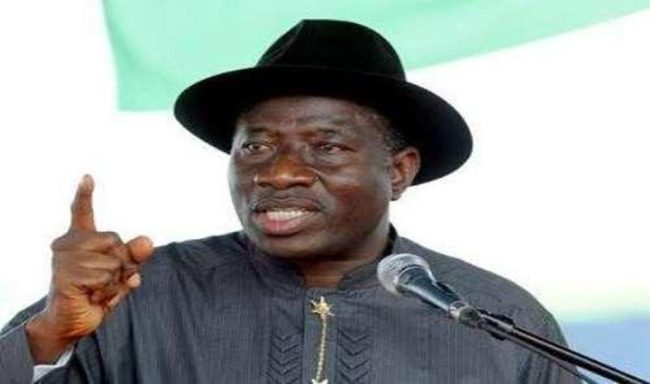
History shows that politics conducted with respect and focus inspires hope in citizens. When former President Goodluck Jonathan declared that his political ambition was not worth shedding the blood of any Nigerian, he set a standard of civility that should at all times guide political campaigns in Nigeria. It was Dr. Jonathan who taught Nigerians that politics should not be a do-or-die affair. He reminded the nation that politics is not war, but a contest of ideas in which the people are the ultimate referees.
Sadly, many of today’s politicians have refused to learn that beautiful lesson. In Anambra, what ought to have been a robust contest of ideas almost degenerated into a playground for accusations and counter-accusations, vendettas and personal attacks. That trend just has to stop. Ndigbo have had enough of this brand of insensitive political campaign that is creating the scope for Igbo detractors to ridicule them. As the most hated ethnic group in Nigeria, the Igbo have enough burdens to bear in Nigeria’s polity without handing adversaries more weapons. Because Igbo ought to know better that every outburst of indiscipline, every scandalous accusation, every insult that flies between rival camps in Igboland is amplified nationally and used to justify the age-old stereotype that Igbo politicians are too divided and undisciplined to govern the country. That is not the image that should be portrayed about Ndigbo by any Onyigbo.
In that respect, the role of the incumbent governor in this saga cannot be overlooked or swept under the carpet. As the sitting leader of Anambra state, Professor Charles Soludo carries the responsibility not only of governance but also of setting the tone for political discourse. When the exchanges between him and Senator Ekwunife began to slide into the realm of the personal and the petty, he had the opportunity to stir the ship of state in a direction that would halt the drift. He could have de-escalated the rhetoric, re-centred the conversation on issues, and reminded his supporters that the eyes of the nation are watching. Unfortunately, he failed to do so. More importantly, it was never the duty of the governor, in the first place, to scrutinize the certificate of a rival contestant. That constitutional duty belongs squarely to the Independent National Electoral Commission, the nation’s election umpire. Even if Soludo genuinely felt that there was a problem with Senator Ekwunife’s PhD certificate, the appropriate and dignified thing to do would have been to lodge a private complaint with INEC and allow the Commission to investigate and take necessary action. By choosing to make the matter public, he effectively started a conversation that quickly degenerated into a distasteful and damaging spectacle. The involvement of his wife, who felt compelled to defend her own integrity in public, deepened the crisis and made the entire affair even more sensational.
It is not the first time that Nigerian politics has seen spouses drawn into the battlefield, but the Anambra example was particularly troubling because it came at a time when the Igbo quest for national relevance requires discipline and focus, not distraction and scandal. The people of Anambra deserve better. The Igbo nation deserves much better. Leadership is a sacred trust, not the provider of an opportunity to exhibit personal vendettas. Politicians seeking office must understand that they are not only representing themselves but also the aspirations of millions who want to see an Igbo Presidency which they consider as overdue.
And so, every campaign speech, every public appearance, every debate is an opportunity to show Nigeria and the world that the Igbo can rise above pettiness and offer politics of substance. To do otherwise is to sabotage that aspiration. The Igbo philosophy of life, encapsulated in the proverb: “Ezi afa ka ego” – a good name is worth more than riches – should guide Anambra politicians during this season. A good name is not built on scandals, by mudslinging, or by reckless words. It is built by dignity, integrity, by issue-driven campaigns, and by a commitment to serve the people.
Democracy flourishes when politicians articulate clear policies that address the everyday struggles of the people they are elected to serve. In the context of Anambra state, this means providing concrete plans on how to industrialize the state, how to secure its communities, how to improve education, how to make healthcare affordable and accessible. It means addressing the plight of farmers who are at the mercy of climate change, middlemen, and insecurity. It means showing the traders in Onitsha, Nnewi, Awka and the rural communities how government intends to support their enterprises with infrastructural facilities, access to credit, good roads and security. It means offering hope to the teeming population of youths that the state will create a future where they need not flee abroad in search of opportunities. These are the things campaigns should be based on. If candidates spend their energy on personal feuds and showing off how rich they have become in office, rather than on these pressing issues, they only succeed in betraying the trust of the people.
As the November elections draw close, it is imperative that Anambra state politicians campaign and elect their candidates with a sense of decorum. They must recognize that their conduct sets the pace for the wider Igbo political agenda. They must rise above insults and pettiness. They must demonstrate that politics can be a noble calling, one that puts the people at the centre. A campaign conducted with dignity will not only inspire confidence among Anambra citizens, it will also send a strong message to the rest of Nigeria that the Igbo are ready for leadership at the highest level. For more than six decades since independence, Ndigbo have been denied the opportunity to produce an executive President. If that aspiration is ever to be realised, then every political contest in Igboland, especially in a strategic state like Anambra, must be conducted with the highest sense of responsibility.
The incidents of the last few weeks have set the eyes of Nigeria and the international community on Anambra state. The insults traded in public are not just damaging to the individuals involved; they are damaging to the collective image of Ndigbo. They could create doubt about whether the Igbo can unite around serious leadership and present a credible front in national politics. That doubt must be immediately dispelled, not confirmed. And the only way to dispel it is for candidates to change course immediately, abandon the politics of mudslinging, and embrace the politics of ideas. It is time to end the washing of dirty linens in public. It is time to restore dignity to Igbo politics. It is time to respect Igbo for who they are and what they represent. It is time for Governor Soludo to call for peace in his state.
Chief Sir Asinugo, PhD., M.A., KSC writes from the UK