
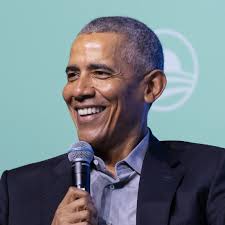
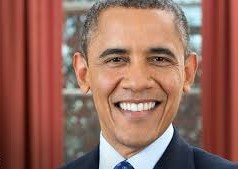
The political rise of Barack Obama represents one of the most compelling affirmations of the ideals embedded in the United States Declaration of Independence, the enduring proposition that all men are created equal and endowed with certain inalienable rights. For centuries, that declaration stood as both a promise and a contradiction within American society, especially for African Americans whose experience often fell painfully short of those lofty words. Obama’s emergence in national politics, his eloquent advocacy in Congress, and his transformative two-term presidency marked the historic period when that promise appeared closer to fulfillment. In many ways, he did not merely preach the American dream, he lived it and demonstrated its meaning to the world.
When Obama entered the United States Senate in 2005, he arrived in Washington at a time when American politics was sharply polarized and the country’s global reputation was strained by wars and unilateral foreign policy decisions. Yet from the beginning of his congressional career, Obama distinguished himself not by ideological rigidity but by a consistent appeal for mutual cooperation, shared humanity, and responsible leadership. His speeches and legislative initiatives reflected a belief that American strength should not be defined solely by military might but by the moral authority that flows from justice, diplomacy, and respect for international partnership.
Obama’s approach challenged a deeply rooted strain of political thinking in the United States of America, one that equated national greatness primarily with military dominance. While acknowledging the necessity for national security, he insisted that real leadership in the modern world required the ability to build alliances, respect international institutions, and recognize the interdependence of nations. This outlook reflected the lessons of a globalized age in which economic, environmental, and security challenges have discreetly crossed borders with unprecedented speed.
One of the earliest and most influential articulations of Obama’s political philosophy came during the 2004 Democratic National Convention, where his keynote address electrified the nation and introduced him to a global audience. In that speech, Obama rejected the politics of division, declaring that there was not a liberal America and a conservative America but the United States of America. The address resonated deeply because it appealed to a collective national identity rather than tribal loyalties. For many Americans, it was a reminder that the strength of their democracy lay not in ideological uniformity but in the capacity to unite across differences.
As a senator, Obama carried this spirit into debates on national security, transparency in government, and nuclear non-proliferation. He worked with colleagues across party lines on initiatives to reduce the threat posed by loose nuclear materials, recognizing that modern security challenges demanded international cooperation. His work reflected a broader conviction that in an interconnected world, no nation—however powerful—can isolate itself from global realities.
When Obama launched his campaign for the presidency, he carried with him this message of unity and shared responsibility. His victory in the 2008 election represented a watershed moment in American history. For the first time, an African American, the descendant of a people who were once enslaved in the very nation he would lead, was elected to the presidency. The symbolic power of that moment reverberated across the globe, demonstrating that the United States was capable of confronting its historical injustices and moving forward, toward a more inclusive understanding of citizenship.
Obama’s presidency coincided with a profound global shift in the nature of power and leadership. The world was grappling with economic instability, climate change, terrorism, and the challenges of globalization. Rather than retreating into isolation or asserting dominance through confrontation, Obama emphasized diplomacy and multilateral cooperation. His administration pursued international agreements such as the Paris Climate Agreement, a landmark effort to address the shared threat of climate change. By encouraging nations to work together on environmental responsibility, Obama reinforced the principle that global challenges require collective solutions.
Perhaps even more significant were the philosophical themes embedded in his public speeches. Obama repeatedly emphasized that the United States could lead not merely through power but through example. In addresses he delivered across the world, from Europe to Africa to the Middle East, he spoke about mutual respect, cultural understanding, and the necessity for dialogue between civilizations. His famous address at Cairo University in 2009 sought to reset relations between the United States and the Muslim world by acknowledging historical grievances while emphasizing shared aspirations for dignity, justice, and peace.
This rhetorical shift represented a deliberate effort to challenge the perception that American power was synonymous with unilateral military intervention. Instead, Obama argued that true national greatness required humility, partnership, and the willingness to listen to other nations. In doing so, he sought to transform the global narrative of American leadership from that of a dominant superpower to that of a cooperative partner.
Obama’s message was deeply influenced by his identity as an African American. The long struggle for civil rights in the United States had taught generations of Black Americans that justice is achieved not through domination but through moral persuasion and collective action. Obama’s own political philosophy drew heavily from this tradition. He often invoked the legacy of Martin Luther King Jr., whose vision of equality and nonviolence had reshaped the American conscience. In many respects, Obama’s presidency represented the political realization of the aspirations expressed during the American Civil Rights Movement.
His speeches on race, particularly in moments of national tension, reflected a rare combination of honesty and reconciliation. Rather than inflame divisions, he encouraged Americans to confront their history by recognizing their shared destiny. By addressing issues of inequality with both candor and empathy, Obama reinforced the fundamental democratic principle that justice must apply equally to all citizens.
The contrast between Obama’s vision of American leadership and the nationalist rhetoric that later emerged under Donald Trump is striking. Trump’s slogan, “Make America Great Again,” emphasized a return to a more assertive and confrontational approach to global affairs. Critics have argued that this philosophy risks portraying the United States as a bully on the international stage, a bully that is bent on antagonizing non-allies and retreating from multilateral commitments. Obama’s approach, by contrast, emphasized engagement rather than isolation and cooperation rather than confrontation.
Yet, even in the face of these contrasting philosophies, the enduring significance of Obama’s presidency lies in the example it set. By rising to the highest office in the land, he embodied the promise contained in the nation’s founding documents, that individuals should be judged not by race or origin but by their abilities and character. His leadership demonstrated that the ideals of equality and opportunity are not merely rhetorical flourishes but principles capable of shaping the direction of a nation.
Throughout his presidency, Obama frequently reminded Americans that democracy is a continuing project rather than a finished achievement. The principles articulated in the Declaration of Independence must be reaffirmed and expanded by each generation. In this sense, the American dream is not simply about individual success but about the collective effort to build a society in which every citizen has the opportunity to thrive.
Obama’s legacy therefore extends beyond policy achievements or legislative milestones. It resides in the broader cultural and moral impact of his leadership. By championing diplomacy, global cooperation, and racial equality, he helped redefine what it means for America to lead in the twenty-first century. His presidency illustrated that strength can coexist with humility and that patriotism needs not exclude empathy for other nations.
For millions around the world, Obama became a symbol of possibility. His story demonstrated that the arc of history, though often slow and uneven, can bend toward justice. In a nation that was once scarred by slavery and segregation, the election of an African American president represented a powerful affirmation that progress is possible. The enduring lesson of Obama’s career is that the American dream is not merely an aspiration spoken in campaign speeches. It is a lived experience that emerges when democratic institutions function, when citizens believe in equality before the law, and when leaders recognize that their power carries a responsibility to promote peace and cooperation.
Barack Obama preached that dream in words that stirred audiences across continents. More importantly, he lived it in a manner that transformed the political imagination of his country and inspired the world. In doing so, he reaffirmed the fundamental truth expressed in the American Declaration of Independence, that all people are created equal, and showed that when a nation truly believes in that principle, its greatest strength lies not in domination but in the power of its example.
Chief Asinugo, PhD., M.A., KSC, is an informed commentator on national and international affairs.


