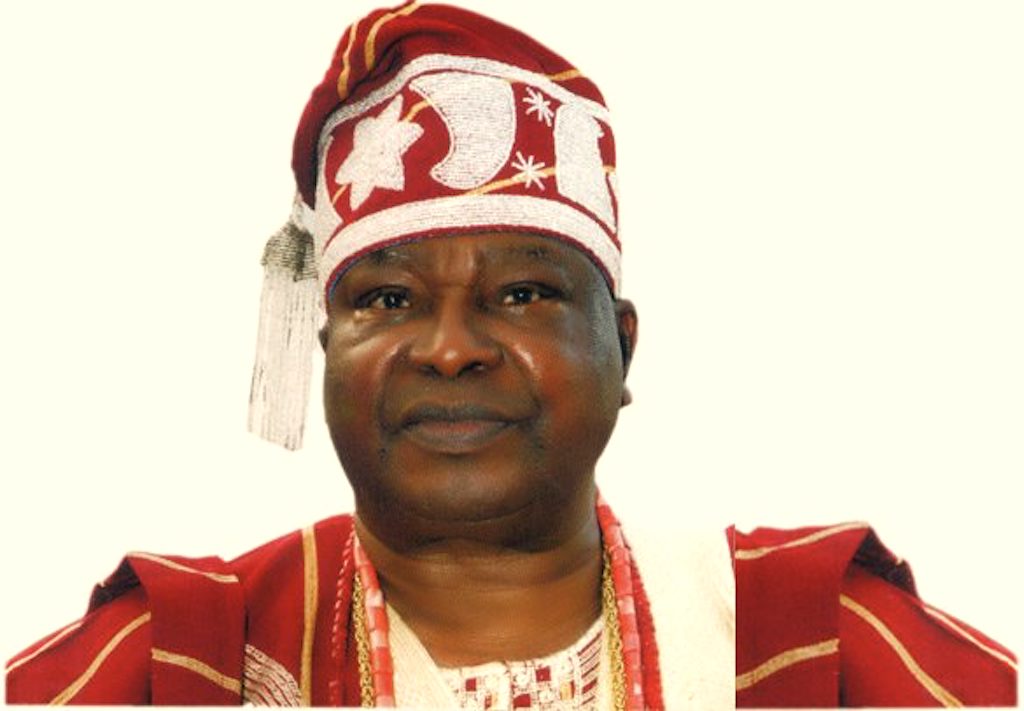
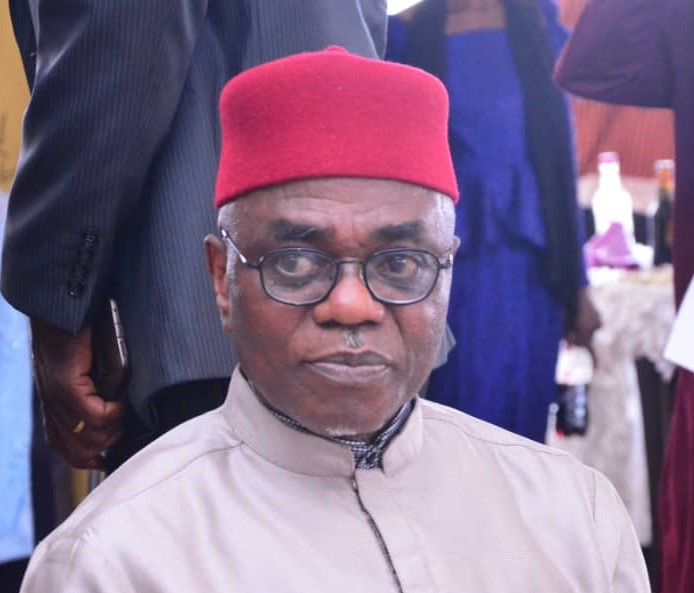
Being excerpts of a paper delivered by Nze Ozichukwu Fidelis Chukwu at the Nigeria Inter-Religious Council (NIREC) First Quarter Meeting on the 30th of April, 2025, at Rockview Hotel, Owerri.
PROTOCOLS
We need not think alike to love alike (“ardua magis res est amare, quam credere ” it is harder to love than to believe) for love’s canvas is painted with diverse strokes of the heart, and its beauty lies not in uniformity, but in the harmony of differences.”
Michael Servetus’
It gives me great pleasure to be asked to address this awesome August assembly today on the very topical issue of
BUILDING MUTUAL TRUST FOR NATIONAL UNITY in our most beloved country, Nigeria.
INTRODUCTION
National unity is a crucial goal for diverse nations like Nigeria, fostering collective progress, sustainability, and representation. Achieving this unity requires deliberate efforts to forge, nurture, and entrench bonds among citizens despite their differences.
Over the years, a lot has been said, tried, and done to establish structures and systems for joint dynamic co-evolution and peaceful coexistence in Nigeria. There have been efforts at segregation in aggregation and aggregation in segregation to achieve national unity and cohesion. Unfortunately, the more efforts that are made, the more the disarray and disenchantment. There is seeming consensus among Nigerians that everything depends and falls on leadership. Consequently, the average Nigeria looks up to the spiritual and temporal leaders for direction. There is a general saying that no nation would be greater than its teachers and leaders. In this regard, the citizens are a reflection of leadership. Unfortunately, there are so many confusions, conflicts, and contradictions as much as trust and confidence deficit. Today, more than any time else in our history, ethno-religious sentiments have been elevated to statecraft.
The outcome is that it is criminal to be law abiding, as the frequent phrases in the vocabulary familiar to our youths are:
* non-indigene
* marginalization
* disenfranchisement
* kill
* rape
* maim…
And all manner of hate speech that debase humanity and discourage pride in Nigerian citizenship and active membership in the United Nations and the Commonwealth of Nations.
The question that should come to the mind of all participants present in this very significant and critical meeting of The Nigeria Inter-Religious Council (NIREC) is:
Has God our Almighty Creator, taken leave of our great country, Nigeria?.
The turnout of notable religious figures in this First Quarter Meeting demonstrates that, indeed, everyone is interested in building mutual trust in the interest of national unity. Therefore, we can rephrase our question, albeit in the declarative rather than in our previous interrogative: Has God not given us the Freewill to choose?
THE GIFT OF FREEWILL
Free will is a precious gift from God, for it lets us love Him with our “whole heart” because we want to (Matthew 22:37). Many religious beliefs emphasize that God has given humans free will in order to allow humans to make choices and decisions; in order to enable humans to have a genuine relationship with God; so that humans can choose between good and evil, for humans to grow morally, and for humans to develop spiritually.
The dominant view of the relationship between free will and moral responsibility maintains that if humans do not have free will, then humans are not morally responsible for their actions. But how can we apply this to the history of human civilization?
The concept of free will is a complex topic in politics, philosophy, psychology, and neuroscience. Thinkers like Rene Descartes and Thomas Hobbes made much of this concept during the European Renaissance. Suffice it to say that most individuals strongly believe they have the capacity to make conscious choices, and they are responsible for their actions. However, the concept of free will is closely bound with our sense of moral responsibility. To what extent can you as an individual be held accountable for your actions and inactions? Central to the legal systems of most societies, particularly in criminal law, is the concept of free will, which is the foundation for holding individuals accountable for their actions. This concept is essential for deterrence: if potential offenders know there will be a consequence for their crime, they will refrain from crime.
How does this translate in intra-faith and interfaith relations? One can boldly assert that in the religious and faith communities, to be a Nigerian is a miracle. There’s no respect or regard for the sensitivities and sensibilities of others. The only considerations are religion, tribe and class with complete anaesthetisation of conscience.
In the words of Xavier Raurich:
A society built on mutual respect creates a space where people can truly connect, appreciate one another, and grow together. At its heart, mutual respect is about recognizing the basic dignity that every person deserves, no matter who they are or where they come from. When we approach others with respect, we open the door to empathy, understanding, and kindness.
Mutual respect helps prevent the kinds of divisions and conflicts that often arise from misunderstanding or prejudice. Nothing can be better than joint dynamic co-evolution and peaceful coexistence in a multicultural, multi ethnic and multilingual society like Nigeria.
Unfortunately, everywhere about us today are multiple principals and plural principles that treat human life and dignity with little or no respect. There is blood flowing everywhere to the pain of many and the joy and excitement of many others as well. I ask: how can scorch-earth policy be acceptable in the 21st century in a country where there is no war and no battle frontiers?
In this regard, I am NOT UNAWARE of the great challenges that our religious leaders face. Be that as it may, it is important to emphasize that the Key Roles of NIREC, should give it enough leverage to weather any storm that confronts our great nation, as a ship that houses over five hundred and eighty ethnic groups with different faiths as the mainstay of their morality. NIREC is led by the most outstanding religious leaders and respectable people in Nigeria.
THE KEY ROLES OF NIREC:
Among the key roles of NIREC are:
1. To Promote Inter-Faith Dialogue: NIREC brings together Christian and Muslim leaders to foster understanding, tolerance, and cooperation, helping to reduce conflicts and promote peaceful coexistence.
2. To Resolve Conflicts:
By providing a platform for dialogue and mediation, NIREC can help resolve disputes and address issues before they escalate into full-blown conflicts.
3. For Advocacy and Education: NIREC can advocate peace, tolerance, and understanding while also educating its members and the broader public on the importance of inter-religious harmony.
All these functions must be pursued in line with the fundamental international and regional principles of human rights, which Nigeria has signed and ratified or acceded to. Some of these principles include the International Covenant on Civil and Political Rights (ICCPR) and the African Charter on Human and Peoples’ Rights. Nigeria also has its own constitution, which guarantees fundamental human rights. Similarly, the 1999 Constitution of the Federal Republic of Nigeria guarantees fundamental human rights, including the right to life, dignity of the human person, liberty, and fair hearing, among others.
Flowing from the above, I strongly believe that men and women of integrity should not allow sentiments and self-interest to override commonsense and public good. Religious leaders should remain always driven by the fear of God in consonance with the law of the land.
Embedded in the Marble wall of Humboldt University’s grand main building in Berlin is the famous quote of Karl Marx,
“Philosophers have hitherto only interpreted the world in various ways; the point is to change it.”
Below, we briefly itemize some but not all the key strategies that could be employed to achieve positive goals , improve Inter-Religious and Intra-faith relationships.
THE KEY STRATEGIES FOR DRIVING NATIONAL UNITY
This is not rocket science. However, if there’s a will, there’s a way. Let’s examine some strategies below.
1. Integrity . Within the ambit of integrity are honesty, sincerity, justice, and fairness, and of course, courage. Some will say, “Why did you not put the fear of God first?” To be frank with you in the Nigerian lexicon, I have been very reluctant to do that because a lot of atrocities are today boldly and publicly committed in the name of God. I believe that whoever has a conscience must be driven by respect for the sanctity of the human person and, by extension, the fear of God. Like I said earlier, if there is a will, there will be a way.
2. Citizenship Mobilization: Engage citizens in national development initiatives, promoting a sense of ownership and shared identity.
3. Sensitization and Education: Educate citizens on the importance of unity, diversity, inclusivity, and religious tolerance, dispelling prejudices and misconceptions that drive ethnic chauvinism and religious bigotry, and quest for territorial aggrandizement.
4. Inclusive Policies and Programs: Implement policies that promote equality, justice, and inclusivity, addressing the needs of diverse groups.
5. Community Engagement: Foster community initiatives that bring people together around shared goals and interests.
6. Leadership and Governance: Ensure effective, accountable, and inclusive leadership that promotes national unity and development. More importantly is living by example.
By Power of Example, I mean infectious and transformational positive action. Distinguished Senator Hope Odidika Uzodinma Governor of Imo State has made it a routine to breakfast with Muslim faithfuls during their fasting periods. When sponsoring Christians on Pilgrimage, he also extends the same brotherly gesture to Muslims in our midst to enable them worship in Jordan and Jerusalem, Mecca, and Medina as appropriate with all expenses paid.
My friends, brothers and colleagues the very saintly Dr Hamza Rafindadi Zayyad and quintessential public servant Chief Omowole Kuye both of blessed memory were married to Christian wives, lived most examplary lives and raised beautiful families irrespective of their religious affiliations.
It is common knowledge that His Excellency President Bola Ahmed Tinubu, a staunch Muslim is married to a Christian Pentecostal Pastor, Senator Oluremi Tinubu and both have enviable relationships.
The President and the amiable SGF are of different tribes and religious affiliations, yet they are very well bounded.
It’s incumbent on NIREC to ask Mr. President to step out with the same values to tolerate dissent and accommodate diversity to avoid adversity and national calamity.
7. The value of International Support and Frameworks: The United Nations’ Sustainable Development Goals (SDGs) provide a framework for achieving national unity and development, particularly Goal 16, which promotes peaceful and inclusive societies. National Sustainable Development Strategies (NSDS) emphasizes the importance of integrating economic, social, and environmental objectives, as well as broad participation and effective partnerships.
CHALLENGES AND OPPORTUNITIES
The policies that seek to address some historical grievances and managing diversity are crucial in achieving national unity. Yet, they are not without their own challenges. However, fostering this sense of shared citizenship and promoting cross-cultural understanding can help build trust and unity. That is why effective governance and leadership are essential in promoting national unity and development.
In this regard, the National Question including General Yakubu Gowon’s 1970 Declaration of “No Victor, No Vanquished” is recurrent with the burdens of the 3Rs:
(i) Reconciliation/Reintegration;
(ii) Rehabilitation;
(iii) Reconstruction;
and the question of nationhood and respect for the Rule of Law stares us on the face. Why is full federalism impossible. Why do we continue living in denials?
Is it not time to start cleaning the mess and engage in restoration and healing?
Recall the wisdom of Emperor Haile Sellassie of Ethiopia in “There is no power or authority without responsibility, and he who accepts the one cannot escape or evade the other.” National unity is beyond the ethics of the boardroom; it calls for positive and impactful. I recall that during the Igbo must go crisis in North, His Eminence the Sultan of Sokoto, stood up and spoke out. He instantly calmed the storm. It was a rare show of courage and exceptional leadership.
I know that the President, Governors, Principal Officers of the various legislative assemblies, as well as the shakers and movers of the Nigerian State, are all at the beck and call of Spiritual and Temporal Leaders; but only when these spiritual leaders act as a Collective with courage, in their resolve to seek justice, fairness, equity, and the dignity of human life. Any opportunity you have should be used to speak truth to authority. They also look up to you for directions and guidance.
As the Poet reminds us below:
What was, is no longer;
What is, is not worth preserving;
What will be, is not yet;
Don’t look elsewhere for the secret of our evils.
It is in us.
UNCOMMON PRIVILEGES, UNCOMMON ROLES IN CONFLICT RESOLUTION
Among the unique roles and uncommon privileges of this most revered committee are to address the various challenges of conflict resolution in Nigeria, viz:
1. To ensure the restoration of peace and return of His Excellency Governor Siminalayi Fubara to his seat as the democratically elected Governor of Rivers State along with the members of the House of Assembly.
2. To foster an end of Farmers Herdsmen clashes across the regions. And inculcate a sense of nationhood.
3. To bring an end to banditry and violence in Nigeria and debilitating sense of entitlement. Discourage the urge for territorial aggrandizement.
4. Ensure there is freedom for all prisoners of conscience.
5. Ensure the release of Nnamdi Kanu as ordered by the courts.
6. Foster peace and religious tolerance among peoples of different faiths.
7. Declare Emergency on unemployment.
7. Restore the structures and systems that sustain the growth and development in our beloved country, Nigeria.
CONCLUSION.
I am glad to note that President Olusegun Obasanjo GCFR PhD FNSE helped facilitate the establishment of this historic institution. President Olusegun Obasanjo will go down in history as one of the best things that happened in Nigeria. He pursued nation building with missionary zeal and Apostolic ideal, holding his life in the palm of his hands, not willing to sacrifice it with a spirit of weariness and bravado but ready to lay it down if duty demands.
By providing a platform for dialogue and mediation, NIREC can help resolve disputes and address dissentions before they escalate into full-blown conflicts. The function of NIREC in this regard is rare and uncommon. Indeed, this function supersedes every other privilege. Our prayers are that you use your position to do the needful. Address hyper-polarization and engage in constructive and positive advocacy. As we also pray that the Good Lord will lead you, guide you, protect you, prosper you and preserve you as you go out to do the needful with courage and in good conscience in His honour and praise for the unity, peace and progress of our dear nation Nigeria.
History beckons;
Time is ticking;
The time is now;
To Do Right Things Right.
Thank you, and God bless us all. 🙏🙏🙏