
LocalNewsOpinionStyle & Fashion

Ikechi Emenike’s Court of Appeal judgement versus Uche Ogah’s Federal High Court judgement: A riposte By Ndubueze Okoli

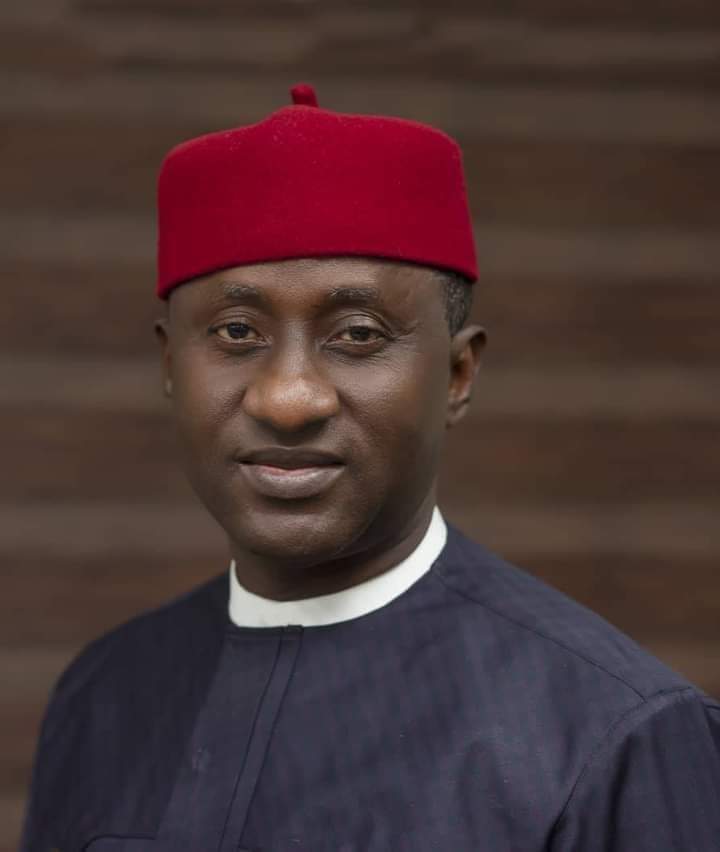

Ikechi Emenike approached a state High Court (Umunneochi Division) and obtained judgment of court which mandated the APC and INEC to publish his name as Abia APC gubernatorial candidate. His claim before the court was that it was not a pre-election matter and for which the state high court was clothed with jurisdiction. He sued only the APC and INEC.
- Uche Ogah applied by seeking leave of Court of Appeal to appeal against the judgment as an interested party. Court of Appeal refused the application because he applied after 14 days earmarked by the constitution for such application. Court of Appeal Owerri did not affirm Ikechi Emenike as the candidate of the Abia APC at that level. It was just a mere application On Notice to appeal against the said judgment as an interested party. It would be recalled that Hon. Justice Benson Anya withheld the signed copy of his judgment longer than 14 days which denied Dr. Ogah such a window.
- Hence, Uche Ogah was not a party to the suit or appeal, as the case may be.
- Even a kindergarten knows that a non-party to a case cannot be bound by a judgment he is not a party to. In other words, the judgment of the Umunneochi High Court and the Court of Appeal are not binding on Uche Ogah. There are several Supreme Court authorities on this sacred principle of law. See the cases of OYEYEMI & ORS V OWOEYE & ANOR (2017) LPELR-41903 (SUPREME COURT): Per Justice Sidi Dauda Bage: “The Effect of order (s) made against person not joined as a party is that such order is a nullity and of no effect”; In COTECNA INTL LTD V CHURCHGATE NIG LTD (2010) LPELR-897 (SUPREME COURT): Per Justice John Fabiyi: “It goes without saying that a judgment given with an order against a person who ought to be a party but was not duly joined is to no avail”.
- On the other hand, the judgment by the Federal High Court is binding on all parties including Ikechi Emenike because he was a party to the suit.
- Again, assuming but without conceding that Court of Appeal had affirmed Ikechi Emenike as candidate of the Abia APC as he is boasting about, why did he not raise it as a ground of abuse of court process in his preliminary objection to the Federal High Court suit? Because he knew that, that Court of Appeal judgment was a non-starter in that necessary party (Dr. Uche Ogah) was not joined. And also, he admitted that it was not a pre-election matter. And as such, his head could not have been shaved in his absence.
- Sequel to the Further Amended Originating Summons filed before the Federal High Court, Ogah sued Ikechi Emenike, APC, Abdullahi Adamu, INEC and Dan Eke, the latter joined upon his application to be joined as interested party. By this, all necessary parties for the proper determination of the case were parties unlike Ikechi Emenike’s much-touted Court of Appeal judgment.
- All parties before the Federal High Court exchanged briefs and issues joined. Court arrived at its well-considered judgment after analysing all briefs of argument filed (6 volumes in all).
- Page 12 of the judgment is instructive and is partly reproduced here: “In my view, the core issue for determination in this suit is who, as between the plaintiff (Dr. Uche Ogah) and the 1st Defendant (Ikechi Emenike) is the legitimate and valid candidate of the 2nd Defendant (APC) in respect of the 2023 Abia State Governorship Elections? The answer for this court is not far-fetched and can be resolved by using the Counter-Affidavit filed on behalf of the 4th Defendant (INEC)…In the face of the contentions by all parties, it is safe, prudent and in accordance with the law for this Court to have recourse to what the Monitor/Umpire states as the correct version of what transpired with regards to the 2023 APC primaries for the office of Governor in Abia State.”
- Paragraph 4 of INEC Counter-Affidavit bares it all and the court further remarked under page 14 of its judgment: “How can this court shut its eyes to the very clear, categoric and emphatic averments in paragraph 4 of INEC affidavit? The sum total and implication of the averments are to the effect that INEC, in the discharge of its statutory responsibility, did in fact monitor the direct primaries of 26th-27th May, 2022 that produced Dr. Uche Ogah as the candidate of the APC for the 2023 Abia State Governorship Elections”.
- Continuing, the court judicially affirmed that what the APC, indeed ordered for, was direct mode of primaries, as can be gleaned from Exhibit 1 attached to INEC Affidavit of fact. The court accorded the letter full weight, even as it further held that the letter which APC sent to INEC on direct primaries rendered Ikechi Emenike’s argument of indirect primaries under paragraph 1 of his final written address untenable. Therefore, it has been judicially affirmed that direct primaries were what took place in Abia State by the APC.
- The court further held that APC, by the direct primaries, monitored by the INEC, in full compliance with Section 84 of the Electoral Act, duly nominated Uche Ogah as its Governorship candidate for the Abia State Governorship election and that the direct primary was in substantial compliance with the provisions of the Electoral Act and therefore, lawful and valid.
- The court further held that: “having conducted direct primaries in line with Section 84 of the Electoral Act and same having been monitored by the INEC, it was no longer open to APC to conduct any other primary and in particular, the purported indirect primaries that produced Ikechi Emenike as the purposed candidate of the APC for the Abia State 2023 Gubernatorial elections”.
- In sum, this Federal High Court judgment emanated from the suit where all necessary persons were parties and which sought to determine who, amongst the contending persons, is the rightful candidate for the party’s gubernatorial candidate. It has been judicially decided that Uche Ogah is the candidate.
- The judgment is full and enforceable forthwith in line with Section 287 (3) of the Constitution. And also, being majorly declaratory reliefs, it cannot be stayed. It can only be appealed against, just like some parties have already done.
- And if Ikechi Emenike believes he already has Court of Appeal judgment in his favour as he has been bragging, he is challenged to not appeal against this Judgment of the Federal High Court.
- There are conditions precedent before a superior court’s decision binds a lower court. More than any other thing, aside that the parties must be the same, the issues must be one and the same. In Ikechi Emenike’s appeal before Court of Appeal, the gravamen of the appeal was a non-pre-election matter, whereas the Federal High Court just decided on a pre-election matter.
Okoli is a lawyer and public affairs analyst