
For decades, the industrious men and women of the South East have been the engine of Nigeria’s commercial life, spreading enterprise across every city and corner of the nation. From the busy corridors of Alaba International Market to the bustling rows of the Trade Fair Complex in Lagos, Igbo traders were always the symbol of resilience, hard work, and adaptability. But now, events of recent months, underlined by the demolition of properties, displacements, and the destruction of investments built over decades have shaken that foundation of trust between these entrepreneurs and the state where many of them had established their businesses.
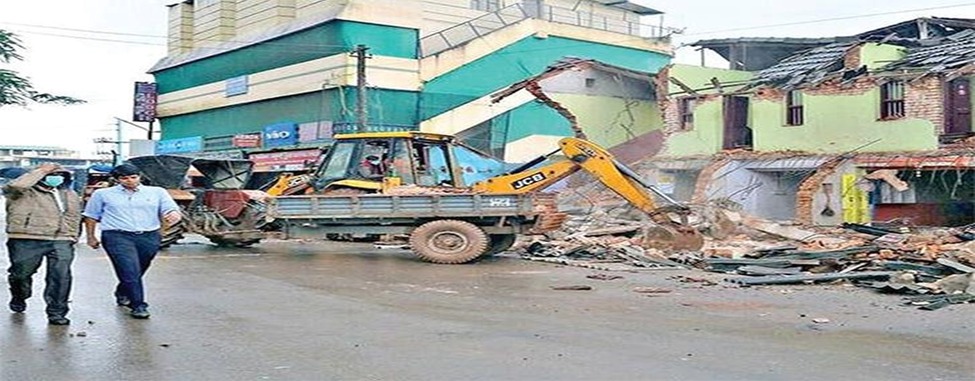
The demolitions in Lagos, particularly around the Ojo and Trade Fair areas, were officially described by the Lagos State Government as part of an urban renewal and enforcement of planning laws. But for thousands of Igbo businessmen and women whose shops and warehouses were bulldozed overnight, it was a bitter reminder that their prosperity in other people’s lands could be transient; that they were not dependent on the genuineness of their sweat and their labour, but on the unpredictable stroke of political or bureaucratic decisions.
The image of traders standing helplessly and watching tearfully as excavators reduced their life investments to rubbles struck a familiar chord across the South East. It rekindled the painful memories of dispossession, of marginalization, of the silent understanding that, no matter how much wealth they built elsewhere, they remained guests who could be asked to leave at any time.
The Igbo have a long memory of such betrayals. After the civil war, their properties in many parts of Nigeria were declared “abandoned,” seized without compensation, and reallocated to others. Their attempts to rebuild were often met with subtle or open discrimination. Yet they returned to commerce, believing that enterprise was a neutral language that transcended politics and ethnicity. Lagos, with its ports and population, became the melting pot of that dream. The Igbo prospered there, built homes, educated their children, and contributed immensely to the tax base of the state. But the recent wave of demolitions, whether they were for political optics or urban planning, reopened an old wound and drove home a harsh reality: the sense of belonging many Igbo traders thought they had secured in Lagos was more fragile than they had ever imagined.
It was in this context that the decision of South East entrepreneurs to relocate their core businesses back home must be understood. It was not an act of anger or vengeance. It was an awakening, a sober realization that sustainable security of investment always begins with ownership of the soil beneath one’s feet. Reports from the South East Business and Investment Summit indicate that these Igbo entrepreneurs have earmarked a massive ₦50 billion for the resuscitation of the traditional apprenticeship system and for funding small and medium enterprises in the region. It is a bold and symbolic gesture, signalling both a return to roots and a renewed determination to build a self-sufficient economy, knowing that freedom comes in many ways.
The choice of the apprenticeship scheme as the anchor of this new movement is both historic and strategic. The Igbo apprenticeship model has long been one of the most effective wealth redistribution systems in Africa. Under it, a master trains an apprentice for some years, not only in trade but in discipline, negotiation, and ethics. At the end of the training, the apprentice is “settled.” He is given a startup capital to begin his own business. The same went for the female citizens. This system produced generations of independent entrepreneurs who dominated Nigeria’s informal economy. But in recent years, the scheme had waned, eroded by urban pressures, consumerism, and lack of structured support. The decision to revive it, now backed with ₦50 billion, would decidedly reawaken the entrepreneurial DNA of the South East region and provide a model of grassroots economic empowerment the rest of the country might possibly emulate if they can.
But, this repatriation of business will not be without its challenges. The South East, though rich in human capital, faces real infrastructural deficits. Roads are poor, power supply is unreliable, and security has become a growing concern in some areas. These obstacles can frustrate even the most patriotic investor. It would be naïve to assume that the mere relocation of businesses will automatically produce prosperity. What it requires is careful planning, collaboration with state governments, and a determination to rebuild not only economic structures but trust in public institutions in the region.
Entrepreneurs returning home must learn to balance emotion with strategy. They must push for a business environment that rewards efficiency, protects property rights, and supports innovation. They should seek partnerships with local governments to ensure that new industrial clusters have proper roads, reliable energy, and digital connectivity. State governments in the region, in turn, must rise to the occasion. They must see this relocation as an opportunity to reinvent their economies, to provide industrial parks, tax incentives, and transparent land acquisition systems that will continue to attract both indigenous and foreign investors.
At the early stages, these returning entrepreneurs will encounter difficulties. Many will face resistance from local authorities steeped in bureaucratic inefficiency or corruption. They may also encounter hostility from petty rivals who view their return as competition rather than opportunity. There will be logistical frustrations, the scarcity of raw materials, limited access to ports, and higher transportation costs. But none of these should discourage them. They must remember that Lagos itself did not become an economic giant overnight. It was built through years of sacrifice, visionary leadership, and a willingness to take calculated risks. If the South East can replicate even a fraction of that focus, its transformation would be nothing short of extraordinary.
The Igbo must also rediscover the communal spirit that once made their markets flourish. The apprenticeship system worked because it was built on trust, mentorship, and collective progress. The new generation of entrepreneurs must avoid the mistakes of individualism and greed. They should form cooperatives, joint ventures, and industrial clusters that share resources and reduce costs. The spirit of “onye aghana nwanne ya” — let no one be left behind — must guide this new economic renaissance. In doing so, they will build not only wealth but resilience and global respect.
Another area that requires urgent attention is youth engagement. The South East is teeming with energetic young people, many of whom are unemployed and disillusioned. The returning entrepreneurs should see them as an asset, not a threat. Through vocational training, mentorship, and digital entrepreneurship programmes, these youths can become the backbone of the new regional economy. The apprenticeship scheme should evolve to accommodate modern trades — coding, logistics, creative arts, and renewable energy — so that the South East does not only rebuild what it lost in Lagos but leap forward with great confidence into the future.
There is also a moral dimension to this movement. For too long, the Igbo have been told that their loyalty to Nigeria is suspect, that their success must always be tempered by suspicion. Every election season brings new slanders, every policy shift a new form of exclusion. But by building thriving enterprises in their homeland, they can finally redefine what inclusion means. Economic power is the surest path to political respect. A prosperous South East will command attention not through agitation but through results. When factories hum again in Aba, when tech parks rise in Enugu, when Anambra exports finished goods instead of raw materials, Nigeria will have no choice but to acknowledge that the Igbo spirit cannot be suppressed by demolitions or prejudice. Still, the entrepreneurs must not romanticize homecoming. Nostalgia alone cannot sustain industries. They must innovate, adapt to global trends, and leverage technology. E-commerce, branding, and export logistics must become second nature. They should seek professional management structures, engage Diaspora expertise, and link up with regional development banks. The ₦50 billion fund is a good start, but it must be managed transparently, free from political interference, and directed toward viable enterprises rather than token grants. The lessons of Lagos, that overreliance on political goodwill can destroy decades of work, must never be forgotten.
At the end of the day, this movement is about dignity. The title of my article captures the spirit of the new resolve: “In the South East, nobody will dispossess, expropriate and humiliate them anymore.” It is a statement of defiance, but also of hope. It is the assertion of a people tired of being treated as outsiders in a nation they helped so much to build. It is the conviction that home is not just a refuge from injustice but a platform for renewal. If the Igbo can channel their collective genius into rebuilding the South East, they will not only secure their future but also enrich the soul of Nigeria.
Lagos may have taught them the science of trade, but the South East will teach them the meaning of ownership. And in that ownership is their freedom, the kind of freedom no government, western or northern, can demolish.
Chief Sir Asinugo, PhD., M.A., KSC writes from the UK


Nice