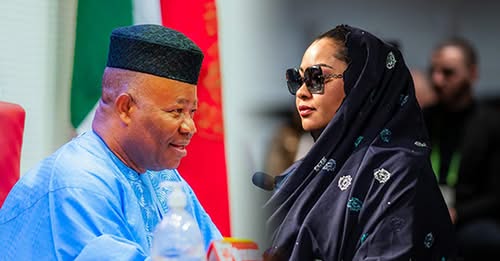
The recent airport drama involving Senator Natasha Akpoti-Uduaghan and immigration officials who she alleged seized her passport has thrust into sharp relief a fundamental truth that too many in high public offices seem to forget: the office of President of the Senate of the Federal Republic of Nigeria is not one that wields or should wield executive power. The Nigerian constitution is very clear on that. Yet, sometimes, the Senate President’s public conduct suggests he believes otherwise. And many bored Nigerians are beginning to believe that it is high time the fantasy is checked.
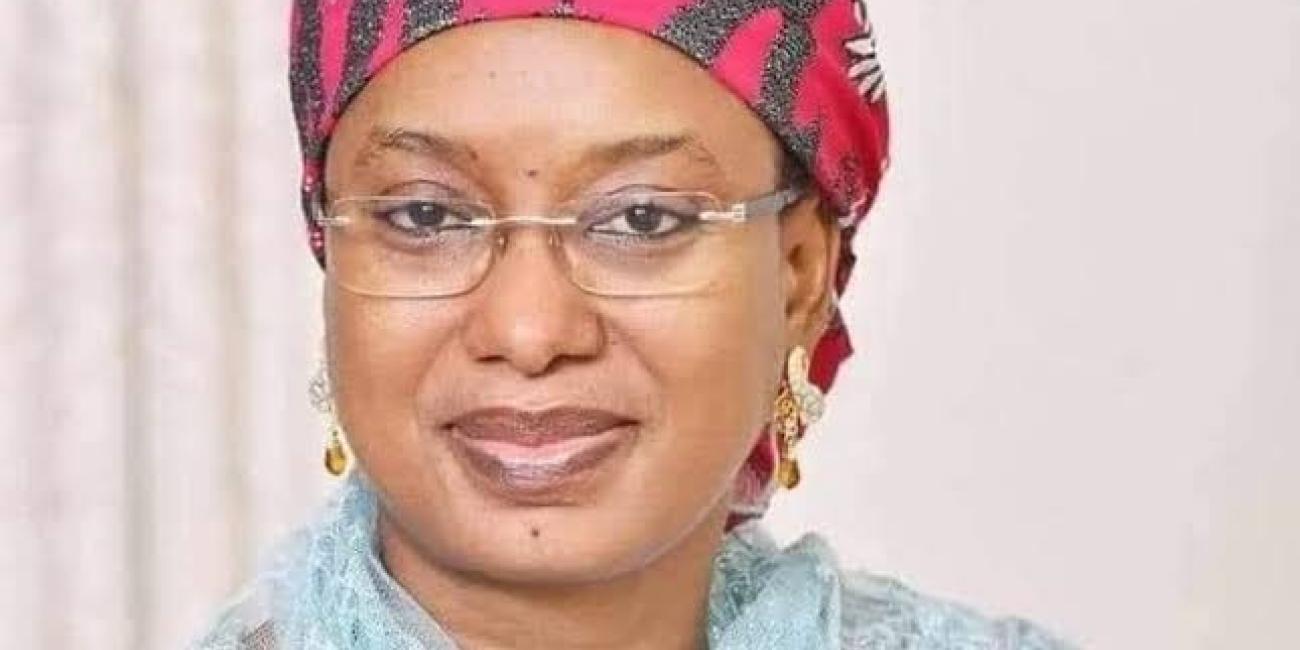
In the viral video that nearly set social media ablaze this week, Senator Akpoti-Uduaghan appeared at the airport live, visibly frustrated, asserting that her passport had been withheld by immigration officers just as she was about to travel. She claimed the directive came from the Senate President and that he ordered the passport withheld because, in his alleged words, each time she travels abroad she “spoils the country’s image” by giving interviews to international media. The next day her passport was stamped and released. But the damage had already been done.
The fact Nigerians should be considering is that the office of the Senate President is strictly within the legislative arm of government. Under the 1999 Constitution of the Federal Republic of Nigeria, legislative power is vested in the National Assembly. Executive power is vested in the President of the Federation, and can be exercised by only him or by his Ministers. The Senate President is not the Chief Executive of the Federation. He does not command the Armed Forces. He does not issue executive orders except within the procedural confines of the Senate. He has no constitutional authority to direct other arms of government to act and certainly not to detain or withhold the passport of a sitting Senator. He may preside over debates, guide the work of the Senate and represent the Senate externally but he does not exercise executive power.
And this brings us to the central point that the Senate President, by allegedly directing immigration or customs officers to withhold a senator’s passport and prevent her from travelling, has breached the constitutional boundary between the legislature and the executive. If the allegations are true, and public disgust and the senator’s personal account give serious credence to them, he had behaved as though he held unbridled executive authority when, in fact, he holds none.
Beyond this incident, the Senate President’s tenure has been marred by multiple controversies that further suggest an escalating pattern of overreach and disregard for institutional boundaries and public accountability. Within his first six months in office, there were at least ten documented controversies. Among them were the “holiday bonus” gaffe when he publicly claimed “a token has been sent to our various bank accounts” for senators’ holidays, only to withdraw the statement minutes later when the cameras were still rolling. His “let the poor breathe” comment during plenary, at a time when millions of Nigerians faced crushing hardship, was widely interpreted as tone-deaf and mocking of genuine suffering of fellow Nigerians. Then there was his alleged manipulation of committee appointments, privileging loyalists, narrowing the voice of dissent within the Senate and further allegations of bending the chamber toward the executive’s will rather than preserving its independent constitutional role.
And now, with the alleged passport seizure, the pattern becomes deeply worrying. If, for whatever reason, a presiding officer of the Senate believes he can trigger immigration or customs agencies to act on his personal directive, circumventing court orders and denying travel rights to a member of his own chamber, then we have moved far beyond political misstep into institutional threat. The question must be asked: does the Senate President believe he is above the Constitution? Does he believe that in his person the legislature becomes executive? The answer must be a resounding no, and for the people of Nigeria, reclaiming that constitutional truth has become urgent.
When Senator Akpoti-Uduaghan declared, “I have committed no offence. And there is no order from the court to withhold my passport and deny me travelling,” she struck at the heart of constitutional governance. The Constitution does not countenance arbitrary restrictions of movement without process. The fundamental right to personal liberty and freedom of movement are protected, unless they are lawfully curtailed. And certainly such circumvention of process cannot be justified by a mere allegation that a senator “spoils the country’s image” when speaking with international media. That kind of vague allegation does not give license to override statutory safeguards.
Let us be clear on this: the Senate President has many responsibilities. He can coordinate the plenary, oversee debates, guide legislative agenda, ensure committees are constituted, represent the Senate in national functions and yes, he must act with the decorum and independence that the office demands. But he does not have the power to order the immurement of a senator’s movement. He does not have the power to instruct immigration or customs to withhold passports without due process. He does not have the power to treat the Senate as his personal fiefdom. The Constitution was written exactly so that no single branch of government dominates the others. When any officeholder forgets that, the door opens to tyranny, contempt for the rule of law and the erosion of democratic governance.
The Senate President must understand that the path of impunity he appears to be walking is dangerous not just for his own legacy, but for the integrity of the institution he leads. He must understand that he is not a mini-executive president. He is not the autocrat of the upper chamber. He is the first among equals in a legislative body whose legitimacy rests on separation of powers, checks and balances, and the fidelity to the Constitution. His actions must reflect these realities.
Therefore, if for any reason the allegations are brought under scrutiny and are substantiated, the Senate itself must act and quickly, not any more as his echo chamber, but as a serious-minded guardian of the constitution. The Senate must demand transparency: how and why was a senator’s passport withheld? On whose lawful instruction? What court order authorized it?
There is no legacy in treating the Senate like an extension of the Executive Arm, or worse, a personal asset. Democracy is not preserved by titles, but by limits. A senate president who forgets the limits of his office ceases to become the guardian of Parliament. He becomes its imprisoner. A senator whose movement is restricted without due process is not seeing the power of the Senate strengthened, she is seeing it weakened before immigration officers. And Nigerians who are watching all of this will not easily forget that it happened. The constitution is unambiguous on these issues. It is the President of Nigeria alone that should wield executive power. The Senate President does not have such powers. And if the Senate President refuses to acknowledge that truth, he would not just be defying a letter of the law, he would be defying the spirit and the very essence of Democracy.
Chief Sir Asinugo, PhD., M.A., KSC, writes from the UK