

 By Isiah Christie
As complex of a system New Jersey boasts in regards to its transportation – featuring an intricate web of above ground trains, subway systems, and buses – commuters still feel flustered with its platform-to-patron connection. Many feel as if the state could benefit from more direct explanations of transportation readiness, including possible system updates or remodeling. After all, what good is a dedicated transit application that doesn’t even provide consistent times and dates?
The NJ Transit app, which is slated to celebrate the ten-year anniversary of its release this September, still possesses a sense of primitivity that holds back its potential. While its interface and features have both involved solid updates in the past several years, it grossly lacks active notification capabilities – and that may be more important than the glitz and glamour of a pretty app with perceived improvements. For example, late light rail and bus arrivals are not consistently reflected in the app with alerts or time changes – it simply sticks to its assumed regular schedule, complete with ride intervals that aren’t necessarily consistent on a day-to-day basis. This creates natural confusion for commuters, who may be expecting a train to arrive at a certain time to make an event but are met with a late carriage that they had absolutely no expectation for.
The lack of physical signage is also a problem – most light rail stations are accompanied by light-up mini-billboards that showcase the next arriving train, but the said billboards are often out of order or outright incorrect. They do not update in real-time to reflect an earlier-than-usual or lagging train, rather assuming that it will always come at its scheduled time. This can lead to a sense of false expectation for passengers, who may miss a train that came too soon or wait in bitter conditions with no update on their incoming ride – and this in itself is a majorly toxic ignorance from the NJ Transit administration.
 Considering there was just a 3% fare hike in July for “funding”, improvements should arrive alongside the price increase. Instead, the system has attached to its outdated infrastructure with little deviation, and looks to remain an exhausting sight for sore eyes – and legs waiting for transit – in a period of time where public transportation should be efficient and modernized.
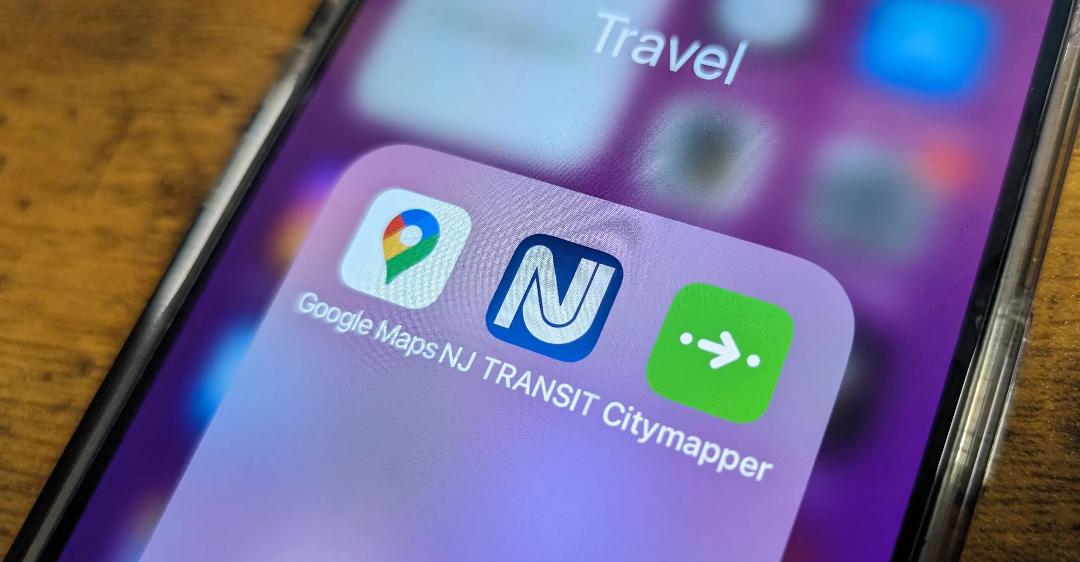
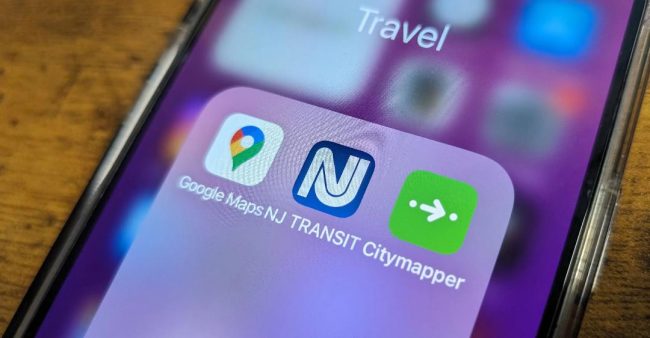
This is without mentioning the disgustingly confusing and ineffective navigation of the NJ Transit app, which includes little guidance for unfamiliar users and is often prone to system errors for simple requests. For example, its Trip Planner does not include an option to save locations and will outright not work depending on the complexity of a potential commute. This has forced users to install other directional applications, such as Google Maps, Apple Maps, or Citymapper, pictured above.
With these price increases already frustrating a myriad of low-income passengers that feel alienated by such an extreme change, NJ Transit is currently on thin ice with its commuter base. It is ultimately a profitable corporation that is not necessarily at a risk to experience a collapse, but its worker strike earlier this year is certainly a sign that retaliation is underway – and they must be careful with their attentiveness to detail and accommodation. Otherwise, they can definitely expect more online complaints and in-person fare skippers, who are acting in opposition to their policies – and that social dissonance may be the biggest loss of all.