South East Development Commission has much work to do By Emeka Asinugo, KSC


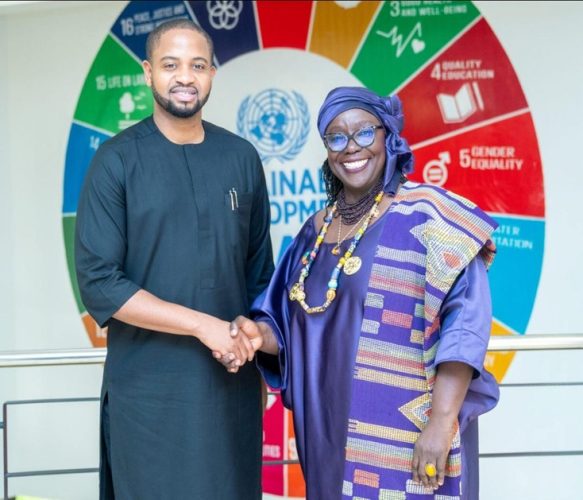
SEDC MD/CEO Mark Okoye II and UNDP resident representative, Elsie Attafuah
Every Nigerian of Igbo extract should by now be expressing profound gratitude to the Federal Government of President Bola Ahmed Tinubu, for demonstrating wisdom and courage to acknowledge the historical injustices and developmental setbacks caused by the Nigerian civil war. The establishment of the South East Development Commission (SEDC) in July 2024 represents not just an administrative move but a moral recognition of the need for healing, restoration, and purposeful growth in the South East region of Nigeria. By instituting the SEDC, the government has created a framework that allows the people of the region not only to confront past adversities and bring them to closure, but also to aspire to a future of shared prosperity and infrastructural renaissance. It is a welcome step in the right direction, one that acknowledges that development must be deliberate, locally driven and inclusive, if it is to be meaningful and enduring.
Beyond that, the appointment of Mazi Emeka Mark Okoye II as the MD/CEO of the organisation is most assuring of the genuine intentions of the Federal Government. In his public role, Okoye II easily comes as a man who has shown remarkable dexterity in his work at Afrinvest Limited which is an investment bank, in his work as Senior Special Assistant on Investment to Governor Peter Obi, in his work as Executive Director of Anambra State Investment Promotion and Protection Agency, ANSIPPA, and in his work as Commissioner for Anambra State Economic Planning and Budget in 2016 when he was only 30 years of age. His outstanding performances were always exemplary and had won him several awards which is in alignment with the new Nigeria that is the dream and aspiration of many citizens, especially the youths of which he is one. Okoye II is a distinguished public servant and economic planner, noted for his youthful leadership, technocratic acumen and bold vision for the transformation of the South East of Nigeria.
The South East has historically been a region of remarkable industriousness and innovation. Yet, despite the resilience of its people, infrastructural decay, environmental challenges, and economic disparities have limited its potential for decades. The SEDC, by its very mandate, is now positioned to address these issues and transform the South East into a model of regional development in Nigeria. Its objectives which include but are not limited to reconstruction, rehabilitation, ecological management, strategic investments and economic empowerment reflect a comprehensive approach to ensuring that growth in the region is not only rapid but also sustainable. The people of the South East are ready to partner with the Commission, and to offer their energies, ideas, land and enterprising spirit to ensure that these goals are achieved. I am sure Okoye II understands that much work lies ahead, and the expectations of our people are really high.
A primary area that demands urgent attention is road transportation. The South East is blessed with fertile agricultural land, yet much of its produce does not reach markets efficiently or in good condition due to poor connectivity between rural farms and consuming urban areas. An immediate priority for the SEDC must be the construction, rehabilitation, and maintenance of a network of roads that link all agricultural-producing rural areas to major cities in the region. These roads should be constructed by international standards, durable enough to withstand heavy loads, and equipped with safety features to protect both drivers, cyclists and pedestrians. Efficient road networks will not only reduce post-harvest losses and improve market access for farmers but also catalyze economic activity by facilitating the free movement of people and goods.
Complementing road transport is the urgent need for rail infrastructure. A well-functioning rail system linking the major towns within the South East, as well as connecting these towns to state capitals and other parts of Nigeria, will revolutionize mobility in the region. This is absolutely necessary and will liberate Southeasterners from the psychological trauma of feeling hounded in a country they sometimes feel they don’t belong to. The SEDC should consider inviting strategic partners from countries with advanced rail expertise, such as China and the United Kingdom, to construct and manage the rail facilities, paying only taxes to the government. Such public-private partnerships could ensure the rapid deployment of modern rail services, create thousands of jobs, and provide a reliable alternative to road transport, and thereby reduce the level of congestion, wear and tear on highways, and carbon emissions.
Beyond transportation, the South East’s agricultural potential presents a unique opportunity for inclusive economic development. The SEDC should spearhead the establishment of local government farms in each of the region’s states, ensuring that every Local Government Area (LGA) specializes in one or two crops that thrive best in their particular environment. For instance, riverine areas could focus on fish farming, while dryland LGAs could specialize in poultry, goat and sheep farming, pig or cattle rearing, snail cultivation, mushroom farming, and other suitable agricultural enterprises. The range of crops that can be cultivated is vast: yams, cassava, cocoyams, plantains, bananas, vegetables, cashew, palm produce, groundnuts, and all the other staple foods that are consumed by the people of Eastern Nigeria in particular and by Nigerians in general. By concentrating on the strengths of each LGA, farmers can achieve higher yields, improve product quality, and create local economic hubs that serve as engines of growth for their communities.
Each local government farm should integrate agricultural production with value-added processing facilities. For example, LGAs specializing in palm oil could operate factories producing not only refined oil but also derivative products like pomade, hair cream, and other cosmetic items. Those focusing on groundnuts could manufacture groundnut oil, peanut butter, and related products. Vegetable-producing LGAs could create vegetable oils and canned goods, while cassava-producing areas could manufacture garri in packaged quantities suitable for different consumer levels, like N100, N200, N500, N1,000, and N5,000 along with manufacturing starch and other industrial derivatives. These factories would not only create jobs for those working directly on the farms but also employ technicians, factory operators, logistics personnel, and marketing staff, building a vertically integrated agricultural economy.
Staffing these farms and factories would require a comprehensive workforce strategy. Some employees would remain on the farms, handling planting, nurturing, and harvesting, while others would work in the processing plants, managing production lines, packaging, and distribution to markets. Additionally, transport and delivery teams would ensure that finished goods reach shops and markets efficiently. This integrated approach has the potential to absorb a significant number of school leavers, youth, and other unemployed persons, providing meaningful livelihoods while also addressing urban congestion. By promoting rural employment, the SEDC can contribute to reducing the migration pressures on major cities, making urban centres more environmentally sustainable and socially stable.
The SEDC should also consider reviving the joint assets that were historically owned by the old Eastern Region, which have become defunct over the decades. These include such iconic institutions and industrial enterprises as the African Continental Bank, Emene Steel Company, Nkalagu Cement Factory, and Anambra Motor Assembly Plant (ANAMCO), among others. Reviving these ventures would not only restore economic pride and historical legacy but also create significant employment opportunities, attract foreign and domestic investments, and foster a culture of industrialization and self-reliance in the South East. These projects would require strategic planning, investment mobilization, and public-private collaborations, but the long-term benefits for the region are undeniable.
However, infrastructural and economic development cannot thrive in an environment of lawlessness or insecurity. To ensure the safety of both urban and rural communities, the SEDC should implement such measures as installing surveillance cameras on highways and major roads, particularly in rural areas. Road discipline is critical, not only for reducing accidents and protecting lives but also for creating a culture of order and accountability which normally extends into homes, schools, and workplaces. When discipline is enforced on the roads, it resonates through society, reinforcing norms of lawfulness and responsibility. Without such measures, even the most ambitious development plans risk being undermined by chaos and inefficiency.
Environmental management must also feature prominently in the SEDC’s agenda. The South East is vulnerable to erosion, deforestation, and other ecological challenges that threaten agricultural productivity, public health, and the quality of life for residents. The Commission should prioritize reforestation programmes, soil and water conservation initiatives, and sustainable waste management systems. By addressing these environmental concerns, the SEDC can protect the region’s natural resources, ensure long-term agricultural productivity, and create a model of ecological stewardship that could inspire other regions in Nigeria.
Economic empowerment is another critical pillar. Beyond creating jobs, the SEDC should encourage entrepreneurship and skills development. Young people, women, and marginalized groups must have access to training programmes that equip them with technical, managerial, and business skills. Microfinance schemes and investment incentives can help fledgling enterprises flourish, ensuring that economic growth is broad-based and inclusive. Strategic investments, such as technology parks, agro-processing hubs, and industrial zones, could position the South East as a centre of opportunity, attracting both local and foreign investors who recognize the potential of a region committed to disciplined growth and industrialization.
The vision for the South East also requires a mindset shift, particularly among the political leadership and community stakeholders. Development cannot succeed solely through the efforts of the SEDC. It requires active participation and collaboration at all levels. State governments, local authorities, private sector actors, civil society, and traditional institutions must see themselves as partners in the transformation agenda. Coordination, transparency, and accountability will be essential in ensuring that resources are used efficiently, projects are completed on time, and the benefits of development are equitably distributed.
The potential of the South East is immense. By linking agricultural production with industrial processing, reviving historical joint ventures, improving transport infrastructure, promoting environmental sustainability, enforcing law and order, and fostering entrepreneurship, the SEDC can catalyze a renaissance that benefits millions of people. Rural areas would flourish as centres of production and employment, urban centres would become less congested and more liveable, and the historical wounds of the past could finally give way to hope, opportunity, and tangible progress.
It is important to remember that development is not a one-off exercise but a continuous process requiring vision, dedication, and persistence. The South East Development Commission has a monumental task ahead, and the expectations of the people are understandably high. Success will require careful planning, prudent management, and unwavering commitment to the welfare of the people. The government’s decision to establish the SEDC is a commendable acknowledgment of historical lessons and a declaration of intent to build a stronger, more prosperous South East. What remains is the translation of this vision into action, ensuring that the promises of reconstruction, economic empowerment, and strategic growth become a lived reality for every community in the region.
As the SEDC embarks on its journey, the people of the South East are watching with hope and anticipation. They seek a Commission that will not only plan but also execute; that will not only dream but also deliver; that will not only talk of progress but also demonstrate results. From road networks to rail lines, from local government farms to industrial revivals, from rural empowerment to ecological management, the blueprint is clear. Now, the onus is on the South East Development Commission to turn these aspirations into tangible achievements.
While the task before the SEDC is vast and complex, it is by no means insurmountable. With strategic planning, stakeholder engagement, disciplined execution, and a focus on inclusive growth, the South East can emerge as a beacon of development in Nigeria. The Commission has the mandate, the moral imperative, and the popular support to transform the region into a hub of opportunity, innovation, and prosperity. The journey will require patience, resilience, and ingenuity, but the rewards for the people, the economy, and the legacy of the region will be immeasurable. It is time for the South East Development Commission to roll up its sleeves, embrace the challenges ahead, and demonstrate that deliberate, locally driven development is not just possible, but inevitable. The South East Development Commission has plenty work to do, and the world is watching.
Chief Sir Asinugo, KSC writes from the UK