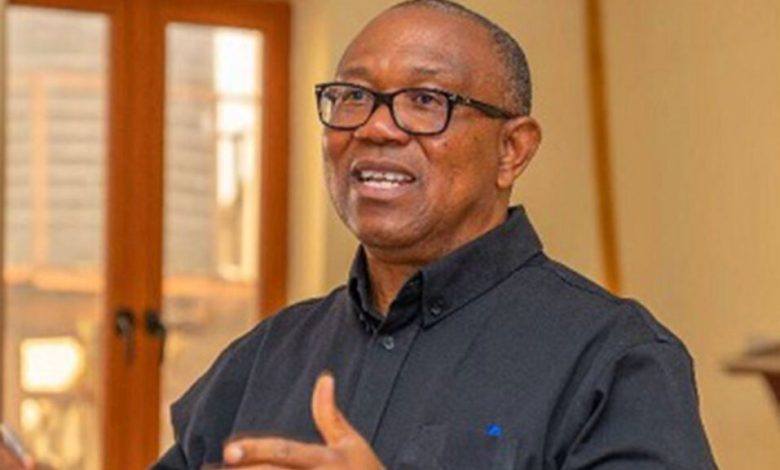
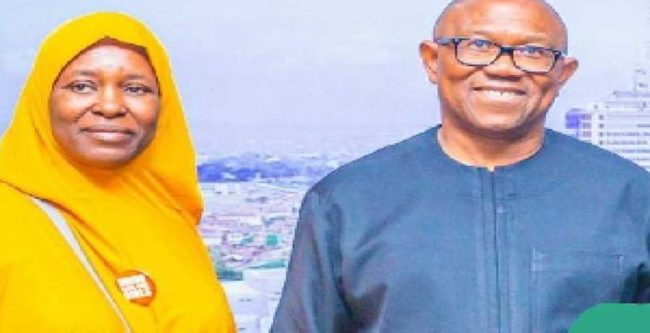
In a country that is known to be democratically fragile and trust in leadership has been repeatedly battered by decades of corruption, incompetence, and betrayal, allegations against public figures must be weighed with a seriousness that extends beyond mere words. Recently, the Nigerian political space was thrown into a frenzy when activist and lawyer Deji Adeyanju openly accused Peter Obi, the 2023 Labour Party presidential candidate, of being fraud himsef. He insisted that he possessed evidence but has not taken any legal steps to present it before a competent court. In response, activist Aisha Yesufu challenged him, pressing for evidence and transparency. Her remarks made waves, not because accusations against politicians are rare, but because Obi’s candidacy is uniquely tied to the aspirations of millions of young Nigerians who have, perhaps for the first time in decades, found a political figure they could rally around with hope for a more meaningful future. And so, when the allegation of fraud surfaced, it did not simply touch on one man’s character, but on the collective dream of millions of citizens who see him as the vessel to end their frustrations and fulfill their aspirations.
The issue at stake, however, is not whether Peter Obi is guilty or innocent. It is about the fundamental question of burden: who carries the responsibility to prove what, in a democracy that is governed by the rule of law, is a strong allegation? In this particular case, it is not Obi who must prove his innocence. It is his accusers who must prove their patriotism by taking legal steps to substantiate their allegations. For a man who has just been called to the Nigerian bar, Adeyanju’s insistence on repeating allegations without filing a case or presenting admissible evidence places him squarely under scrutiny. For a man who claims to have evidence, the patriotic path would be to take Obi to court, to protect millions of Nigerians from backing a fraudulent candidate, if indeed the allegations are true. But by sitting on such evidence, or worse, weaponizing it for mere political drama, he undermines both his own credibility and the credibility of the justice system that he is supposed to respect as a lawyer.
On the other hand, Aisha Yesufu’s reaction, while guided by her passion for due process, inadvertently shifted attention. She demanded to “see” the evidence as a supporter before continuing her loyalty to Peter Obi. Yet, as important as transparency is, she is not the judiciary, nor are the millions of Nigerians watching from the sidelines. They are stakeholders in the democratic process, but the proper arena for proof is the courtroom. By challenging Adeyanju to bring forward the evidence, she reinforced the principle that accusations must not be allowed to fester without scrutiny. But equally, by asking for direct access to evidence, she placed herself in a role that rightly belongs to the courts. Nigerians deserve to know the truth, but the truth must emerge through due process, not through the sensationalism of social media or private dossiers brandished to score points.
At the heart of this matter is a truth that Nigerian politicians and their supporters have long learnt. In politics, no matter how good leaders may be, there will always be people determined to pull them down. Fault-finding is part of political life, but the danger lies when accusations are made carelessly, without grounding, and without recourse to the legal mechanisms designed to separate truth from falsehood. Peter Obi himself is not the first, and he certainly won’t be the last, to be maligned by opponents. What is unique about his situation, however, is that his candidacy has come to embody a generational revolt against the established order. Millions of young people, disillusioned by the PDP and APC, both seen as two sides of the same corrupt coin, found in Peter Obi someone who at least symbolized accountability, discipline, and a fresh start.
To smear such a figure without following the legal course is not just an attack on one man, but on the fragile hope of a nation struggling to rebuild its democracy. Consider the precedent set by other leaders. President Bola Ahmed Tinubu, for instance, has faced countless accusations about his identity, his educational qualifications, his alleged involvement in drug-related issues in the United States, and most importantly, his alleged manipulation of Nigeria’s electoral process. Aisha Yesufu herself has accused him publicly of rigging elections and stealing the people’s mandate. Yet Tinubu has never taken her, or any other accuser, to court. Why? Because politicians have learnt that engaging every of their critics elevates the critics’ status and distracts from governance. To sue every accuser is to spend one’s political career in courtrooms rather than in public service. If Tinubu has ignored even graver allegations without legal redress, why should Peter Obi, on account of Adeyanju’s statement, begin to hit his head against a brick wall? If Adeyanju’s claim is true, then he, not Peter Obi, should take the case before a judge. That would be the patriotic thing to do, because in doing so he would not only cleanse public discourse of ambiguity but also save millions of Nigerians from being misled to support the wrong candidate in 2027.
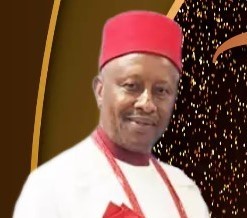
But Adeyanju is not alone. Others, like Abbey Odeyemi, have also flung accusations at Peter Obi. Odeyemi claimed that as governor, Obi was siphoning N250 million every month from Anambra State coffers until he was allegedly caught in Lagos in 2009. To any reasonable mind, the narrative had already collapsed under its own contradictions. If Obi was taking money from Anambra, how does Lagos come into the story? How could he, a sitting governor, be “caught” in another state for a crime that was tied to his own jurisdiction? Moreover, this is the same governor who left billions of naira in the treasury upon exiting office, a feat rare in Nigerian politics. This is the same governor who cleared arrears of salaries and pensions his predecessors had ignored, distributed thousands of laptops to students, invested heavily in schools and hospitals, and rehabilitated critical infrastructure. How does the picture of a governor who saved and invested align with the caricature of one who was monthly stealing from state coffers? If Odeyemi had evidence of such massive fraud, the patriotic course would have been to approach the EFCC, the ICPC, or any competent anti-graft agency. But he did not. And by failing to do so, he positions himself not as a defender of the Nigerian masses, but as an enemy of truth and accountability.
This same Abbey Odeyemi had alleged in X that one Chinenye Ezewuzie had confessed that she was raped, threatened, and forced to carry drugs by Peter Obi. In another post on X, he alleged that Peter Obi’s father was killed by his drug associate, Pa Edwin Chukwujekwu of Igbo Kwenu following a drug dispute. But the truth is that Peter’s father died in 1968 during the Nigerian civil war, when Peter was just 7 and not in any drug dispute. And even Igbo Kwenu refuted the allegation.
This pattern of accusations reveal something deeper: that these accusers may not, in fact, have the evidence they claim to possess. They thrive on the drama of accusation, knowing that in Nigeria’s polarized climate, even a whisper against a political figure can grow into a storm of suspicion. But when push comes to shove, they refrain from going to court because they know the risks of perjury, of wasting the court’s time, and of exposing themselves as liars. The court is not a social media platform where unverified claims can trend for 48 hours and then be forgotten. In a courtroom, evidence is weighed, cross-examined, and judged. To fail to take accusations there is to admit, tacitly, that the evidence may not withstand scrutiny.
It is important to stress here that patriotism is not about waving the national flag or chanting national anthem. Patriotism is about putting the interest of the nation first. If Adeyanju or Odeyemi or any other critic truly believes that Obi is fraudulent, the patriotic course would be clear: file a case, present evidence, and save the nation from backing a dangerous candidate in 2027. By choosing instead to sit on alleged evidence, they betray Nigeria and Nigerians. They deny Nigerians the right to clarity, the right to make informed choices. They play politics with the truth, and in so doing, they erode the very foundations of democratic accountability.
Meanwhile, Obi himself has no obligation to chase every shadow that runs after him. He has built his political identity around accountability, prudence, and transparency. His track record in Anambra, though not so perfect, still stands in stark contrast to that of many of his contemporaries. To ask him to go to court every time a critic calls him fraudulent is to misunderstand the nature of politics. It is not Obi’s job to prove his innocence against every street-side allegation. It is the job of those who claim wrongdoing to prove their case. If Obi went to court over every insult or accusation, he would spend his life in endless litigation and would be unable to focus on his vision for Nigeria. Simple.
Moreover, Nigerians themselves must demand higher standards from those who speak in their name. It is no longer enough for activists or lawyers to gain relevance by throwing accusations into the air. In a country where lives are perpetually on the line, where the wrong leadership choice can mean the difference between progress and regression, Nigerians must insist that anyone who claims to have evidence of corruption should either prove it in court or remain silent. Patriotism demands as much. Anything less is an insult to the intelligence of the masses who are struggling daily to survive the consequences of bad governance.
As 2027 approaches, the stakes are even higher. Nigeria cannot afford to repeat the cycles of 2015 and 2023, where propaganda, misinformation, and unverified claims shaped electoral outcomes more than truth and accountability. If Peter Obi is indeed corrupt, let the courts establish it. Let the evidence be laid bare for Nigerians to see. But if his accusers cannot prove their claims, then they must be held accountable for attempting to deceive the public. Democracy does not thrive on rumour. It thrives on proof. And proof is what Adeyanju, Odeyemi, and others have consistently claimed to have but failed to provide.
In the final analysis, the burden is clear. It is not Peter Obi who must go to court to clear his name. It is his accusers who must go to court to prove their patriotism. By failing to do so, they risk being remembered not as defenders of democracy, but as opportunists who played politics with truth. Nigeria deserves better. Nigerians deserve better. And as the country marches toward 2027, the lesson must be clear: allegations without proof are not just empty words, they are acts of sabotage against the democratic process. The burden does not rest on the accused, but on the accusers. And if they will not carry it, then their patriotism must rightly be called into question.