I have recently concluded a ten-day study abroad program in Ireland, spanning the rural village of Carraroe in the Gaeltacht of Connemara and Galway City. In my travels to these areas, I noticed a very different attitude towards environmental care and attention, with many practices being extremely attentive but necessary. Compared to American small villages and towns, and medium and large sized cities, natural landscapes, from rolling hills to beaches, are extraordinarily clean, and called me to ask how things could be different if some of these practices are present in the United States.
Carraroe, Connemara
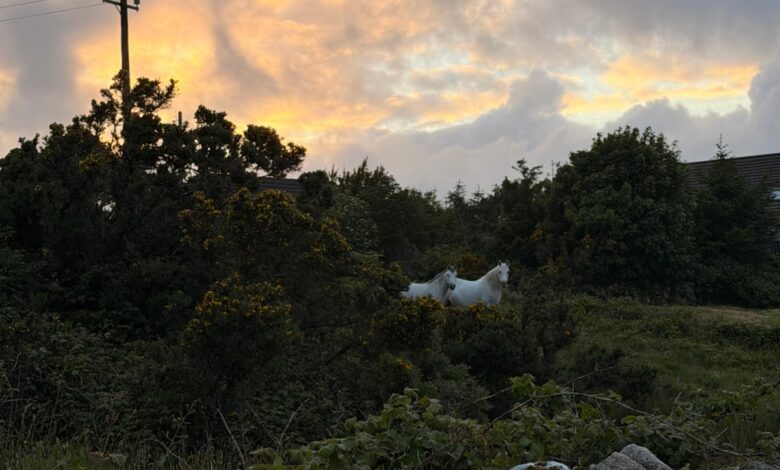
From our arrival in Ireland, I noticed a shift in environmental consciousness. The gorgeous countryside of western Ireland and even the more “towny” areas lack any kind of trash or waste along roadsides. Almost every family in the village of Carraroe has livestock, or lives in proximity to people who own livestock, like horses, sheep, and cattle.
.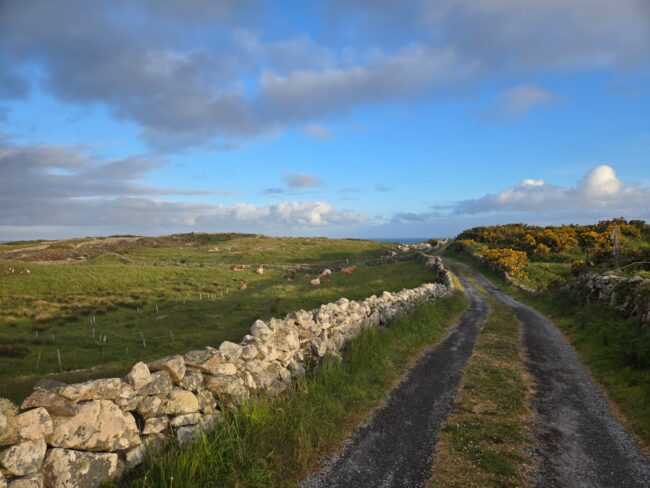
The beauty of Ireland’s landscapes cannot be overstated, but I began to notice how these areas stay pristine. First, there is a very strong recycling culture. Also, the majority of the homes do not use plastics or paper plates, napkins, or utensils that are common here, but when they are is use, residents are quick to tell you to recycle and in the correct areas. In the town of An Spidéal, about half-a-half from where we were staying in Carraroe, we came across a recycling station by a beach. Residents of An Spidéal (and surrounding areas) are expected to bring their trash to this location and sort them, and by the looks of the town, the strategy is working perfectly. There are no wastes on the sidewalks or roads at all, and even young children would bring over their trash and throw them in the correct containers.
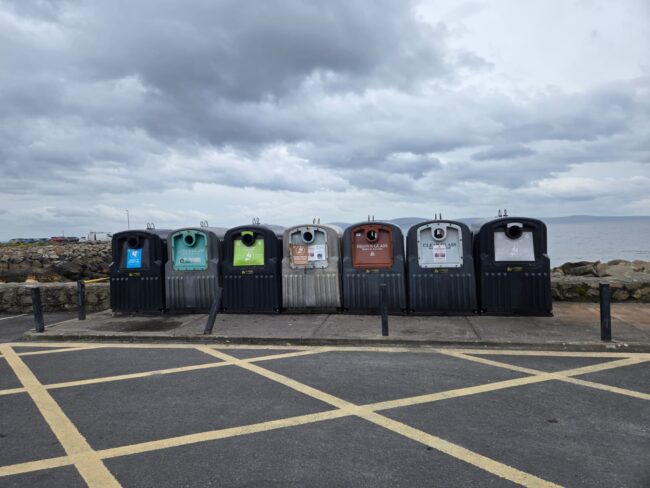
The raised attention to trash and waste disposal made me start wondering its origin and why similar attitudes don’t exist in much of the United States. The next day, I came across a template in a museum dedicated to Patrick Pearse, a prominent Irish Revolutionary and figure in the Easter Rising of 1916. In this museum, there is a template that reminded me of a common historical trend in Ireland to name and show attention to every aspect of the landscape. Every bog, hill, mountain, stream, river has a significant and unique name passed down through history. From residents I spoke to, I found that these areas still hold great value and historical relevance. Many of these, especially for those pushing for more Irish language use in the country, hold even more value in these areas as the unique, meaningful names are often in Irish. I believe that this connection between the land and the language leads many in the Irish speaking Gaeltacht and around the country to hold the land and its preservation dear and close to their hearts.
Galway City
In Galway City, my first exposure to environmental consciousness was the use of composting in our hostel. The hostel we stayed at was called Snoozles, where breakfast is provided with the rooms, but after eating I was interested to see that they were separating trash here too. There were distinctions written above trash cans that would point you away to a compost bin in the kitchen if your trash was food waste, in contrast to recyclable bottles and cups.
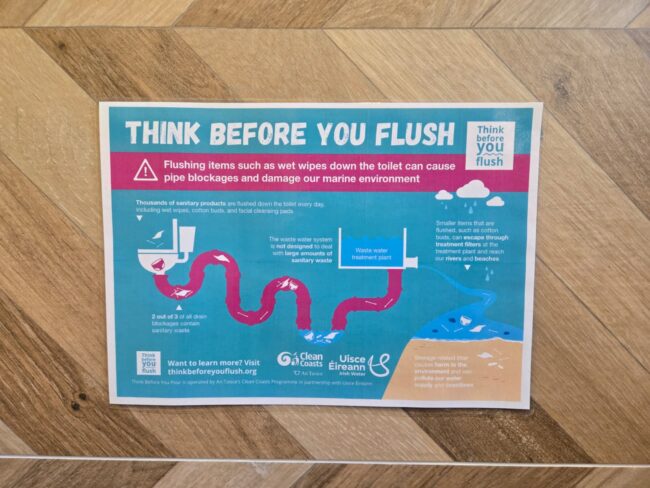
The bathroom also had a sign promoting public environmental awareness. This sign was prompting people to not flush items that could be detrimental to wildlife and water filtration through a diagram by THINK BEFORE YOU FLUSH, a public awareness campaign in Ireland operated by Clean Coasts (part of An Taisce) in partnership with Uisce Éireann (formerly known by its English translation, Irish Water). Uisce Éireann also are the producers of the documentary Wastewater | The Story of Water | Uisce Éireann that emphasizes the importance of treating water before it is released into the ocean. Residents of coastal villages were interviewed on how the waters around Ireland went from crystal clean to giving people skin and ear infections, e-coli, and many other conditions from raw sewage being discharged into the environment. There have been many changes in attention to coastal health in Ireland and Uisce Éireann is a leading figure in more focus being pointed at waste water.
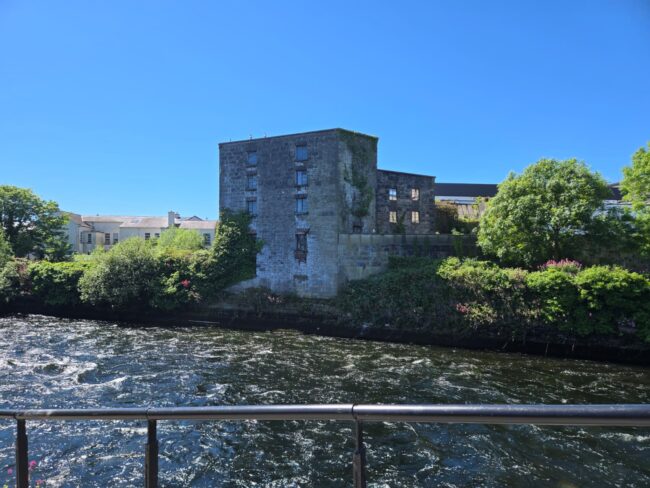
A very good example of the attention towards clean water is Galway City’s Canal, also known as the River Corrib. This river, even though it is short, is the second largest river in Ireland by waterflow, and is very clean. It still struggles with rare issues of agricultural runoff and sewage overflows in Claddagh, but the river hosts numerous kinds of fish including atlantic salmon, pike, and perch, Otters and mink, an array of bird species, and eels. This biodiversity in a river running through one of Ireland’s largest cities displays how much combating waste water and environmental awareness is present in Ireland.
In both cities and rural villages there is great attention to the environment and environmental health in Ireland, which was quite surprising and often refreshing to me as an American tourist. In most areas within the New York Metropolitan Area there is little to no PSA’s or very significant environmental calls for change. There are bits and parts within New Jersey and New York that mostly do clean ups, but they aren’t that many large scale efforts to reroute sewage runoff, curb agricultural runoff, and battle marine environmental issues. Numerous lakes in New Jersey and New York struggle with algae blooms which cause rashes and kill wildlife, caused by fertilizer runoff. There are few urban rivers that are safe in or are clean enough to eat what is caught in them. With some changes and more public awareness, along with historical love for the land that is present in Ireland and Irish culture, there may be more long term changes to the way we treat our waterways and coasts.