
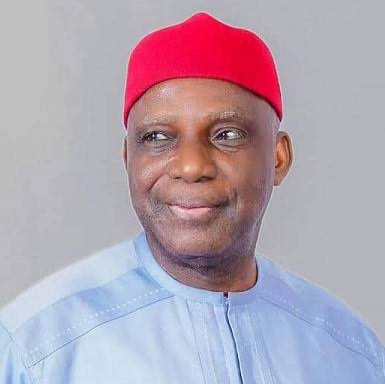
Show the light, and the people will find the way By Professor Bart Nnaji

Education represents progress. The most fundamental difference between the developed nations and the developing ones is the level and quality of education. A leading African American civil rights activist, Ella J. Baker (1903-1986), famously quipped, “show the light, and the people will find the way”. The Great Zik of Africa reflected this statement in his Renascent Africa and also made it the motto of his crusading West African Pilot newspaper when it was founded in 1937.
The launch of Free Universal Primary Education in Western Nigeria by the Chief Awolowo government on January 17, 1955, was a most important development in our nation’s history. It led to massive enrolment figures in schools in the Western Region. When the General Olusegun Obasanjo government launched a similar scheme in the mid-1970s, there was an unprecedented upsurge in primary school enrolment throughout the federation. In 1979 when the Unity Party of Nigeria (UPN)-controlled Lagos, Oyo, Ogun, Ondo, and Bendel states launched the Universal Primary Education programme, school enrolment figures rose sharply. People who were already approaching 20 years of age returned to primary school, showing that poverty was a major impediment to education. I would not have gone beyond primary school but for the tradition of benevolence and solidarity in my extended family. Children who showed promise were supported by family members who could. My father supported my uncle Basil to go to school and my uncle rose to become a primary school headmaster. He, in turn, supported me in primary school; another uncle Clement who was supported in school by uncle Basil supported me to go to high school. All of my education was in Catholic schools when the missionaries controlled most of the schools in the Eastern region.
As I have noted, this was a period of healthy competition among the component groups of the Nigerian federation. What The Great Zik couldn’t do through free education he made up through other strategies. For instance, he inspired and motivated communities to embrace education with gusto. They mobilized funds to award scholarships to promising community members, a practice captured in Achebe’s No Longer at Ease. The result was that between 1945 when the Second World War ended and 1965, the Igbo “wiped out their educational handicap in one fantastic burst of energy”, as Chinua Achebe puts it in The Trouble with Nigeria. The East had begun to compete effectively with the West in education within just 20 years.
The healthy competition continued after independence. When Eastern Nigeria inaugurated the University of Nigeria at Nsukka in 1960, Western Nigeria launched the University of Ife in 1962 and the Northern Region commissioned later the same year the University of Northern Nigeria at Zaria, though it was changed later to Ahmadu Bello University to honour Sarduana. This is the healthy rivalry we should expect from states because it makes for rapid national progress. Why is it not happening now? Even in the Second Republic, when Governor Jim Nwobodo launched the Anambra State University of Science and Technology, Governor Melford Okilo responded with the Rivers State University of Science and Technology, and Governor Lateef Jakande set up the Lagos State University. Graduates of these new universities were competitive.
On September 23, 2025, at the annual Fafunwa Memorial Lecture in honour of the foremost Nigerian educationist, Professor Babatunde Aliu Fafunwa, CON, NNOM, a former Minister of Education, I called attention to the imperative of embracing generative artificial intelligence in our education system, starting from primary school. But I wondered how our pupils could be taught AI when most rural community teachers are not yet computer literate. I, therefore, proposed that the Federal Government, all state governments and all 774 local government areas in the country jointly pool funds to provide each public school teacher with a computer. The President Obasanjo administration did a similar thing when the three tiers of government mobilized funds to provide each Divisional Police Office in the country with a Toyota Prado SUV to enhance security nationwide. I use this opportunity to repeat the call for a computer for every public school teacher in Nigeria. As I was completing my doctoral studies in robotics engineering in the United States in the early 1980s, I foresaw that the AI revolution was a matter of time. Consequently, I went to the Massachusetts Institute of Technology for a postdoctoral fellowship in artificial intelligence. My research work in robotics was heavily based on AI tools. AI is the way the whole world is going, and Nigeria must embrace it fully—beginning from primary school.
Lastly, I would like the panelists to spare some moments on the quality of education in public primary and secondary schools. When I travelled to the United States in 1977 for studies in physics and mathematics and engineering, I did very well because I received competitive education in public schools in Nigeria. Can the same thing be said today about the quality of instruction in our public schools?


