There are moments in human history when events strip away our illusion and force us to confront ourselves with the truths of our being, however uncomfortable. The Covid-19 pandemic was one such moment. The pandemic was not merely a health crisis, it was a mirror held up to humanity. It revealed not only our vulnerability but also our collective and individual character. The virus did not discriminate. It crossed borders without a passport, entered palaces and slums without invitation, and treated all human beings with the same indifference. In doing so, it reminded us of a truth that is as ancient as humanity itself, that beneath the assumptions of race, class, nationality, and status, we share a common humanity.
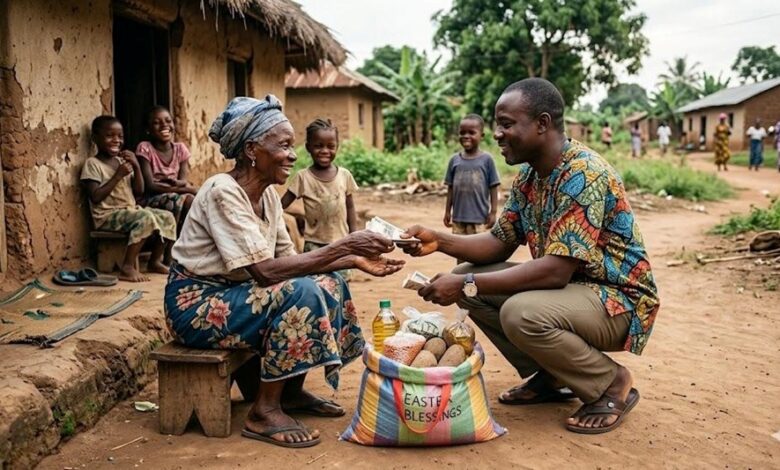
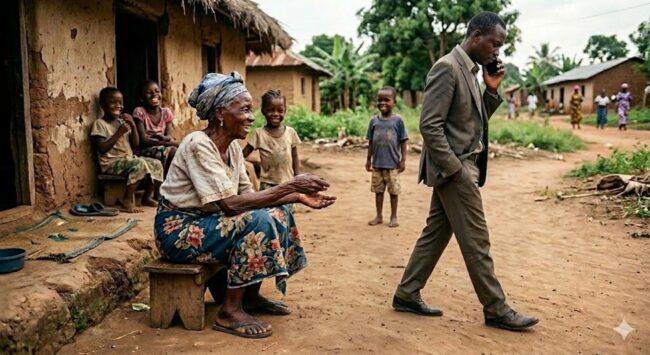
But, while the virus attacked all of us equally, our responses to it were anything but uniform. While some people reached out to help strangers in need of help, donated resources, volunteered their time and risked their lives for others, some others were busy hoarding supplies, spreading misinformation, exploiting fear for profit, or simply turning away from the suffering of those around them. In this contrast lies one of the most profound dilemmas of human existence, the coexistence of good and bad people within the same society, within the same community, and sometimes even within the same family.
The pandemic made visible what had always been present but often overlooked: the fundamental divide that was no longer between black and white, rich and poor, or educated and illiterate, but between good people and bad people, those who act with empathy toward others and those who act without it. It exposed a moral spectrum that cuts across all traditional categories. In every race, every nation, every class, there are people who strive to do unto others as they would have others do unto them. And there are those who act in ways they themselves would resent if they were treated the same way. It is in the nature of man that while some pray for others, some prey on others. This realization is likely to now force us to reconsider how we define conflict, cooperation, and the future of our shared world.
At the heart of this dilemma is perception. Good people often assume that others are like them, that they share their values of empathy, forgiveness, care. They trust easily, help freely, and empathize deeply. Their worldview is shaped by the belief that kindness is a universal language. They are often surprised, even shocked, when they are confronted with betrayal, selfishness, or cruelty. This naivety, while rooted in virtue, can make them vulnerable in an unpredictable world where not everyone operates by the same moral code.
On the other hand, those who operate without empathy often also assume that others are just like them. They are suspicious of kindness, interpret generosity as weakness, and approach relationships with cautious cynicism. Their experiences or dispositions lead them to believe that self-interest is the primary driver of human behaviour. The word “trust” is not in their dictionary and often not needed in their lives. In their world, helping others without immediate personal gain is unreasonable.
These opposing and antagonistic positions between good people and bad people tend to create a profound tension in modern society. Good people expect goodness and are not prepared for exploitation. On the contrary, bad people expect selfishness and are unprepared for genuine kindness. As a result, interactions between these two groups often lead to disappointment, conflict, and misunderstanding. Good people would feel betrayed by the values of bad people who would not like to be treated as they treat others, while the bad ones feel justified in their ‘trust no one’ mantra. The cycle perpetuates itself, reinforcing each group’s assumptions about themselves.
One of the key lessons from the pandemic is that systems matter. Where institutions are strong, transparent, and responsive, people are more likely to cooperate and act in the collective interest. Where institutions are weak or mistrusted, individuals are more likely to act in self-preservation, even at the expense of others. This suggests that while individual character is important, the environment in which people operate can significantly influence behaviour.
We mostly understand that trust is a central pillar in human relationships. A society with high levels of trust tends to foster cooperation, reduce conflict, and enable collective action. However, trust can also be fragile. It can be eroded by repeated experiences of betrayal or injustice. For good people, maintaining trust in a world where everyone is not trustworthy can be extremely challenging. Yet, abandoning trust entirely would lead to a breakdown of relationship cohesion. The question, then, is not whether to trust, but how to build systems that make trust rational rather than risky.
Accountability plays a crucial role in this process. A society that rewards good behaviour and penalizes harmful actions creates incentives for individuals to align with the common good. Without accountability, the non-empathetic could feel emboldened to exploit others, knowing that there would be no consequences. Over time, this can discourage good behaviour, as those who act with integrity may feel disadvantaged or taken advantage of. If this imbalance persists, the fear expressed in the dilemma becomes real: good people could begin to abandon their values, not because they no longer believe in them, but because they feel they cannot survive by them.
Education also has a vital role to play. Not just formal education, but moral and civic education that emphasizes empathy, responsibility, and the interconnectedness of human lives. The pandemic illustrated how individual actions can have collective consequences. For example, wearing a mask, observing social distancing, or getting vaccinated were personal choices, but also, they were acts that affected the health and safety of others. Therefore, teaching people to see beyond their immediate self-interest to the broader impact of their actions will become essential in bridging the gap between good and non-empathetic behaviour.
Leadership is another critical factor. Leaders usually set the tone for society. When leaders are the model of empathy, integrity, and accountability, they create a culture that cherishes these values. When they act in self-interest or tolerate unethical behaviour, they send a signal across the land that such conduct is acceptable. During the pandemic, leadership made a significant difference in how societies responded. Some leaders unified their people, appealed to shared humanity, and fostered cooperation. Others deepened divisions, undermined trust, and exacerbated the crisis for their self-aggrandizement.
Beyond systems, education, and leadership, there is a deeper, more personal dimension to this dilemma. Each individual must confront his or her own capacity for becoming known as a good or bad person. It is easy to categorize others, to see oneself as “good” and others as “bad.” But true moral reflection requires acknowledging that the line between these categories often runs within each of us. The challenge is not only to act rightly when it is convenient, but to do so when it is difficult, when there is no immediate reward, and when others may not even reciprocate.
This brings us to the moral conclusion that society must embrace if it is to navigate this dilemma successfully. A functional and humane society cannot be built on the assumption that everyone will always act with goodwill. Nor can it survive if it assumes that selfishness is the only rational behaviour. Instead, it must strike a balance by encouraging and protecting good behaviour while limiting the harm caused by less empathetic actions. This balance requires a combination of trust and vigilance. People should be encouraged to act with kindness and empathy, but not at the expense of their own well-being or without awareness of potential risks. Systems should be designed to support cooperation while it prevents exploitation. Laws and institutions should be fair, transparent, and consistently enforced, ensuring that no one is above accountability.
At the same time, society must resist the temptation to descend into cynicism. If people come to believe that everyone is fundamentally self-serving, the social fabric will weaken. Cooperation will give way to competition, and empathy will be replaced by suspicion. In such a world, even those who wish to act kindly can feel compelled to act otherwise, creating a self-fulfilling prophecy of distrust and division.
The alternative is to cultivate a culture where goodness is not seen as naivety, but as strength. Where empathy is not exploited, but respected. Where helping others is not a rare act of heroism, but a normal part of daily life. This does not mean ignoring the existence of non-empathetic behaviour, but rather addressing it through structures that promote fairness and discourage harm. Ultimately, this great human dilemma is not one that can be solved once and for all. It is an ongoing challenge that requires constant attention, reflection, and effort. The pandemic served as a powerful reminder of both our shared vulnerability and our shared responsibility. It showed us that while we may be divided by many things, we are united by our humanity—and by the consequences of our actions toward one another.
If we are to move toward a better, saner world, we must choose to strengthen the forces of empathy, cooperation, and integrity within our societies. This choice must be reflected not only in our words, but in our systems, our institutions, and our daily interactions. And that must be supported by leadership that inspires trust and accountability, and by individuals who are willing to act with courage and compassion even in the face of uncertainty. The future of humanity may well depend on how we navigate this delicate balance. If we allow selfishness and mistrust to dominate our lives, we risk eroding the very communal foundations of our societies. But if we can find a way to nurture and sustain goodness while we manage the realities of human imperfection, we may yet build a world that reflects the best of what we are capable of being. In the end, the dilemma is not just about others, it is about each of us. The question is not only whether good people or bad people, found across borders and traditions, will prevail, but what choices we will make when we are faced with the opportunity to act. Those choices will portray the true measure of our humanity, and the lessons we learnt from the Covid ’19 pandemic.