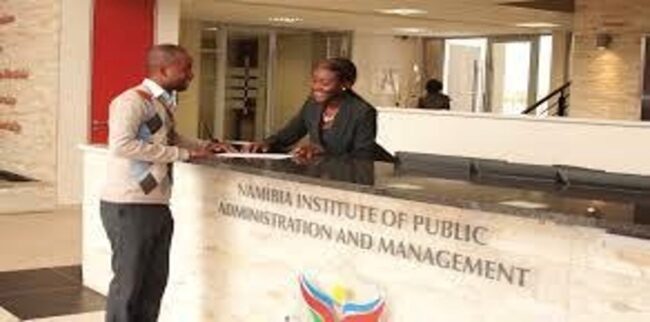
The atmosphere in Windhoek, the capital city of Namibia, has borne witness to the deep reflection of the optimism, determination and urgency with which Africa is increasingly approaching the question of public sector transformation in these last few days. With the opening of the Second Annual Conference of the African Management Development Institutes’ Network on May 18, 2026, the beautiful premises of the Namibian Institute of Public Administration and Management became the brainstorming centre for policy makers, scholars, development practitioners, senior public administrators and institutional leaders from across the continent. Their shared objective has been the deliberation and policy road-mapping of how African countries can develop a more responsive, more accountable and more development-driven public service that is capable of delivering sustainable growth and inclusive governance to its people.
The conference theme, “Transformative Public Service Leadership for Sustainable Development and Inclusive Growth in Africa,” could not have come at a more appropriate or more opportune time in the continent’s history. African countries today face enormous challenges that range from unemployment, mass poverty, high level insecurity and infrastructural deficits to challenges in climate change, digital transformation and national economic stability. But these challenges also present opportunities for innovation and institutional renewal. Participants at the conference therefore approached the discussions not merely as academic exercises but as urgent conversations about the future of governance in Africa.
The significance of the conference is that from the onset, it recognized the fact that no nation can rise above the quality of its public institutions. Across the continent, governments are increasingly being called upon by their citizens to deliver more efficient public services, transparency and equitability. Citizens no longer only make demands for democratic governance but for competent administration also. This explains why the conference has continued to focus strongly on leadership capacity, ethical standards, digital innovation, institutional resilience and strategic public sector reforms. And this is where Nigeria comes in handy.
Undoubtedly, one of the most anticipated personalities at the conference was Dr. Funke Adepoju-Olayomi, the Director-General of the Administrative Staff College of Nigeria. Her participation generated considerable excitement among delegates even before the opening ceremony. Widely respected for her commitment to public sector reforms and administrative excellence in public service, Dr. Adepoju-Olayomi arrived at the conference already reputed for visionary leadership and practical institutional development.
As the Special Guest and keynote contributor to discussions at the conference, Dr. Adepoju-Olayomi emphasized the need for African governments to invest more seriously in leadership training, institutional continuity and policy implementation. Her interventions are believed to have resonated strongly with participants who recognize that many well-designed policies across the continent fail because of weak implementation frameworks and inadequate administrative capacity.
Observers at the conference have also noted the growing prominence of Nigeria in continental conversations about public administration reforms. Through such institutions as ASCON, Nigeria continues to play a strategic role in the training of senior public servants and policy managers. In a great measure, Dr. Adepoju-Olayomi’s presence symbolized not only Nigeria’s commitment to administrative excellence but also the increasing collaboration among African institutions seeking home-grown solutions to African governance challenges.
Another remarkable highlight of the conference occurred after the first day’s proceedings when Dr. Adepoju-Olayomi paid a courtesy visit to the Prime Minister of Namibia, His Excellency Dr. Tjitunga Elijiah Ngurare. Naturally, the visit had important diplomatic and institutional significance. Beyond the exchange of pleasantries, it strengthened ties between African public administration institutions and political leadership structures on the continent.
The meeting reportedly underscored the importance of collaborative governance, leadership development and cross-border institutional partnerships. It also demonstrated the recognition accorded to administrative institutions in shaping national development outcomes. For many conference participants, the visit represented a powerful reminder that sustainable development in Africa cannot be achieved without synergy between political leadership and professional public administration.
The conference itself has so far been characterized by robust panel discussions, policy dialogues and strategic exchanges of ideas. Delegates have explored how African governments can modernize civil service structures, integrate digital technologies into governance systems and strengthen accountability mechanisms. There have also been important conversations around youth inclusion, gender-sensitive governance, institutional transparency and regional cooperation. One recurring theme throughout the deliberations has been the urgent need for African countries to develop leaders who combine technical competence with ethical responsibility. As this point in time, public service leadership in Africa is increasingly being viewed not simply as a bureaucratic function but as a transformative instrument for nation-building. Participants repeatedly stress that Africa’s development aspirations under such frameworks as Agenda 2063 will remain unattainable unless governments cultivate visionary, disciplined and innovative public administrators.
Another important sense of direction emerging from the conference is the emphasis on African solutions to African problems. Many speakers advocated reducing excessive dependence on foreign governance models that often fail to reflect African realities. Instead, there has been a strong call for the development of context-specific administrative systems rooted in local experiences, indigenous knowledge and continental priorities.
As the conference prepares to conclude tomorrow, expectations remain high regarding the practical outcomes participants are expected to take back to their various countries and institutions. Beyond conference papers and formal communiqués, delegates are expected to leave Windhoek with renewed commitment to institutional reforms and leadership transformation. They are also likely to return home with stronger professional networks, deeper policy insights and fresh strategies for improving governance delivery in their respective organizations.
Perhaps the greatest takeaway from the conference will be the realization that public administration remains one of the strongest pillars upon which Africa’s future rests. Roads, hospitals, schools, security systems and economic policies can only succeed where competent and ethical institutions exist to manage them effectively. Conferences like this therefore play a crucial role in shaping the mindset and capabilities of those entrusted with public responsibility.
I must say also that the organizers of the Second AMDIN Annual Conference deserve commendation for bringing together such a distinguished gathering of scholars, practitioners and leaders at a time when Africa urgently needs practical governance solutions. The choice of theme was timely, the level of participation impressive and the quality of engagement encouraging. The warm hospitality of Namibia and the excellent setting provided by the Namibian Institute of Public Administration and Management further contributed to the success of the event.
There is every reason to encourage the organizers to regularize and strengthen this conference as a permanent annual platform for continental dialogue on governance and public administration. Africa stands to benefit immensely from consistent interaction among its public service institutions, policy experts and administrative leaders. Sustained engagement will help build stronger institutions, promote knowledge sharing and foster the emergence of a new generation of well-grounded public administrators committed to transparency, innovation and inclusive development.
As delegates depart Windhoek, the message from the conference appears unmistakably clear: Africa’s future will not only depend on fulfilled or unfulfilled political promises and economic projections, but on the quality, integrity and transformative capacity of its public service leadership. And so, the discussions in Namibia may well prove to be another important step toward building the efficient and people-oriented institutions that Africa needs in order to realize its enormous potential.
Chief Sir Asinugo PhD, M.A, KSC, is a UK-based veteran journalist and author