Preface
The Consequential Sovereign—Inquiry into the Nature of Cause and Reality
This inquiry originates at the intersection of rigorous philosophical questioning and a deeply held faith in Jesus Christ. As a believer now living as a unified self-consciousness, living in unified reality of all realms, with existential congruence with the divine, the notion of disparate secular and sacred spaces has since dissolved. The pursuit of knowledge is not merely an intellectual exercise anymore. It is a spiritual devotion aimed at understanding the full majesty, order, and nature of God. At the heart of this specific exploration is a desire to look past the surface of things and contemplate God as the Ultimate Source of all causes and all effects in both the spiritual and material worlds.
In a world that often treats physical events as random accidents, a Christ-centered ontology demands a higher truth. Scripture reveals a God who is sovereign over all creation—invisible and visible alike. If God is the foundational source of reality, then the laws that govern reality must reflect His inner character. Therefore, cause, effect, and consequence are not external rules that God created to manage the universe; they are expressions of God’s very Nature.
To understand the nature of a virus, a disease, or a healing wind is to look at the lawful architecture of a cosmos designed by a consequential Sovereign. His sovereignty is not a passive title. It is an active, absolute reality where every action, spiritual or material, bears its necessary fruit.
This perspective redefines how we look at the cosmic struggle between light and darkness. The manifestation of the Kingdom of God and the Kingdom of Darkness are not anomalies outside of the divine order. Instead, their manifestations are entirely permitted and structured within the consequential nature of God.
- The Kingdom of God manifests when creation aligns with the primary, life-giving cause of the Creator, resulting in the consequences of order, life, and vital breath (pneuma).
- The Kingdom of Darkness manifests when free will aligns with a “wind of error,” resulting in the unavoidable consequences of fragmentation, decay, and corruption.
The Kingdom of Darkness can only operate within the boundaries of the spiritual and physical laws that God has set. In this sense, even the existence of an adversarial kingdom demonstrates the terrifying and beautiful consistency of God’s sovereignty: choices matter, alignment matters, and consequences are absolute.
Thus, this work is inspired by a desire to dissolve the artificial boundaries set by secular science and Cartesian philosophy. By looking at the biological phenomenon of a virus through a theological lens, we can see the physical world as it truly is—a canvas where spiritual causes are brought to their material consequences. This inquiry is an invitation to look at the microscopic and the cosmic alike, and to find in both the undeniable signature of a sovereign, absolute, and consequential God.
Introduction
What is a virus? To the modern clinical mind, it is a simple biological hitchhiker—a microscopic packet of genetic code that stumbles into a host cell by mechanical chance. Yet, when we interrogate the deeper nature of contagion, this purely material definition begins to fracture. To truly understand a virus, we must look beyond the laboratory microscope and enter the realms of ontology, etymology, philosophy, and metaphysics.
This discussion traces the journey of the virus from a physical object to a cosmic consequence, exploring how the invisible forces of the spirit manifest as tangible realities in the flesh.
Our exploration unfolds through five distinct dimensions:
- The Ontological Threshold: We begin by defining the virus as a transitional entity that challenges our binary definitions of life, acting less like an independent organism and more like a relational piece of executable software.
- The Metaphysical Origin: We then shift our lens to alternative and spiritual frameworks, viewing the physical virus as a material consequence—a biological “shadow” cast when a living system inhales a spiritual “wind of error.”
- The Etymological Thread: We trace how ancient languages inherently understood this connection, examining how the linguistic roots for “breath” and “spirit” (spiritus, pneuma) are inextricably bound to the historical naming of contagions like miasma, malaria, and influenza.
- The Cartesian Rupture: We analyze the philosophical shift of the Enlightenment, exploring how René Descartes severed the mind/spirit from the physical body, leaving modern medicine blind to the interaction between spiritual disharmony and biological illness.
- The Historical Shift: We chart the concrete impact of this philosophy on society, contrasting the medieval Hôtel-Dieu—built as a holistic sanctuary to heal the soul’s atmosphere—with the rise of the 19th-century clinic, which reduced the patient to a mechanical specimen.
Ultimately, this trajectory leads us to a profound concluding synthesis: the realization that cause, effect, and consequence are woven into the very fabric of the Divine Existence. By mapping these principles, we dissolve the illusion of a split between spirit and matter, revealing that physical contagion is the final, material mirror of an unseen cosmic order.
Chapter 1: The Ontological Threshold and Metaphysical Dual Nature of the Virus
Ontologically, a virus is a transitional entity—an acellular, inert physical packet of genetic information in its dormant phase, and an active, distributed metabolic process once integrated with a host cell. It challenges the traditional binary of living and non-living, existing instead as a dependent, relational program.
The Dual Nature of a Virus
- As a Virion (The Object): Outside a host, a virus is a stable, structural particle—a material object made of DNA or RNA wrapped in a protein coat. It has no metabolism, takes up no energy, and is chemically inert. Ontologically, it is a static blueprint or a physical information-carrier rather than an autonomous organism.
- As an Infection (The Process): Inside a host, the virus ceases to be a distinct standalone object and becomes an integrated systemic process. It hijacks the host’s cellular machinery, redefining the host cell into a viral-replication factory.
Key Ontological Categories
- Acellular and Relational: Unlike bacteria or eukaryotes, viruses possess no cellular structure. Their being is entirely relational; they cannot be fully defined or actualized apart from the host systems they exploit.
- Information Over Substance: Ontologically, a virus behaves primarily as executable code. The physical capsid and proteins are merely the delivery mechanism; the core reality of the virus is the genetic instruction set designed to rewrite another system’s operations.
- The Borderland of Life: Philosophically and scientifically, viruses occupy a liminal space. They are excluded from standard definitions of life because they lack independent metabolism and homeostasis, yet they possess evolutionary agency, descent, and adaptability. Formal systems like the Virus Infectious Disease Ontology classify them as acellular, self-replicating organic structures that require external metabolic resources to manifest their lifecycle.
The Metaphysical Model: Cause vs. Effect
When shifting from a purely material biology lens to a spiritual, metaphysical, or holistic framework, the physical virus is often understood as the final effect of an unseen force, rather than the primary origin of a disease.
- The Spiritual Wind: In many theological and esoteric traditions, “wind” (or breath, spirit, pneuma, ruach) represents the invisible, moving force that animates reality. A constructive wind brings order, health, and vitality. Conversely, a destructive wind—or a “wind of error”—introduces disharmony, misalignment, and corruption.
- The Physical Precipitate: In this view, a virus is not an independent actor that randomly attacks. Instead, it is the physical manifestation, or precipitate, left behind when a “wind of error” disrupts an environment. The spiritual or energetic vulnerability occurs first; the virus appears as a material consequence.
- A Shadow of Misalignment: Ontologically, if light is a primary reality and a shadow is merely the consequence of an object blocking that light, a virus can be viewed similarly. It is a biological “shadow” cast when spiritual or environmental harmony is obstructed.
Chapter 2: Spiritual Traditions and the Etymological Atmosphere of Contagion
Across global spiritual and esoteric traditions, contagious illness is rarely viewed as a random, purely mechanical accident of biology. Instead, ancient and metaphysical frameworks interpret pestilence as a physical manifestation of disrupted spiritual laws, energetic misalignments, or the sweeping movement of invisible forces.
Traditions of the Unseen
- Abrahamic Traditions: In Jewish, Christian, and Islamic mysticism, the physical world is a mirror of spiritual realities. The Hebrew word Ruach and the Greek Pneuma translate to both “wind” and “spirit.” When humanity aligns with a “wind of error” (sin, moral corruption, or spiritual rebellion), it breaks their protective covenant with the divine source of life. Contagious disease is often described as an angel, a wind, or an invisible arrow sent by God—a severe corrective consequence reflecting a defiled spiritual atmosphere.
- Eastern Philosophies: In Buddhism, epidemics are often viewed as the fruition of Janapada-kalyana (collective or communal karma). When a population collectively harbors negative mental states—such as intense greed, hatred, or delusion—it generates a heavy, toxic spiritual atmosphere. Daoism similarly attributes contagious illnesses to Xie Qi (evil or perverse winds). If a person’s internal virtue and harmony are weak, these external winds breach their defenses.
- Western Esotericism and Anthroposophy: In Western esoteric traditions, matter is considered the final, densest stage of spirit. Rudolf Steiner explicitly argued that viruses are the physical excretions of a cell experiencing spiritual dread, untruth, or a corrupted consciousness. Lies, materialism, and a lack of spiritual connection create a corrupted mental atmosphere that eventually crystallizes into the physical world as a pathogenic virus.
The Shared Atmosphere: Etymological Roots
The connection between the invisible air that gives life and the invisible air that carries disease is deeply woven into the etymology of ancient languages.
- Spiritus and Inspirare: In Latin, spiritus translates directly to “breath” or “breeze,” derived from spirare (to breathe). To be inspired (inspirare) meant to have a divine breath blown into you. When early medical writers described catching an airborne disease, they used the exact same root; to contract a sickness carried by the wind was to inspire a toxic vapor.
- Miasma: Long before modern microbiology, the dominant explanation for widespread disease was Miasma Theory (from the Greek miasma, meaning “pollution” or “stain”). In ancient Greek culture, a miasma was a moral and spiritual corruption. If a person committed a grave sin, an invisible cloud of moral defilement would settle over the city, bridging the gap between a spiritual “wind of error” and physical illness.
- Influenza: In medieval Latin, influentia meant “an inflowing”—an astrological term describing the invisible fluid or ethereal wind that flowed down from the stars and altered the atmospheric conditions of the Earth. When a sudden, collective respiratory illness swept through Europe, it was believed to be a consequence of a planetary misalignment—a cosmic “wind of error” influencing the air.
Chapter 3: The Cartesian Rupture and the Spatialization of Disease
Philosophical dualism—most famously formulated in the Western tradition by René Descartes in the 17th century—posits that reality is divided into two fundamentally different substances: the mind/spirit (the unextended, thinking thing, or res cogitans) and the physical body (the extended, material thing, or res extensa). When applied to medicine, dualism completely redefined how humanity understands physical illness, creating a profound conceptual divide between a “wind of error” in the spirit and a viral infection in the flesh.
The Separation of Meaning from Medicine
Before the rise of dualism, traditional medicine viewed the human being as a psychosomatic unity. A spiritual misalignment or emotional grief was expected to manifest directly as a physical sickness. Dualism severed this connection. By declaring that the body is merely a complex biological machine operating under mechanical laws, Descartes argued that the body could be studied and treated entirely on its own.
- The Body as a Clock: In a dualistic framework, a virus or bacterial infection is treated like a broken gear in a clockwork mechanism.
- The Stripping of Purpose: Because the spirit belongs to an entirely different realm of reality, a physical illness loses its existential or spiritual meaning. Sickness is no longer a corrective lesson from the soul—it is a mechanical malfunction caused by a physical intruder.
From Medieval Sanctuaries to Cartesian Clinics
The transition from medieval medical care to post-Cartesian clinical medicine represents one of the most radical ontological shifts in human history. It flipped the hospital from a sacred house of spiritual alignment into a mechanical laboratory for biological repair.
- The Medieval Hôtel-Dieu: In medieval Europe, the hospital—often called a Hôtel-Dieu (House of God)—was an extension of the church. Sickness was understood as a spiritual crisis. Hospitals were built like cathedrals, featuring massive, open-air wards radiating outward from a central altar. The architecture itself was designed to alter the spiritual “wind” or atmosphere, infusing the space with sacred prayer to counter the moral corruption of illness.
- The Birth of Clinical Classification: With the arrival of Cartesian dualism, the physical body was decoupled from the soul. Spiritual care was systematically evicted from medical practice. Thomas Sydenham applied Cartesian logic to taxonomy, arguing that diseases should be classified into distinct botanical-like species, completely independent of the patient’s character, spirit, or personal life history.
- The 19th-Century Clinic and “The Medical Gaze”: The shift culminated in the early 19th century with the rise of clinical medicine, famously analyzed by philosopher Michel Foucault. The French clinic restructured the hospital into rows of isolated beds organized by pathology. Doctors developed “the medical gaze”—a way of looking at a patient not as a person or a soul, but as a walking collection of symptoms and organs. Truth was no longer found by looking upward toward the divine source of life, but by cutting downward into dead tissue on the autopsy table.
Chapter 4: Christ the True Physician—The Archetypal Logos and the Ultimate Restorative Cause
Modern clinical medicine approaches disease by isolating the material mechanism. While this reductionist lens can identify, classify, and temporarily suppress physical symptoms, it remains fundamentally incapable of addressing the root cause of human sickness. It treats the final biological effect while remaining blind to the spiritual fragmentation that allowed the vulnerability to manifest in the first place.
If illness, on an ontological level, is the physical precipitation of a “wind of error”—a misalignment with the Divine Source—then true healing cannot be found by merely manipulating physical matter. It requires an ontological remedy. It requires a restoration that travels backward up the chain of causation, moving from the physical cell, through the energetic terrain, and back into the spiritual atmosphere. Into this fragmented reality enters Jesus Christ. He is the ultimate restorative Cause who treats the entire spectrum of human existence—spirit, soul, and flesh.
Christ as the Logos: Re-establishing the Original Design
To comprehend how Christ functions as the ultimate restorative Cause, one must return to the cosmic architecture outlined in the Gospel of John: “In the beginning was the Word, and the Word was with God, and the Word was God… All things were made through Him, and without Him nothing was made that was made” (John 1:1-3). The Greek term used here for “Word” is Logos—denoting the underlying reason, structural logic, and cosmic blueprint of the universe.
Christ is the original template of creation. He is the uncorrupted spiritual “source code” of both the spiritual and material realms. When a virus enters a living host, it acts as a corrupted piece of executable information, hijacking the cell’s software. On a grander scale, the Kingdom of Darkness operates precisely like a systemic virus, introducing a “wind of error” that distorts the spiritual atmosphere and brings the consequence of decay into the physical body.
As the True Physician, Christ rewrites the compromised software. He is the divine Information that enters the human architecture to overwrite the energetic and spiritual error of the fall. This restoration is profoundly tied to the atmosphere and the breath. After His resurrection, He appeared to His disciples and “breathed on them, and said to them, ‘Receive the Holy Spirit'” (John 20:22). The word used for Spirit is Pneuma—the holy, vital breath. By breathing into humanity, Christ displaces the toxic, contagious spiritual atmosphere of the fallen world and fills the internal terrain of the human being with the untainted life-force of God.
The Mechanics of Miracle: Swallowing Up Corruption
Throughout the Gospel narratives, Christ’s healing ministry serves as a practical demonstration of how the higher laws of the Kingdom of God overwhelm and rewrite the lower laws of material decay. Under the old levitical and historical medical frameworks, contagion was managed through isolation and avoidance. If a clean person touched an unclean person, the clean person became defiled. Christ entirely inverted this mechanical expectation.
When a leper fell before Him, Christ stretched out His hand and touched him, saying, “I am willing; be cleansed” (Matthew 8:3). Christ does not avoid the contagion, nor does He contract it. Instead, His absolute purity acts as an aggressive, outward-flowing spiritual force. His uncorrupted Logos absorbs, penetrates, and swallows up the physical corruption. The physical illness—the consequence of error—cannot maintain its structure when confronted with the primary Cause of all life.
The ultimate manifestation of this law is the Resurrection. The Cross was the place where Christ willingly permitted the full weight of the world’s spiritual error, toxicity, and consequence to collapse upon His physical body. He allowed the “virus” of death to do its worst to the machine of His flesh. Yet, because His spirit was in perfect, uninterrupted alignment with the Divine Source, death could not hold Him. The Resurrection proved permanently that life, order, and harmony are the final realities of God’s nature.
Concluding Remarks
The Fabric of Absolute Reality: Cause, Effect, and Consequence as Manifestations of the Divine Essence
Whether analyzing a viral infection through the lens of a biological pathogen, an atmospheric miasma, or a spiritual “wind of error,” we are continually tracking the movement from an origin to a manifestation. This movement is not an accident of the material universe, nor is it a mechanism invented merely to govern human morality. Rather, cause, effect, and consequence are woven directly into the very fabric of God’s existence. Because these attributes are intrinsic to the Divine Nature, they necessarily imprint themselves upon every layer of creation, manifesting with absolute consistency across both the spiritual and material realms of reality.
Cause and Effect as the Primal Flow of Divine Nature
In classical theology and esotericism, God is defined as the Uncaused Cause (Causa Sui) or the Ultimate Source from which all reality flows. However, this flow is not static. The Divine Essence is inherently dynamic, characterized by an eternal outpouring of energy, intention, and life.
- The Spiritual Emanation: God’s existence is a continuous act of creation. In this act, the Divine Will serves as the primary, archetypal Cause. The Effect is the generation of reality itself—first in the highest spiritual spheres of pure intellect and light, and then down through the energetic and material planes.
- The Law of Continuity: Because the material universe is an emanation of the spiritual realm, it must inherit the laws of its source. Cause and effect are the lower-frequency reflection of the divine creative process. Just as a thought in the Divine Mind causes the birth of a galaxy, a thought or movement in the human spirit causes a ripple in the physical body.
Consequence as the Mirror of Divine Justice and Harmony
If cause and effect describe the mechanical flow of reality, consequence is the moral, spiritual, and structural feedback loop that maintains cosmic equilibrium. Consequence is the absolute guarantee that every action bears its true fruit. It is the manifestation of Divine Justice operating as an immutable law of nature.
- In the Spiritual Realm: When an entity aligns itself with truth, order, and love, the consequence is an influx of vital energy, harmony, and connection to the Divine Source. Conversely, when an entity aligns with a “wind of error,” the inevitable consequence is fragmentation, darkness, and a breach in their spiritual defenses. This is not a punitive, emotional anger from God, but the lawful reaction of a harmonious system rejecting a discordant frequency.
- In the Material Realm: Because the material world is the densest expression of the spiritual realm, these energetic consequences must eventually “crystallize” into physical reality. This is where the physical virus or illness manifests. The material consequence is the mirror of the spiritual state. A toxic, fearful, or misaligned spiritual atmosphere eventually precipitates downward into a toxic, compromised biological terrain, making it vulnerable to physical pathogens.
Dissolving the Cartesian Delusion
The historical shift from medieval holistic medicine to post-Cartesian clinical reductionism attempted to divide this unified fabric. By splitting reality into res cogitans(spirit) and res extensa (matter), Western thought tried to isolate physical effects from spiritual causes. It treated the body as a machine that could catch a virus by pure mathematical chance, entirely disconnected from the soul or the cosmic atmosphere.
However, a truly ontological view of the cosmos reveals that Cartesian dualism is a functional illusion. The physical virus is not an independent agent of chaos operating outside of God’s laws; it is the final, tangible point on a spectrum of causation. The Spiritual Cause is the introduction of a “wind of error” or a disruption of cosmic harmony; the Energetic Effect is the weakening of the vital breath (pneuma, qi, or terrain); and the Material Consequence is the biological outbreak—the physical entity we call a virus hijacking a cellular mechanism.
Ultimately, understanding that cause and consequence are part of the fabric of God’s existence shifts our relationship with illness and suffering. Consequence is not merely a destination or a punishment; it is a profound mechanism of grace and redirection. When a virus or an infection manifests in the physical realm, it acts as an alarm system for the entire being. It forces the gaze of the observer to travel back up the chain of causation—from the physical symptom, past the clinical diagnosis, and into the spiritual climate that allowed the error to take root. By recognizing that the material and the spiritual are bound by the same divine laws of action and reaction, humanity can move past the limitations of the Cartesian clinic. Healing, then, under the sovereign and consequential care of the True Physician, is the holistic alignment of the human entity with the eternal, life-giving Logos, ensuring that both the spiritual breath and the physical flesh beat in perfect harmony with the heart of the Creator.
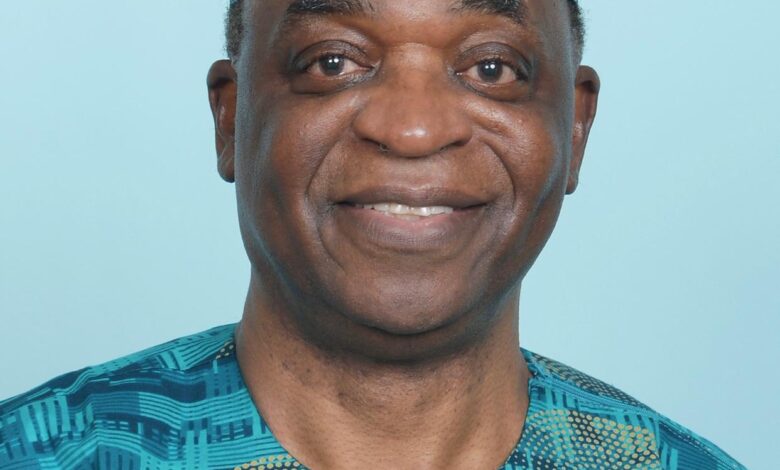
Isaac Megbolugbe, Director of GIVA Ministries International. He is a recipient of Albert Nelson Marquis Lifetime Achievement Award in business and academia in the United States of America. He is retired professor at Johns Hopkins University and a Fellow of the Royal Institution of Chartered Surveyors. He is resident in the United States of America.


