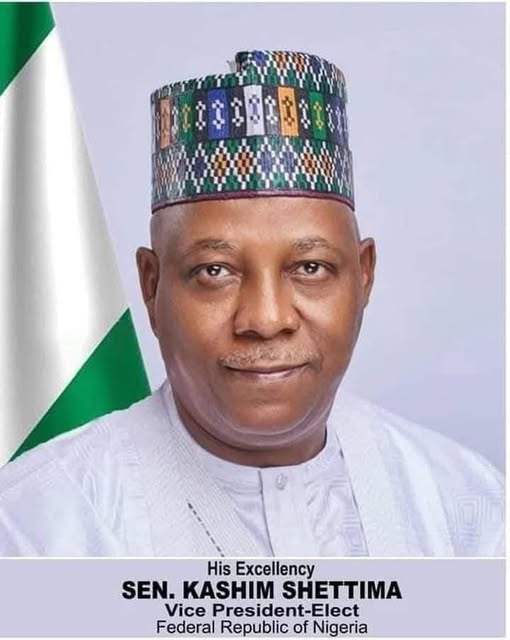
He explained that the proposed legislation would strengthen the Federal Government’s Nutrition 774 Initiative and deepen a compact among federal, state and local governments for coordinated implementation nationwide and accountability nationwide.
This, according to him, is with a view to delivering a unified response to malnutrition, beginning at the community level and reaching vulnerable mothers and children, while prioritising vulnerable households nationwide.
Shettima said Nigeria’s National Policy on Food and Nutrition 2026–2035 targeted stunting reduction to 32 per cent by 2029, 28 per cent by 2032 and 25 per cent by 2035, respectively.
He said that with nutrition committees already established in 32 State Houses of Assembly, the time was ripe to give the country’s nutrition response stronger legislative backing for sustained implementation nationwide.
“We are convinced that, with nutrition committees in 32 state assemblies, there is no better time for us to accelerate the development of a National Food and Nutrition Bill.
“The advancement of a federal, state and local compact to protect financing and enforce accountability beyond administrations,” he said, stressing the need for commitment nationwide at every level of government.
Shettima said that nutrition committees had also been established in more than 450 local governments to strengthen grassroots participation and improve implementation of nutrition programmes nationwide across all states and communities.
The vice president said that the Federal Government was strengthening state councils and delivery capacity across all levels of government to improve coordination and implementation of nutrition interventions across the federation.
According to him, Nigeria’s Nutrition 774 Initiative provides a single framework that brings together all tiers of government to lead implementation within their respective jurisdictions and ensure grassroots accountability nationwide effectively.
“Each council, being the lowest tier of our system, is our unit of planning, financing and accountability. We are working with states on costed plans for priority councils,” he said, nationwide.
“Bringing health, agriculture, social protection, water, sanitation, hygiene and education to the same mother and child,” he said, describing the integrated approach to nutrition delivery through coordinated action across Nigeria effectively.
Shettima disclosed that Nigeria’s 26 million dollars commitment to the Child Nutrition Fund attracted matching support and unlocked 52 million dollars for nutrition interventions to expand access to essential support nationwide.
“While 21 states had contributed 6.3 million dollars since 2023 for supplies aimed at preventing and treating malnutrition,” he added, noting progress in domestic nutrition financing across states and communities nationwide.
He said the proposed Presidential Nutrition Investment Fund would provide catalytic financing, while the Nutrition Financing Subcommittee was working to mobilise additional domestic resources for nutrition programmes nationwide and strengthen implementation.
“We can only claim that our budget fulfils its purpose when it nourishes a child,” he said, emphasising the importance of linking public spending to nutrition outcomes and accountability across government.
Shettima said that the government was strengthening systems linking public expenditure to measurable nutrition outcomes through scorecards and stronger domestic financing mechanisms across all levels of government to strengthen accountability nationwide.
He further explained that the urgency of the reforms was underscored by the fact that 40 per cent of Nigerian children under five were affected by stunting, alongside human capital challenges.
“This alongside an estimated annual economic cost of 56 dollars billion from undernutrition,” he said, highlighting the urgency of stronger nutrition investment and human capital development nationwide for Nigeria’s development.
“We act to protect learning. We act to preserve earnings. We act to project productivity,” he said, outlining the broader economic benefits of improved nutrition for Nigeria while protecting human capital.
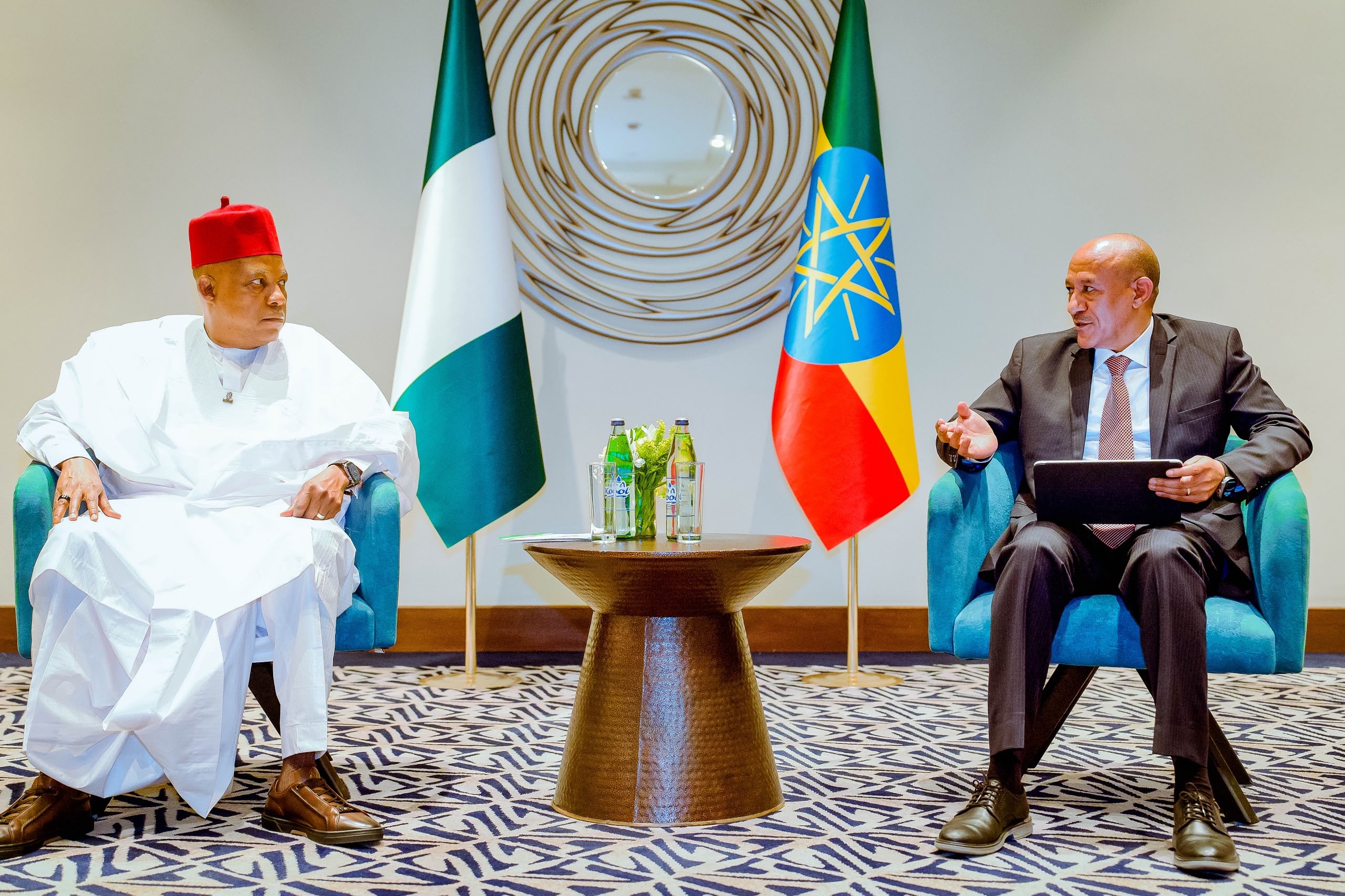
Earlier, the Deputy Prime Minister of Ethiopia, Mr Temesgen Tiruneh, said the longstanding relationship between Nigeria and Ethiopia could help shape Africa’s development trajectory through shared experience and sustained political commitment.
He welcomed Nigeria’s interest in Ethiopia’s nutrition experience, noting that his country had placed food and nutrition at the centre of its development agenda and national strategy nationally for better outcomes.
According to him, improving nutrition requires sustained political leadership, financing and accountability at every level of government, backed by systems that track implementation and results effectively and sustainably at community level.
“Over 100,000 children in Ethiopia have been protected from malnutrition through community mobilisation and improvements in the nutritional value of the food they eat,” Tiruneh said.
Meanwhile, Shettima and Ethiopia’s Deputy Prime Minister, Tiruneh, held a bilateral meeting on the sidelines of the forum to review shared interests and cooperation for deeper bilateral ties for growth.
Both leaders reviewed relations between Nigeria and Ethiopia and explored opportunities for deeper cooperation in trade, investment, food security, aviation and security, discussing practical steps for expanded collaboration and investment bilateral.
Tiruneh, who conveyed Ethiopia’s condolences to Nigeria over the recent Ondo air crash, said his country placed a high premium on its relations with Nigeria and underscored strong bilateral ties overall.
He explained that Ethiopia’s decision to treat nutrition as an economic and development issue led to the inauguration of the 15-year Seqota Declaration in 2015 as part of broader development strategy.
The Deputy Prime Minister also welcomed progress on the Transfer of Sentenced Persons Agreement signed by both countries, describing it as another area of bilateral cooperation and stronger relations for Ethiopia.
He called for the convening of the Nigeria-Ethiopia Joint Commission, and commended growing private-sector cooperation, including the Dangote Group’s investment in Ethiopia, urging sustained bilateral engagement and investment and economic cooperation.
Responding, Shettima reaffirmed Nigeria’s commitment to deepening bilateral relations with Ethiopia and strengthening cooperation in areas of mutual interest for Africa’s shared prosperity and development while promoting partnerships and shared prosperity.
He said both countries had a responsibility to leverage their population, resources and strategic positions for Africa’s development, while promoting stronger partnerships and shared prosperity across the continent and inclusive growth.
He commended Ethiopia’s progress in agriculture and domestic value addition, while emphasising the need for stronger intra-African investment under the African Continental Free Trade Area and expanded private-sector cooperation and jobs.