Jannah Theme License is not validated, Go to the theme options page to validate the license, You need a single license for each domain name.
LocalNewsOpinion

Nigerian government must learn to put the needs of the masses in front of its budget By Emeka Asinugo

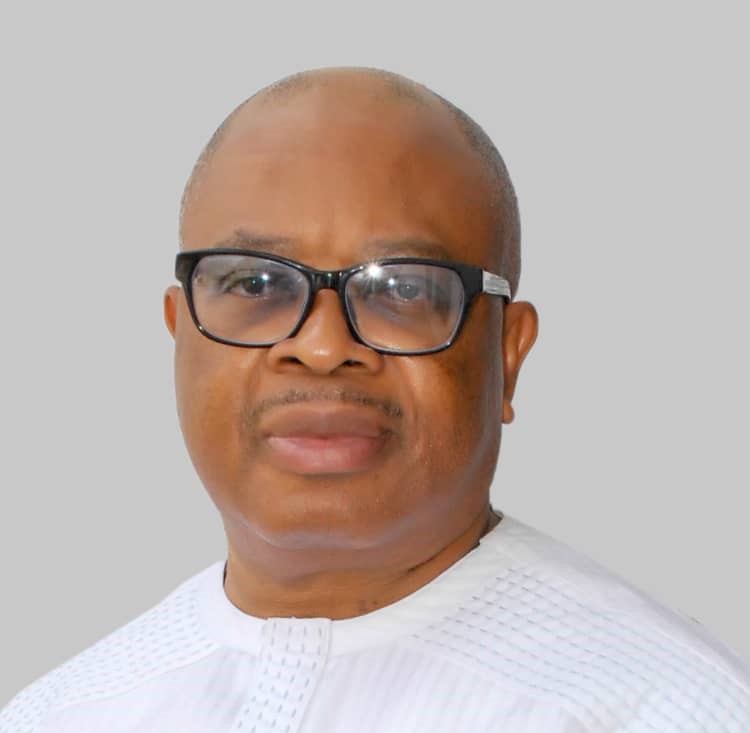
David Umahi

There is a growing perception among most Nigerians that those who wield the authority of governance in the country have lost touch with the fundamental essence of leadership, which is service to the people. The government, it would seem, has become more interested in pursuing grandiose projects that dazzle on television screens but mean little or nothing to the daily lives and well being of ordinary citizens whose welfare should have, by right, been the essence of governance. This is why the recent disclosure of the actual cost of the Lagos-Calabar coastal highway by Works Minister, David Umahi as a staggering N7.5 billion per kilometer after his Arise TV engagement with journalist Rufai Oseni, has sparked intense public debate. It is not only about the jaw-dropping figure, but more importantly, about what such an amount could have achieved if it were directed toward the real needs of the people.

For most Nigerians, the daily struggle is not about driving on a coastal highway or flying on new inter-state rail lines. Their worries are simpler, but also more urgent. They are more concerned about access to clean and safe drinking water, affordable healthcare services, schools where their children can learn without being drenched by rain or scorched by the sun, decent stalls in local markets where traders can sell their goods without fear of collapse, and rural roads that link farm products to urban consuming centres. These are the foundations of national development, the simple yet powerfully life-saving structures upon which a healthy, productive, and united society is built. Unfortunately, these basic needs are often ignored by state and federal governments in favour of flamboyant and capital-intensive projects that benefit only a small fraction of the population.

When a government chooses to spend N7.5 billion on a kilometer of highway while millions of citizens still fetch brown water from polluted streams, it raises a deep moral and developmental question about priorities. No matter how economically strategic a road may be, it should not take precedence over the lives of the people. A mother who loses her child to typhoid from contaminated water or to Lassa fever due to unhygienic environments, a man who dies from a preventable ailment because he cannot afford treatment has been failed by the system. The government exists primarily to prevent such failures. Yet, that is where Nigeria finds itself today, a nation where budgetary choices seem disconnected from the real pain and aspirations of the masses.

The truth is that nation building follows a natural logic, just like constructing a house. No builder begins from the roof. They start from the foundation, making sure it is solid enough to carry the weight of the structure. The foundation in this case is represented by the basic needs of the citizens like food security, water supply, affordable healthcare, education, and similar infrastructure. These are the elements that support life and human productivity. When a government chooses to start from the “roof” like such flashy projects that only a few people can use or appreciate, the house is bound to collapse, either in social instability, public discontent, or outright economic failure.

For decades, successive Nigerian governments have continued to misread what should be the real priorities of development. They have consistently poured money into showpiece projects that make for good political propaganda but contribute little or nothing to the everyday welfare of citizens. Consider the billions wasted on abandoned airports, luxury government buildings, and needless political appointments. Meanwhile, a visit to most rural communities across the country reveals a different reality:  schools without roofs or chairs, health centres without drugs, generators or qualified personnel, and boreholes that stopped working years ago. In these same villages, the people still pay taxes, vote during elections, and sing the national anthem with hope. But hope alone cannot sustain a nation.

What makes the Nigerian situation more disheartening is that the government continues to defend these misaligned expenditures in the name of “development.” But the point is that true development is not about how many expressways or skyscrapers a nation has. It is about how well its citizens live. A country where people have to walk kilometers to fetch water, where expectant mothers die because there are no nearby hospitals, or where teachers are unpaid for months cannot boast of genuine development. The gap between the government’s priorities and the people’s realities keeps widening, and that can easily be a recipe for social unrest.

Nigeria’s politicians often forget that the simple needs of the people are not expensive by any standards, but they are life-saving. Providing clean water does not require billions of naira. Functional rural clinics will not demand international loans. Refurbishing public schools is not an impossible task. The challenge is not a lack of resources but a lack of political will and human empathy. When leaders see governance as an opportunity to serve rather than to display power, impunity and a misguided sense of entitlement, priorities naturally shift toward the things that matters most.

Another dangerous misconception among Nigerian politicians is the notion that they can always buy the loyalty of the people through tokenism. During election seasons, we see political parties distributing bags of rice, small cash gifts, or branded wrappers to expectant voters. Beyond being degrading, this act is a direct insult to the sensibility of the electorate. Nigerians do not need handouts. They need a system that works for the good of all, not some. They need roads that connect them to hospitals and to colleges. They need water that does not kill their children, and schools that open the doors of opportunity to this and future generations of their children. It will be politically naïve for public office seekers to believe that the people’s trust can always be secured with bags of rice in place of visible and consistent  improvement in their living standards.

History teaches that governments that neglect the basic needs of their citizens often end up losing legitimacy. When hunger, disease, and poverty become the daily experience of the citizens, patriotism gives way to frustration. Frustration will breed anger. That is when insecurity, corruption, and social decay thrive. They are symptoms of a system that has failed to build from the foundation. A hungry person is easily tempted to take to crime in a bid to survive. An uneducated youth becomes vulnerable to cheap manipulation. A sick population cannot be productive. Addressing these challenges is not charity, it is sound economics and smart governance.

If the Nigerian government truly wishes to earn the trust and admiration of its citizens, it must begin by realigning its budget priorities. Every naira spent should be evaluated based on how it improves the lives of the people, not how it inflates the egos of politicians or contractors. Building one kilometer of road for N7.5 billion may look impressive on paper, but imagine what that amount could do if channelled differently. That could come up to thousands of new boreholes in rural communities, hundreds of refurbished classrooms, or dozens of functional primary healthcare centres equipped to handle common diseases. Such investments have multiplier effects that ripple across the economy, improving productivity, reducing poverty, and strengthening national unity.

 Moreover, putting the masses at the centre of budgeting is not only a moral duty but also a political strategy. When citizens feel that the government genuinely cares about their welfare, they respond with loyalty, cooperation, and civic responsibility. They become partners in governance, not adversaries. This is how stable and prosperous societies are built, not by imposing policies from above but by building trust from below. The people must see and feel the impact of government spending in their everyday lives.

Nigeria is not poor. What the country lacks is prudent management and visionary leadership. The resources are available. They only need to be redirected from wasteful prestige projects toward essential public goods. The billions spent on political luxuries, inflated contracts, and endless foreign trips could transform rural communities if properly harnessed. The solution lies in a new mindset that values human life and dignity above political showmanship.

To build a house, one must first lay the blocks that hold it firm. That is the essence of nation building. Governments that have transformed their nations, from Singapore to Rwanda began by focusing on the fundamentals: health, education, sanitation, and infrastructure that serve everyone, not just a privileged few. Nigeria can do the same if it learns to begin from the bottom up. We cannot talk of digital economy when electricity is unstable. We cannot boast of tourism when our roads are death traps. We cannot dream of industrialization when our children study under trees. Every great nation began its journey to greatness by solving the small problems first.

The time has come for Nigeria’s leaders to recognize that a government’s greatness is not measured by the size of its projects but by the smiles on the faces of its citizens. A government that provides clean water, affordable healthcare, and quality education does not need propaganda: the people themselves will sing its praises. It is time to stop building from the roof down and to return to the foundation of true nation building: the people.

The Nigerian government must therefore reexamine its budgeting philosophy. Each budget cycle should begin with a simple question: how will this expenditure improve the lives of ordinary Nigerians? The answer to that question should guide every policy and spending decision. That is the only way to build a strong, resilient, and truly independent nation. The needs of the masses are not just items on a list; they are the pillars upon which the Nigerian dream stands. Meeting those needs is not only an act of governance but also an act of justice. In the end, development is not about how much money is spent but about where and how it is spent. When the government learns to prioritize the welfare of its people, to see every citizen as the cornerstone of national progress, and to build patiently from the foundation upward, Nigeria will finally begin to realize its immense potential. The masses do not demand miracles, they only ask for fairness, empathy, and a government that listens. Meeting those simple needs like water, health, education, and opportunity will not only save lives but also win hearts. And that is the true meaning of leadership.

Chief Sir Asinugo, PhD., M.A., KSC writes from the US 

Related Articles

Leave a Reply

Your email address will not be published. Required fields are marked *

Back to top button