
Laureate Ifowodo urges students to read voraciously, embrace perseverance

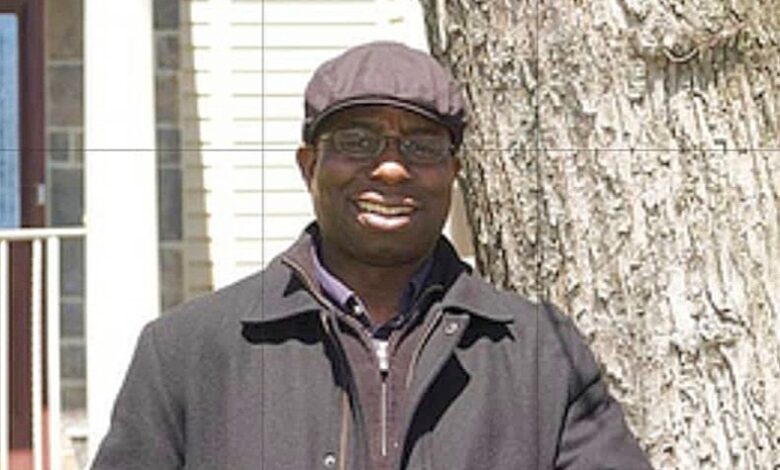

Ogaga Ifowodo
By Joan Odafe
Lagos, Nov. 20, 2026
Poet Laureate and lawyer, Ogaga Ifowodo, has urged secondary school students to cultivate reading habits, persevere in their creative pursuits and explore poetry as a means of expressing their ideas and experiences.
The News Agency of Nigeria (NAN) reports that Ifowodo, who is the winner of the 2026 Nigeria Prize for Literature, gave the advice during a mentoring session with students from various schools.
NAN reports that the mentoring session was part of the 28th Lagos Book and Art Festival (LABAF), taking place on Lagos Island from Nov. 16 to Nov. 22, 2026.
The festival organised by the Committee for Relevant Art (CORA) has the theme, ‘REPAIR: The Workover Starts, Now.’
LABAF 2026 marks the organisation’s 35th anniversary.
While sharing his journey into writing and the role of reading in developing literary skills, the poet encouraged students to write about their thoughts, experiences and stories.
Ifowodo said they could do it through poetry, fiction or essays, emphasising that creative expression was not limited to a particular literary form.
“I know that all of you have good ideas, have thoughts, have stories you want to tell, have had experiences you would like to write about,” he said.
Recalling how he wrote his first poem at about 16 while at the Federal Government College, Warri, Ifowodo said a senior student had challenged him to write a poem for his house during the school’s annual festival of arts and culture.
He said he had never written a poem before that challenge but took it up, writing “Ill Wind,” which won first prize among the school’s four houses and earned him an opportunity to read before the entire school.
Describing poetry as the elevated use of language through its figurative, rhythmic and musical qualities, Ifowodo said the genre extended beyond conventional verses.
“When you are exploring those things, those musical properties of language, you are actually writing poetry,” he said.
He added that the elements could also be found in speeches, essays and other forms of communication.
He urged students to pay attention to the use of language, including rhyme, rhythm, alliteration and metaphor, noting that the creative use of words could make expressions memorable.
Ifowodo advised aspiring writers to read widely beyond their textbooks and learn from established literary figures, including Shakespeare, Charles Dickens, Chinua Achebe and Wole Soyinka.
He urged students to seek out books that align with their interests and learn from the works of accomplished writers.
“Read voraciously. Read voraciously,” he said.
He added that reading and studying the works of literary masters remained an important part of developing writing skills.
He urged young writers to learn from them without necessarily copying their work.
Drawing on his experience teaching literature in the United States, Ifowodo also urged students to memorise at least one poem, likening the practice to remembering the lyrics of popular songs.
NAN reports that his winning collection, ‘Why Does God Need a Gun?,’ explores religious extremism and the use of religion to justify violence.
Ifowodo said his decision to write portions of the book in the voice of Leah Sharibu was intended to restore her agency and allow her to speak through literature.
Ifowodo won the 2026 Nigeria Prize for Literature with the collection, receiving the $100,000 award.
Also, Prof. Akachi Ezeigbo, Chairman of the Advisory Board of The Nigeria Prize for Literature, also urged aspiring writers to improve their craft through sustained writing, reading and careful editing.
Ezeigbo noted that the quality of literary submissions had improved over the years.
She recalled that in 2004, when the prize was first held, none of the submitted books won because judges found editorial flaws in the entries.
The don, however said publishers and writers had since made considerable progress in the quality of works produced.
Citing this year’s shortlist, which she said featured books that made the selection difficult for the judges, Ezeigbo said the improved quality of submissions had made the judging process more competitive.
She urged writers to keep reading and writing, stressing that reading remained fundamental to developing good writing skills.
Patrick Ekong, the Community Affairs Manager at Aradel Holdings Plc, said its investment in literacy and education reflected its commitment to community development and human capital.
According to Ekong, the organisation had spent about $224 million in bursary payments to students from its host communities studying in tertiary institutions, providing support for tuition and accommodation for indigent students.
Ekong said literacy now extended beyond basic reading and writing to include digital, financial and information literacy, which equipped young people to navigate social, economic and technological challenges
He urged parents to teach children financial literacy, including saving, budgeting and responsible money management.


