
Nafisa Abdullahi ought to be given a fair treatment By Emeka Asinugo

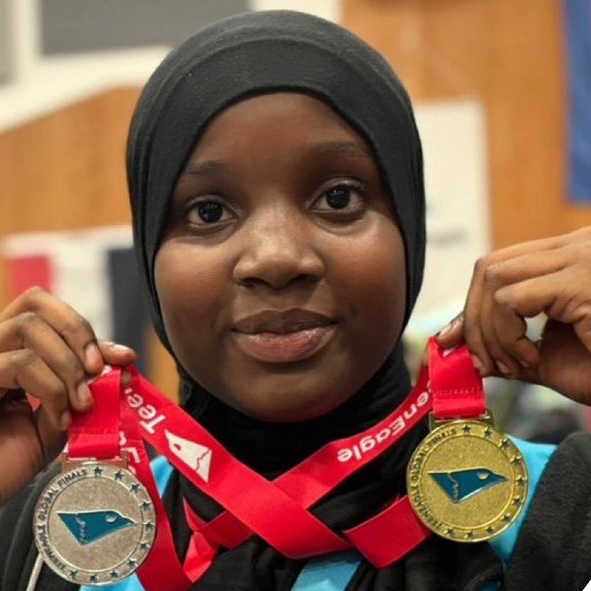
In a world that is being increasingly shaped by knowledge, innovation and intellectual capital, it is disheartening that Nigeria continues to undervalue academic excellence in favour of sports and entertainment. The recent case of Nafisa Abdullahi, the 17 year-old girl from Yobe State who emerged as the best in English language in a keenly contested global competition in the United Kingdom, is a classic example of how the Nigerian government often misses the opportunity to uplift and inspire right values in its young-adults. Nafisa’s achievement is monumental by every standard. She competed against more than 20,000 participants drawn from 69 countries and came out top, placing Nigeria’s name in the international limelight for the right reasons. Yet, when it was time to reward her, the Federal Government allegedly gave her only N200,000 in recognition of her feat.
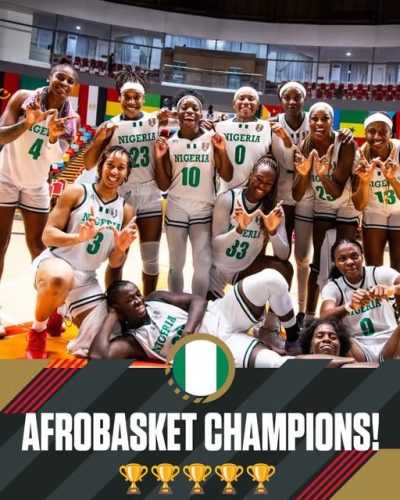
When we compare this with the treatment given to the Super Falcons and the Tigress, both of whom were rewarded with $100,000 each, three-bedroom apartments, and national honours for their victories in sports we find that the disparity is awful. Even their technical teams each received $50,000, three-bedroom apartments, and national honours. While there is nothing wrong in the celebration of sporting activities, the disparity in the rewards system reveals a troubling national priority. What message was the government possibly sending out to its young adults? Was it that sporting victories were more important than intellectual accomplishments? Did they mean that a goal scored on a football field was more valuable than the brilliance of a young mind who defeated tens of thousands of other contestants on a global academic stage? Nafisa’s triumph is even more significant when viewed against the backdrop of her origin.
She comes from Yobe State, one of the states most affected by insecurity in Nigeria. Yobe, like Borno and Adamawa, has often been associated with violence, poverty, and low literacy levels. Yet from this challenging environment emerges a shining star who defied all the odds, demonstrated resilience, and proved that brilliance can flourish even in the most difficult circumstances. By conquering the academic challenge posed by over 20,000 participants across 69 countries, Nafisa not only lifted her family and state but also lifted Nigeria’s image before the comity of nations. Her success symbolised what is possible when Nigerian youths are given encouragement and the right mentorship.

The Federal Government, in its decision to treat Nafisa’s accomplishment with such levity, inadvertently sent out the wrong message. It told millions of Nigerian students that their intellectual struggles and academic triumphs were less valued in comparison with the fame brought by sports.
To put it mildly, this is a travesty of justice, not only to Nafisa but also to every Nigerian youth who wakes up early in the morning to study, stays awake to read late into the night, and aspires to be recognised for academic brilliance one day. The imbalance between the treatment of sportsmen and women on one hand and scholars on the other will definitely tend to perpetuate a culture where young people are motivated to chase careers in entertainment and sports and shun the rigours of real education. Yet, we all know that education is the foundation of any meaningful national development, not entertainment and definitely, not sports.
When Nigeria invests heavily in sports and entertainment while it neglects academics, it inadvertently weakens its capacity to compete globally in the fields that matter most: science, technology, innovation, and intellectual property. The truth is that countries do not develop simply because they have great football teams or renowned basketball players. They develop because they produce scientists, engineers, writers, researchers, innovators, and thinkers who create solutions to national and global problems. If Nigeria truly desires to be taken seriously on the world stage, it must begin to elevate academic achievements to the same, if not higher, level as sports.
Other countries understand this clearly, which is why they celebrate their academic champions with more vigour than we do. In India, for instance, students who win international science or mathematics Olympiads are awarded scholarships that cover their entire university education, sometimes with additional financial stipends and job placements in research institutions. In Singapore, young winners of international academic competitions are celebrated by the Prime Minister, given government scholarships, and mentored into leadership roles because the country sees them as assets for the future. China takes it even further: outstanding students in global competitions are given lifetime scholarships, government-sponsored research grants, and placements in elite universities. Even in Ghana, academic achievers have been given national awards and scholarships, with ceremonies broadcast on national television to inspire other young people. These governments understand that by elevating academic heroes, they are elevating the very foundation of their nations’ future.
Rewarding Nafisa handsomely and celebrating her widely would have been in the government’s best interest. It would have sent a strong message to Nigerian youths that the government values education, intellectual capacity, and innovation. It would have inspired millions of students across the country, especially those from conflict-ridden and marginalised areas, to believe that their struggles in school are not in vain. It would have challenged parents, teachers, and communities to invest more in education, knowing that the government recognises and celebrates academic excellence at the highest levels.
Moreover, celebrating Nafisa properly would have helped to counter the narrative of despair that has long trailed the North-East. For years, Yobe has been in the news for insecurity and poverty. The emergence of a world-class academic champion from such a state should have been seized upon by the government as a symbol of hope and resilience. Instead of making her an example of the kind of excellence that can come out of the region, the government reduced her reward to a mere token that can barely cover her educational expenses for a year. In doing so unfortunately, it missed a golden opportunity to change the perception of Nigeria’s North-East and to inspire millions of its young people.
The argument here is not that sports should not be rewarded. Sports, no doubt, play an important role in national unity and international visibility. They bring people together, ignite patriotism, and place nations on the global stage. The Super Falcons and the Tigress have done the country proud, and they deserve recognition. However, the question is about balance and fairness. If sports heroes can be rewarded with cash prizes running into millions, apartments, and national honours, then intellectual heroes like Nafisa deserve nothing less. In fact, in a world driven by innovation and knowledge, one could argue that intellectual achievements deserve even greater recognition.
By under-rewarding Nafisa, the government may have unknowingly discouraged thousands of other bright students across the country. Many would wonder why they should burn the midnight oil if their achievements will only earn them token rewards, while others who play football or basketball receive life-changing benefits. This could have a long-term negative effect on the country’s educational system and human capital development. No country can develop beyond the quality of its education, and if Nigeria fails to motivate its students, it risks breeding a generation more interested in short-term fame than in building the intellectual foundation necessary for national growth.
It is also important to note that rewarding Nafisa properly is not just about money. Beyond financial incentives, it is about symbolic recognition. The government could have awarded her a national honour, named a scholarship after her, or even set up an academic endowment fund in her name to support other brilliant students. Such gestures would have elevated her achievement, immortalised her name, and demonstrated that Nigeria values its intellectual heroes. Unfortunately, none of these things happened. Instead, the government treated her feat as a minor occurrence, when in reality it was a global triumph worthy of national celebration.
The treatment of Nafisa speaks to a larger problem in Nigeria’s reward system. For too long, the country has celebrated short-term victories while ignoring long-term investments. Football victories last for a season, but academic breakthroughs last for generations. If the government wants to secure Nigeria’s future, it must reverse this trend and begin to celebrate those who can help shape the nation’s destiny in science, technology, engineering, medicine, and the arts. The solution is simple. The Federal Government must revisit Nafisa’s case and do something better to correct the wrong impression already created. She deserves not just financial support but also symbolic recognition at the highest levels. By doing this, the government would not only be honouring Nafisa but also sending a clear message to Nigerian youths that education matters. It would demonstrate that Nigeria values both sports and academics equally, and that no sector is superior to the other. More importantly, it would show that Nigeria is ready to prioritise education as the foundation of national development.
The case of Nafisa Abdullahi is not just about one girl: it is about the soul of a nation. It is about what Nigeria values, what it rewards, and what it teaches its young people. By treating her accomplishment as secondary to sports, the government risks perpetuating a culture of misplaced priorities. But by correcting this mistake and giving Nafisa the recognition she truly deserves, the government still has a chance to inspire millions of youths, restore faith in the value of education, and chart a trusted course for Nigeria’s future. In the final analysis, Nafisa’s victory on the global stage is a reminder that Nigerian youths can rise to any challenge if given encouragement and mentorship. She has shown that brilliance knows no boundaries, not even the insecurity and poverty of Yobe State. For the government and the people of Nigeria, the message is clear: it is time to reward and celebrate academic excellence with the same zeal as sports. Only then can Nigeria build a future where knowledge and innovation take their rightful place at the centre of national progress. And only then can we say, in truth and fairness, that we have treated Nafisah Abdullahi and others like her with the dignity and honour they truly deserve.
Chief Sir Emeka Asinugo KSC, writes from the UK