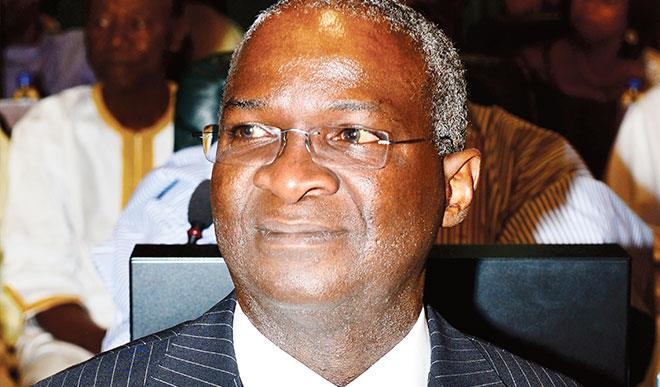
Dr. Nwankwo is a Professor of Practice in Economics, Miva Open University and Former Director-General, Debt Management Office (DMO), Nigeria.
This paper was presented at the Miva Open University Monthly Academic Discourse, August 26, 2026
Abstract
The pervasiveness, intensity, and persistence of public debt challenges, for world economies in general, and African countries in particular, call for diverse investigations to identify possible solutions. A natural candidate for these probes is the major instrument designed by the International Monetary Fund (IMF) and the World Bank for structured management of public debt, including borrowing decisions – the medium-term debt management strategy (MTDS), and its complementary implementation tool, the debt sustainability analysis (DSA). A study of the IMF-World Bank frameworks for these instruments reveals that neither the MTDS nor the DSA, captures how the specified new borrowing itself should be utilized to contribute to debt sustainability. All the denominators in the debt sustainability ratios refer to the values generated through various activities in the subject economy but omit the specification of any contribution to those values by the use of the new debt financing. This lacuna is conducive to free-riding debt financing and irresponsible borrowing. A remedy is to incorporate debt productivity plan (DPP) into the MTDS framework and reflect its principles in the DSA. The DPP is a policy document for articulating how borrowed funds can be deployed to transform the economy. It will contain estimates of the impact of each debt-financed project on other existing, ongoing or planned real sector and infrastructural projects. For example, in respect of the external component of the new borrowing, the approach would demonstrate how to deploy the proceeds to positively impact, directly or indirectly, export-oriented production, which would boost the economy’s foreign exchange reserves, and from which cash-flow, the external loan can be serviced, thereby reducing foreign exchange risk, in addition to generating employment.
- Introduction: The Background Challenge
Public debt challenges have been pervasive, intense, and persistent in the last five decades. This has been especially so for African countries: in spite of more than 60 instances of debt reduction episodes over the past 25 years (Laws, Lemaire, Pafadnam, Spatafora, and Khandelwal, 2025:2), Sub-Saharan Africa have remained in a quaky fiscal condition. In the second half of the 2000s, through the Heavily Indebted Poor Countries (HIPC) debt relief initiative and the Multilateral Debt Relief Initiative (MDRI), Sub-Saharan African countries Debt-GDP ratio dropped from about 60 percent to between 20 and 30 percent; however, by 2022, the ratio had risen to about 59.1 percent (IMF, 2023:2). For Africa as a whole, between 2010 and 2022, the total public debt stock rose by 183 percent to USD1.8 trillion (UNCTAD, 2024), while the ratio of debt service to gross domestic product (GDP) rose from 1.5 percent to 3.2 percent (South African Institute of International Affairs (SAIIA), 2023). The continent’s median debt-to-GDP ratio was estimated at around 65.5 percent in 2024 (African Development Bank, 2025a:7).
Paradoxically, African countries need to borrow more. Estimates such as those of the joint work of African Union Commission (AUC) and Organization for Economic Cooperation and Development (OECD) (AUC/OECD, 2023: 21) show that Africa has a huge sustainable financing gap of about USD1.6 trillion up to 2030 and that that it needs new financing of about USD194 billion annually, to achieve the Sustainable Development Goals. A notable aspect of the financing gap is the need to address Africa’s GDP losses caused by COVID-19, estimated at a cumulative of USD145.5 billion in 2020 (AfDB, 2021: 4). The greater portion of the financing gap can only be closed with debt financing – mainly, external debt financing.
Sovereign debt crisis has also affected the more advanced economies, even if in versions different from the African type. This is exemplified in: the debt crises during 2008 – 2014, in such Eurozone countries as Portugal, Italy, Ireland, Greece, and Spain (PIIGS); the U.S. debt and financial sector crisis, induced by sub-prime mortgage-sector lending, between 2007 and 2010; as well as Japan’s crisis of ballooning public debt co-existing with economic stagnation for decades.
Although the suspected contributors to the public debt malady are conceivably varied, there is the need to investigate the adequacy of the technical tools used in the management of public debt. Indeed, the dilemma whereby African countries are debt-distressed and at the same time need more debt financing, points to the need to seek a solution in more productive management of public debt.
Accordingly, the purpose of this paper is to examine the adequacy of the traditional public debt management strategy framework. The paper will be presented under four core sections, thus: II. The Nature of the Medium-Term Debt Management Strategy; III. The Disconnect of the Strategy with Debt Productivity; IV. A Peep into the Literature; and V. The Remedy: Debt Productivity Plan.
- The Nature of the Medium-Term Debt Management Strategy (MTDS)
In public debt management, the principal instrument for articulating and driving the amount, deployment, and outcome of debt financing – essentially, for achieving healthy public debt conditions – is the medium-term debt management strategy (MT DS). It is usually of three- or four-year duration. The IMF and World Bank document, “Developing a Medium-Term Debt Management Strategy Framework (MTDS) – Updated Guidance Note for Country Authorities” (IMF and World Bank, 2019) defines debt management strategy (DMS) as:
…..a plan that the government intends to implement over the medium term in order to achieve a desired composition of the government debt portfolio, which reflects the government’s preferences with regard to the prevalent cost and risk. Those preferences capture the government’s debt management objectives—for example, ensuring that the government’s financing needs and payment obligations are met at the lowest possible cost, consistent with a prudent degree of risk. An effective DMS has a strong focus on managing costs and risk exposures embedded in the debt portfolio—specifically, potential variations in the overall cost of debt servicing and its impact on the budget (IMF and World Bank, 2019: 4).
According to the IMF (2014:7), “The main objective of public debt management is to ensure that the government’s financing needs and its payment obligations are met at the lowest possible cost over the medium to long run, consistent with a prudent degree of risk”. Moreover, the Bretton Woods institutions (IMF and World Bank, 2019: 5, 6), outline the benefits of a debt management strategy as follows:
- The DMS allows informed decisions based on evaluation of cost-risk trade-offs associated with alternative strategies.
- The formulation of a DMS involves analysis, which helps to identify and monitor key financial risks and establishes strategies for optimizing new borrowing opportunities.
- Developing a DMS facilitates coordination between debt management and both fiscal and monetary management, while tasking each agency to focus more clearly on its core objectives, thereby enhancing clarity and accountability for debt management, separate from fiscal and monetary policies.
- The DMS helps identify the constraints that affect the debt manager’s choices, and increases the chances of identifying steps to ease those constraints.
- Cost: For developing countries in particular, because DMS aims to support the development of the domestic debt market and facilitate the relationship with investors, creditors, and rating agencies, it can potentially lower the cost of debt servicing.
- Transparency and accountability: DMS serves the purpose of transparency and accountability in various ways. The development of a DMS requires the compilation of detailed relevant data, from several government agencies; this in itself could facilitate accountability. In addition, the implementation of the strategy stipulates regular updates and circulation of the reports to relevant government agencies, the parliament and other stakeholders. All these would encourage building of broad-based support for responsible financial stewardship.
The formulation of a MTDS involves a number of steps, of which we consider the following to be core: portfolio analysis and risk analysis, review of available borrowing sources, designing the strategy in alternative forms, identifying the preferred strategy, and implementation of the preferred strategy.
To achieve a more compressive understanding of the nature and current state of knowledge on the principles and practice of the MTDS, it is compelling to also understand another public debt management device, which complements debt strategy – debt sustainability analysis (DSA). The DSA, unlike the MTDS, is an annual exercise and revolves essentially on the implementation of the preferred borrowing strategy determined in the MTDS, one year at a time. The main objective of the DSA according to the Bretton Woods institutions is:
…to gauge whether or not the level and terms of current and expected future borrowing may lead to future debt servicing difficulties over the long term. To assess debt sustainability, the DSA considers a baseline macroeconomic framework that projects the country’s fiscal and balance of payments stance under certain assumptions and conditions, and then considers the robustness of key debt burden indicators—usually the ratio of the net present value (NPV) of debt to GDP, exports, or tax revenue—to various macroeconomic shocks, such as to GDP, the exchange rate, revenues, etcetera (IMF and World Bank, 2019: 16).
At the core of DSA are: (i) the solvency indicators, which evaluate a government’s long-term ability to service its total debt; and (ii) the liquidity indicators, which evaluate its capacity to meet immediate cash and short-term debt obligations. The key DSA solvency indicators include: Debt-to-GDP, Debt-to-Export, and Debt-to-Revenue; while the key liquidity indicators include: Debt Service-to-Revenue, Interest Payment to Revenue, and External Debt Service-to-Exports.
Both the MTDS and the DSA are carried out using frameworks developed by the World Bank and the IMF: for MTDS, the Medium-Term Debt Management Strategy Framework; and for DSA, the Debt Sustainability Low-Income Country Debt Sustainability Framework (LIC-DSF), and Market Access Countries Debt Sustainability Framework (MAC-DSF).
The MTDS has far-reaching consequences for the DSA because the quantum and mix of the debt portfolio specified in the preferred strategy defines to a large extent, the focus and considerations in the formulation of the DSA. For example, if the preferred strategy indicates higher external borrowing in the required total new borrowing, it implies that the economy needs to achieve a higher level of exports to achieve external debt sustainability. Herein lies the challenge: neither the MTDS nor the DSA, in their conventional frameworks and practice, captures how the specified new borrowing itself should be utilized to contribute to debt sustainability. All the denominators in the debt sustainability ratios (Debt/GDP, Debt/Exports, Debt/Revenue, Debt Service/Revenue, Interest Payment/Revenue, and, External Debt Service/Exports) refer to the values generated through various activities in the economy concerned and do not refer to any contribution to those values by the use of the new debt financing. This lacuna applies to both external and domestic components of public debt financing.
The Disconnect of the Strategy with Debt Productivity
Although the frameworks of the IMF and World Bank for MTDS and DSA present detailed procedures, as well as the objectives and benefits of the exercises for public financial management, they fail to outline how to achieve economic growth as an outcome of debt financing. This makes the tools weak and relatively sterile. The frameworks fail to recognize that the link between debt financing and debt sustainability, lies mainly in debt productivity. This is a huge irony because IMF and World Bank are known to be very concerned about addressing the problem of unsustainable debt, yet they are unable to employ their frameworks and guidelines, to explore and exploit the connection between debt finance and debt sustainability, through debt productivity.
The frameworks simply concern themselves with the capacity of the subject economy to repay the loans, without bothering that the repayments may have been made feasible by the contributions from other sources, even when the loans justified within the frameworks are not productive. A loan ought to be considered non-performing if it is not obviously achieving its socio-economic objectives and contributing directly or indirectly to loan repayment and overall public debt sustainability. If the proceeds of loans are wasted and their servicing is borne by non-debt generated revenue, the effect is the crowding off of revenue that would have been applied to growth-enhancing expenditure. Such a porous and free-riding approach to public debt financing encourages irresponsible borrowing and fiscal profligacy. It is inherently a recipe for endemic debt unsustainability.
Consider a country like Nigeria where both exports and public revenue are over-dependent on exhaustible natural resources, the inflows from which are essentially rents. As at 2024, crude oil and gas accounted for about 80 percent of the country’s total exports (Intelpoint, 2025) and about 30 percent of its government revenue (Central Bank, 2025). Under the MTDS and DSA frameworks, there would be low export-based and government revenue-based sustainability ratios, which produce the illusion that the country could continue to borrow, even if much of the proceeds of the borrowing are not productively deployed in the economy. The illusion exists because the export and revenue values used in the calculation are delinked from the use of the amounts borrowed. They depend on the performance of the overall economy, independent of the performance of the debt-financed activities. Debt sustainability arising out of sources other than debt productivity encourages the accumulation of unproductive and unaccounted-for debt financing – a factor that contributes to the intensity of debt unsustainability and crisis when the veiling sources collapse. (In passing, we could say that this situation could provide one logic why public debt could impact economic growth in the negative direction, as found in some empirical studies of the relationship between public debt and economic growth).
For many African economies like Nigeria, which are characterized by high levels of inefficiency, non-transparency, poor accountability and weak governance (Ajayi 2003, 131; Soludo 2003, 49; AfDB 2015, UNCTAD 2020; Aganga 2023, 10 – 11, 166 – 167; Ogbu 2023, 36; Mo Ibrahim Foundation 2024; Clever 2024; AfDB 2024; AfDB 2025b; Transparency International 2025), the effects of that deficiency in the traditional world-class debt management frameworks, which African countries rely on, are costly. It means that MTDS is not used to achieve economic growth and diversification and, particularly, export growth and export diversification. In the framework, economic growth, which is necessary for debt sustainability is simply wished for and expected to arise from any direction, instead of being pursued deliberately with debt financing. The ideal is to realize maximum contribution to overall repayment from debt financed project, so that cumulatively, all loans would produce public debt sustainability.
This logic aligns with the “(r-g)” rule, whereby the real interest rate (r) rising faster than the real GDP growth rate (g), favours debt unsustainability, and vice versa (Lian, Presibitero, and Wiriadinata, 2020: 1-2; Heimberger, 2023: 1 – 3; Javed, 2026: 4 – 5). An approach which explicitly and proactively engineers the maximisation of the contribution of debt finance to economic growth, contributes to the chances of “g” rising faster than “r”; this outcome lowers the debt burden,
It is understandable that the annual contribution of the loan-financed projects to the GDP is usually in small amounts but expected to flow continuously over a long period of time. So, ensuring that each loan is productive ensures that the cumulative contributions of all existing loans in a particular period would tend to be sufficient to cover the repayment obligations of that period. It is necessary to clarify that it is neither necessary nor practicable that the value-added from each generation of debt financing will take care of that particular underlying liability in a time-tied manner. Moreover, typically, a debt-financed project will not generate any income for a number of initial years. What is needed is that each tranche of debts is managed to produce enough output from the commencement of its yielding years, for a maximum number of years. The cumulative process would produce the required balancing. Put in a different way:
Although the value-added from each generation of debt financing is not expected to match the particular underlying liability in a time-corresponding manner, what is required is that as part of a cumulative and overlapping process, each generation of debts is programmed to make adequate contribution to the GDP along a time path, so that there is an approximate matching of the obligations of each period (needs) and the value-added generated in that period from previous well-programmed debt-growth initiatives (means). The guiding principle is that there is a debt-productivity-sustainability-sequence (DPSS) (Nwankwo, 2026: 284).
Our position, therefore, is that, in general, debt sustainability arises from the adequacy of economic output to cover debt service and repayment obligations. Or, from another angle, it consists in the adequacy of public revenue to cover the debt liability; but public revenue is taken to be a positive function of gross domestic product (Zeng, Li and Li 2013, 851). So, in the final analysis, the aim should be that debt financing should generate enough additional value, over and above the amount borrowed and used, so that it can comfortably cover the underlying obligation. This principle can be adjusted appropriately for debt financing of intangible social services like education and health, in terms of how and to what extent; but the guiding principle remains valid. Such targeting of output outcomes and impact may not be considered imperative in advanced economies, characterized by high levels of efficiency, transparency and accountability in the use of public resources. But for countries with serious governance challenges, deliberate planning for a targeted output from a given amount of debt financing, is a necessary condition for real debt sustainability.
- A Peep into the Literature
Although the twin-institutions of the IMF and the World Bank regard themselves as reservoirs of knowledge and expertise on development financing and macroeconomic issues, they continue to be targets of relentless criticisms, attacks, and resistance by the academia, civil society, and social movements. While the critiques are on a myriad of issues around democratic governance, human rights, and environment (Bretton Woods Project. 2019. 3 – 10), they are shallow on issues of adequacy of the technical frameworks designed by those two global institutions, particularly, for public debt management. In particular, the literature critiquing the MTDS and DSA from the angle of productivity of new borrowing is virtually non-existent.
Even where the title and scoping of some research papers raise expectation in that direction, the exploration turns out completely omitting that aspect. For example, in their paper, “The Debt Burden: How to Create a Better Debt Management Framework”, Olivares-Caminal and Subacchi (2021) had indicated they would discuss “the pillars of what a solid debt management strategy should encompass” (Olivares-Caminal, and Subacchi, 2021: 6)), but they ended up discussing and prescribing the items a proper debt management framework should consider as: a clear decision making and approval process for incurring debt and for guaranteeing SOE and sub-sovereign obligations, backed by law; independence of the debt management body: debt management strategy to set objectives and evaluate short-, medium- and long-term needs; coordination of debt management with fiscal and monetary policies; a transparency policy around procedure for debt recording, tracking payments of outstanding obligations, and publication of reports. Invariably, these prescriptions are about the improved use of the framework as it is and hardly about how the framework could be improved to capture the need for new borrowing to be made intentionally and endogenously productive.
Similarly, a very recent policy research paper, which specifically set out to propose eight reforms for the DSA framework for low-income countries (Henning, 2026) turned out to be disappointing. The reforms it proposed included: the rationale for separating the debt frameworks for low-income and market-access countries; the case for and against analysing external and domestic debts separately; consideration for capturing political risk in the analysis; the need to rationalize institutional issues as measured by the country performance and institutional assessment (CPIA) in the analysis; the need to separate responsibility for technical decisions by the staff, and political decisions by the Executive Board of the respective Bretton Woods institutions; the inevitability of introducing judgement by staff in their analysis “As the assessment of risk becomes more complicated—notwithstanding simplification of the model—omission of important variables becomes more likely and mechanical signals are likely to become less rather than more reliable”; the need to mainstream climate change factors into the framework; and the need to be intentional on when and how the contributions reflecting the peculiar missions of the IMF and the World Bank, should be applied within their institutional collaboration (Henning, 2026: 23). Here again, the reform fails to recognise the challenge posed by the disregard of debt productivity.
It would be helpful in our search to know the internal assessment of the frameworks by the IMF and the World Bank themselves. The closest we come to this is their joint report in 2017, where they stated:
In parallel, there is a need for on-going efforts to develop and extend the MTDS. In this connection, defining appropriately the scope of sovereign debt to be managed is crucial. Especially for smaller member countries very prone to natural disasters or commodity price fluctuations, it may in due course be possible to add an analytic framework that facilitates making the choice between taking out insurance and issuing debt. The viability of sovereign portfolios of some countries may depend critically on contingent liabilities. Hence, they may have to be taken more explicitly into account, not only from a debt sustainability perspective, but also in the development and the implementation of the DMS. Further, the AT could be better adapted to deal with new instruments, such as hedging instruments, and to strengthen its linkages with the annual borrowing plan and the debt sustainability analysis. In this connection, staff intends to review progress on MTDS capacity development and implementation in WB and IMF work, and proposes to inform the Board accordingly from time to time (IMF, and World Bank, 2017:30).
While it is evident from the above statement that the institutions were concerned about optimizing the MTDS, the DSA, and even the analytical Tools (AT) used in conducting MTDS and DSA, they still failed to observe the lacuna inherent in the non-linkage of the frameworks to debt productivity. It is how to close this observed lacuna that this paper aims to propose.
- The Remedy: Debt Productivity Plan (DPP)
By the existing practice, the major activities in the implementation of the MTDS are: developing a borrowing plan; approval of the strategy; dissemination of the strategy; and, monitoring and review of the strategy. However, in line with the foregoing case in favour of using the strategy as a proactive instrument to enhance the transformation of the economy (pursuit of debt productivity), there is need to introduce an additional activity: developing a debt productivity plan (DPP).
A Debt Productivity Plan (Nwankwo, 2025) is a policy document for articulating how borrowed funds can be deployed to transform the economy. Economic transformation in this context means substantial and sustainable inclusive growth (SSIG). The plan aims to ensure that the utilization of loan proceeds will be designed to generate maximum productivity in the form of benefits to the borrower, while self-repaying. For example, in respect of the external component of the new public borrowing, the approach would focus on how to deploy the proceeds to positively impact, directly or indirectly, export-oriented production, which would boost the economy’s foreign exchange reserves, and from which cash-flow, the external loan can be serviced, thereby reducing foreign exchange risk.
The DPP will contain the following schedules:
- Investment expenditure intended from each, or a group of, new loans in the MTDS;
- Linkages of each debt-financed project to other existing, ongoing or planned real sector and infrastructural projects:
- Deliberately identifying opportunities for the private sector (agriculture and agro-processing, manufacturing, mining and mineral-based industry, etc.) from public debt-financed capital expenditure, and ensuring the tapping of such opportunities;
- This approach would guide the projects to maximize the impact on growth, employment and poverty reduction, by being mutually re-enforcing;
(c) Specifically, specification of how projects financed with new borrowing under the strategy are integrated for synergy, rather than being fragmented;
(d) Sectors of the economy the new investment expenditure will impact;
(e) Specific private-sector and other real-sector projects, which the new investment expenditure will impact;
(f) Estimates of the impacts of the expenditures on the real economy:
– Diversification of export revenue, and public revenue in general:
– As much as feasible, there should be estimates of expected impacts; measured in cardinal or relative ranking terms as applicable:
- These estimated outcomes and impacts would be monitored and reported periodically; and
- Estimates of the direct and indirect employment and income created from the debt-financed investments.
These operational features of the DPP inherently introduce the responsibility for monitoring and evaluation. As a plan document, the MTDS is usually subjected to continuous monitoring and to periodic review and revision. These exercises enable the debt manager to continue restoring the implementation to track, in view of the expectation that certain assumptions underpinning it may be changing over time, while ensuring that the MTDS aligns with updates of other policy documents to which it is linked, for example, national development plans. With the incorporation of DPP into the MTDS, the need for monitoring and evaluation becomes not only reinforced but compelling. These enhancements would be migrated appropriately to the DSA: the virilization of the MTDS is a basis for mainstreaming the new thinking into the DSA.
Formalization: The idea of the DPP as enunciated in this paper is not the conclusion but the beginning of a technical journey. It requires that the IMF and the World Bank consider the most appropriate ways to incorporate it into their traditional debt management strategy and debt sustainability analysis frameworks. The incorporation would include formulas and ratios for defining how to generate the estimates mentioned in the schedule for operationalizing the DPP.
- Conclusion
The recalcitrance of public debt challenges calls for a search for areas of improvement in public debt management. A natural candidate in this search is the major instrument designed by the International Monetary Fund (IMF) and the World Bank for a systematic management of public debt – the medium-term debt management strategy (MTDS), and its complementary implementation tool, the debt sustainability analysis (DSA). A study of the IMF-World Bank frameworks for these instruments reveals that while they aim to guide countries to pursue debt sustainability, they fail to provide for how the new borrowings determined from the strategy will be utilised in such a manner that they contribute to economic growth and, therefore debt sustainability. This deficiency is conducive to free-riding debt financing, and irresponsible borrowing. A remedy is to incorporate debt productivity plan (DPP) into the MTDS framework and reflect its principles in the DSA. Therefore, the IMF and the World Bank should consider the most appropriate ways to incorporate the DPP into their traditional debt management strategy and debt sustainability analysis frameworks.
References
African Development Bank. 2015. “International Anti-Corruption Day: AfDB calls for stronger measures in Africa”. News and Events, December 10.
African Development Bank. 2021. Multidimensional Action Plan for the Management and Mitigation of Debt Distress Risks in Africa (DAP). Abidjan: AfDB.
African Development Bank. 2024. Bank Group Action Plan for Anti-Money Laundering and Combatting Illicit Financial Flows (2024 – 2026). Abidjan: AfDB.
African Development Bank. 2025a. “Making Africa’s Capital Work Better for Africa’s Development”. African Economic Outlook 2025.
African Development Bank. 2025b. “Fighting Corruption Critical to Africa’s Economic Growth, Development Bank Experts Say”. News and Events, October 18.
Aganga, Olusegun. 2023. Reclaiming the Jewel of Africa: A Blueprint for taking Nigeria and Africa from Potential to Prosperity. Great Britain: Practical Inspiration Publishing.
Ajayi, Simeon. 2003. “External Debt, Capital Flight, and Growth in Nigeria”. In The Debt Trap in Nigeria: Towards a Sustainable Strategy, edited by Ngozi Okonjo-Iweala, Charles Soludo, and Mansur Muhtar, 105 – 152. Trenton, NJ and Asmara: Africa World Press, Inc.
AUC/OECD. 2023. Africa’s Development Dynamics 2023: Investing in Sustainable Development. Paris: OECD Publishing.
https://doi.org/10.1787/3269532b-en
Bretton Woods Project. 2019. “What are the main criticisms of the World Bank and IMF?” Inside Institutions. London: Bretton Woods Project.
Central Bank of Nigeria. 2025 “2024 Statistical Bulletin: Public Finance Statistics”.
https://www.cbn.gov.ng/Out/2024/STD/2024%20Statistics%20 Bulletin_Public%20Finance.xlsx
Clever, Sydney. 2024. “The Impact of Corruption through Treasury Looting on Economic Performance in Nigeria”. IIARD International Journal of Banking and Finance Research. Vol. 10 (9). 134-151.
Heimberger, Philipp. 2023. “Public debt and r-g risks in advanced economies: Eurozone versus stand-alone”. Journal of International Money and Finance, 136 (2023) 102877. 1 – 14.
https://doi.org/10.1016/j.jimonfin.2023.102877
Henning, Randall, C. 2026. “Getting Debt Sustainability Analysis Right: Eight Reforms for the Framework for Low-Income Countries”. Washington, DC: Carnegie Endowment for International Peace Publications Department.
https://assets.carnegieendowment.org/files/Henning%20LIC%20DSF%20Reform.pdf
Intelpoint. 2025. “88 of Nigeria’s 2024 exports came from crude oil”.
International Monetary Fund. 2014. “Revised Guidelines for Public Debt Management”. https://www.imf.org/external/np/pp/eng/2014/040114.pdf Washington DC: IMF.
International Monetary Fund. 2023. “Debt Dilemmas in Sub-Saharan Africa: Some Principles and Trade-Offs in Debt Restructuring”. Regional Economic Outlook: Sub-Saharan Africa— A Light on the Horizon? (October). Washington, DC: IMF.
https://www.imf.org/-/media/files/publications/reo/afr/2023/october/english/debt-note2.pdf
International Monetary Fund and World Bank. 2017. “The medium-term debt management strategy: an assessment of recent capacity building (English)”. Washington, DC : World Bank Group.
http://documents.worldbank.org/curated/en/300771500775277965
International Monetary Fund and World Bank. 2019. Developing A Medium-Term Debt Management Strategy Framework (MTDS) – Updated Guidance Note For Country Authorities. Washington DC: IMF and World Bank.
https://thedocs.worldbank.org/en/doc/671771552946461937-0090022019/original/MTDSGuidanceNote.pdf
Javed, Muhammad Tariq. 2026. “Public Debt, R-G and Equity Market Returns: An Investigation of the Short-run and Long-run Effects”. Inaugural Dissertation. Otto-Friedrich University of Bamberg.
https://fis.uni-bamberg.de/server/api/core/bitstreams/9be16081-b161-4f66-a121-a583d1f71b02/content
Laws, Athene, Thibault Lemaire, Rachid Pafadnam, Nikola Spatafora, and Khushboo Khandelwal. 2025. “Breaking the Trend: Debt Stabilization in Sub-Saharan Africa.” IMF Note 2025/001. Washington, DC: IMF.
https://www.imf.org/-/media/files/publications/reo/afr/2025/april/english/debtnote.pdf
Lian, Weicheng, Andrea F. Presbitero, and Ursula Wiriadinata. 2020. “Public Debt and r – g at Risk”. IMF Working Paper, WP/20/137.
https://www.imf.org/-/media/files/publications/wp/2020/english/wpiea2020137-print-pdf.pdf
Mo Ibrahim Foundation. 2024. “Financing Africa: Where is the Money”. 2024 Ibrahim Forum Report.
https://mo.ibrahim.foundation/sites/default/files/2024-06/2024-forum-report-key-findings.pdf
Nwankwo, Abraham E. (2025). “Remedying a Gap in African Parliaments’ Oversight of Public Debt”. Public Debt Integrity Series (3). Westminster Foundation for Democracy.
https://www.linkedin.com/posts/wfd-democracy_publicdebt-parliamentaryoversight-debttransparency-activity-7318181455363264513 h_Qc?utm_source=share&utm_medium=member_ desktop&rcm=ACoAABRK0gcBObI_bDx6Yikf3dm03gSYKjmalA4
Nwankwo, Abraham E. (2026). History and Problems of Nigeria’s Public Debt, 1900 – 2017. Newcastle upon Tyne, United Kingdom: Cambridge Scholars Publishing.
Ogbu, Osita. 2023. Development as Attitude. Abuja: PCJ Press Ltd.
Olivares-Caminal, Rodrigo, and Paola Subacchi. 2021. “The Debt Burden: How to Create a Better Debt Management Framework”. London: Global Policy Institute.
https://www.qmul.ac.uk/gpi/publications/items/how-to-create-a-better-debt-management-framework.html
Henning, Randall, C. 2026. “Getting Debt Sustainability Analysis Right: Eight Reforms for the Framework for Low-Income Countries”. Washington, DC: Carnegie Endowment for International Peace Publications Department.
https://assets.carnegieendowment.org/files/Henning%20LIC%20DSF%20Reform.pdf
Soludo, Charles. 2003. “Debt, Poverty, and Inequality: Toward an Exit Strategy for Nigeria and Africa”. In The Debt Trap in Nigeria: Towards a Sustainable Strategy,” edited by Ngozi, Okonjo-Iweala, Charles, Soludo and Mansur, Muhtar, 23 – 73. Trenton, NJ and Asmara: Africa World Press, Inc.
Transparency International. 2025. “Corruption Perception Index 2024”.
https://www.transparency.org/en/cpi/2024
UNCTAD. 2020. “Tackling Illicit Financial Flows for Sustainable Development in Africa”. Geneva: United Nations.
https://unctad.org/system/files/official-document/aldcafrica2020_ en.pdf
South African Institute of International Affairs (2023). ‘Africa’s debt priorities: a sustainability perspective and required support from the G20’. https://saiia.org.za/research/africas-debt-priorities-a-sustainability-perspective-required-support from-the-g20/
UNCTAD (2024). “A world of debt report 2024: Regional stories – Africa”. Geneva: UNCTAD. https://unctad.org/publication/world-of-debt/regional-stories
Zeng, Kangha, Li, Shan, and Li, Qian. 2013. The Impact of Economic Growth and Tax Reform on Tax Revenue and Structure: Evidence from China Experience. Modern Economy. 4(12). 839 – 851.