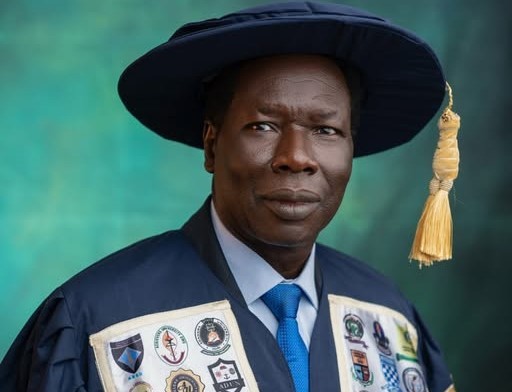
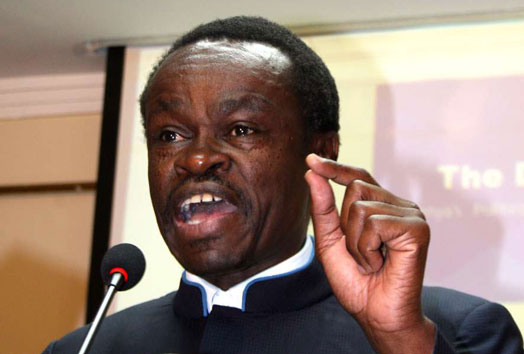

There are people whose reputations precede them, and then there are those whose personalities make you realise that their reputations, impressive as they may be, tell only part of the story. Professor Patrick Loch Otieno Lumumba, popularly known as PLO Lumumba, belongs to the latter category.
My first encounter with PLO was at a book club in Nairobi. We met again the following day at the home of a mutual friend, where the occasion brought together good company, nyama choma and some fine wine. These were ordinary social occasions, but they gave me an opportunity to encounter, beyond the public persona, a man whose ideas and convictions have made him one of Africa’s most recognisable voices.
My encounters with PLO have also given me the pleasure of meeting his wife, Celestine, at a couple of book club meetings and social gatherings. It has been a pleasure to meet her in these settings, away from the public attention that so often accompanies her husband’s name. These occasions have added a personal dimension to my appreciation of PLO and the people around him.
It is always interesting to meet the people who share the lives of individuals whose public contributions we admire. PLO’s influence extends well beyond the lecture hall or the conference stage, and these social encounters have been a welcome opportunity to engage with him and Celestine in a more relaxed setting. They have also reinforced for me the value of the conversations, friendships and shared interests that bring people together, whether over books, ideas, good food or a glass of fine wine.
Before meeting PLO, I had largely known him through his speeches in Nigeria. There, his oratory had earned him considerable admiration. His command of history, his facility with language and his unapologetic Pan-Africanism resonated with audiences who saw in him a voice articulating frustrations, aspirations and ambitions that many Africans share.
There is something rather ironic about this. PLO is Kenyan, yet some of his most enthusiastic audiences are found beyond Kenya’s borders. Nigeria, in particular, seems to have embraced him with extraordinary affection. I often joke with him that, given how much Nigerians love and revere him, we may have to find a way to get him Nigerian citizenship! I sometimes wonder whether a month passes without PLO delivering a speech somewhere in Nigeria.
It brings to mind the old saying that a prophet is not honoured in his own home. Perhaps the explanation is not that Kenyans do not appreciate him, but that familiarity sometimes makes us less conscious of the value of what we have in our midst.
Meeting him only strengthened my appreciation of the man behind the speeches. And it has given me another reason to be grateful that our paths crossed.
A voice for understanding Kenya
Kenya is a country I love. It is a country of remarkable energy, entrepreneurial ingenuity, intellectual depth and extraordinary human possibility. It is also a country whose politics, institutions, history and social dynamics can be difficult to understand, even for those who have lived here for years.
PLO has become one of my go-to resources when I want to make sense of Kenya. When I am trying to understand a political development, a national debate or the historical roots of a contemporary issue, his perspective is often invaluable. He has an ability to place present-day events within a broader historical, social and constitutional context, connecting the choices of today with the decisions, compromises and missed opportunities of yesterday.
That ability matters. Understanding a country requires more than following the news or reacting to the latest political controversy. It also requires an appreciation of how institutions evolve, how political interests shape public life, how citizens relate to one another, how they engage with the state and how historical experiences continue to influence national and individual choices. Even some social interactions that I find difficult to interpret can benefit from a deeper understanding of the cultural and historical context in which they occur.
PLO brings these dimensions into the conversation. He challenges his audiences to look beyond personalities and consider the institutions, values and responsibilities that determine a country’s direction. Even when one does not agree with every interpretation or conclusion, there is value in engaging with someone who insists that we think more deeply about the societies we inhabit.
For me, his contribution extends beyond explaining Kenya. He provides a lens through which to reflect on Africa itself.
Beyond the speeches: a Pan-African commitment
PLO’s public profile rests substantially on his speeches. His command of the English language, his memorable historical references and his ability to hold an audience are unmistakable. But it would be a mistake to reduce his contribution to oratory and rhetorical flourishes.
The PLO Lumumba Foundation provides an important window into the work that sits alongside his public advocacy. Established in 1994, the Foundation describes its mission as advancing leadership, mentorship and development, grounded in Pan-African ideals and the philosophy of servant leadership. Its reported presence extends across 49 countries worldwide, including Africa and the diaspora. Its Africa Mentorship Programme has reported activities in 30 countries in Africa and beyond, engaging more than 900 mentees over a six-month period. These figures, reported by the Foundation, give an indication of the geographical reach of its work.
The Foundation’s programmes encompass youth mentorship, education, book donations to rural schools and community libraries, bursaries for students, medical camps, advocacy and conflict resolution. Its Africa Innovation Club initiative in Ghana has also sought to encourage young people to apply technology and creativity to practical problems, including agricultural challenges.
These activities may not attract the same attention as a powerful speech delivered to a packed auditorium. Yet they are part of a necessary process of translating a vision for Africa into opportunities for Africans, particularly young people.
The significance lies not simply in the number of countries in which an organisation has a presence, but in what it seeks to make possible: young people who acquire confidence and skills, students who gain access to educational opportunities, communities that benefit from practical interventions, and citizens who begin to see themselves as participants in shaping their continent’s future.
That is an important dimension of Pan-Africanism. It is one thing to speak about African unity, dignity and self-determination. It is another to build relationships, nurture young leaders and create platforms through which those ideals can find expression in everyday life.
PLO’s Foundation is one effort to bridge that space between aspiration and action.
Optimism as a responsibility
I have come to think of PLO as Africa’s Optimist-in-Chief. The title is not a suggestion that he is unaware of the continent’s difficulties. Nobody who pays serious attention to African affairs could be. Our challenges are real: weak institutions, corruption, insecurity, unemployment, limited industrial capacity, fragmented markets and a persistent dependence on external financing and decisions made elsewhere.
There are also difficult questions about the quality of leadership, the accountability of public institutions and the extent to which our natural and human resources translate into better lives for ordinary Africans.
Yet PLO refuses to allow these challenges to become the final word on Africa. He insists on the possibility of a different future, one in which Africans exercise greater control over their resources, take responsibility for their development and engage the world from a position of greater confidence.
I share that optimism.
My own professional journey has taken me across Africa, Asia and the Middle East, working at the intersection of governance, institutional strengthening, development and the private sector. I have seen what happens when communities are given the opportunity to shape their own futures. I have seen local institutions develop solutions to problems that external actors had struggled to resolve. I have also seen how quickly progress can unravel when funding ends, when institutions lack the incentives to sustain change or when political interests undermine carefully constructed systems.
These experiences have made me neither an unquestioning optimist nor a pessimist. They have convinced me that Africa’s future will depend on our willingness to recognise our capabilities, confront our weaknesses and build institutions that can deliver beyond the life of individual projects or political administrations.
Optimism, properly understood, is not the denial of reality. It is a decision to act despite the difficulties.
This is where I find common ground with PLO. His message is a reminder that Africa cannot build its future on a permanent narrative of helplessness and hopelessness. We cannot continually explain our difficulties by pointing to colonialism, external interference or the failures of those who came before us, however important these historical factors remain. At some point, we must also examine the decisions we make, the leaders we choose, the institutions we tolerate and the responsibilities we are prepared to assume.
Acknowledging external constraints does not absolve us of internal responsibility. Equally, demanding African agency does not mean pretending that the international economic and political environment is always fair. Both realities must inform our response.
Why pessimism is a luxury Africa cannot afford
Afro-pessimism can sometimes masquerade as sophistication. It can make us appear worldly, critical and realistic. We catalogue Africa’s failures, predict the next crisis and explain why another promising initiative will probably disappoint. With every setback, we find fresh evidence that nothing will change.
But what does this achieve?
If we convince ourselves that our institutions cannot improve, our leaders cannot change and our young people cannot build successful enterprises, we risk turning our observations into self-fulfilling prophecies.
Africa’s young population, entrepreneurial drive, natural resources, cultural richness and growing technological capabilities represent enormous possibilities. Realising those possibilities will require better governance, investment in productive capacity, regional integration, stronger public institutions and a more deliberate effort to connect education with economic opportunity.
It will also require a change in how we think about development. Africans must increasingly be seen not merely as recipients of assistance, but as producers, investors, innovators and owners of the institutions and enterprises that will shape the future.
This is not an argument against international cooperation or the assistance required during humanitarian emergencies. It is an argument for a development model that gives African institutions, businesses and communities greater agency, and that measures success by what remains after external support ends.
Optimism must therefore be accompanied by work. Speeches must inspire action; ideas must inform policy; and ambition must translate into institutions, businesses, jobs and opportunities.
That is the standard by which I believe all of us who speak about Africa’s future should ultimately be measured.
An African future worth believing in
Since those first encounters at a Nairobi book club and a mutual friend’s home, I have had several opportunities to engage with PLO, each reinforcing my appreciation of a man whose public voice reaches far beyond his immediate surroundings.
I admire his ability to make Africans think about their history, question their circumstances and imagine a different future. I appreciate the role he plays in helping me understand Kenya, a country that has become important to me, and I welcome the efforts of his Foundation to extend the conversation into mentorship, education and community engagement.
Of course, no individual, however eloquent or influential, can carry the responsibility for Africa’s transformation alone. Nor can any foundation, operating within its means, resolve the structural challenges confronting an entire continent. The task belongs to governments, businesses, universities, civil society, communities and citizens themselves.
But individuals can help shape the intellectual climate in which change becomes possible. They can remind us of what we have forgotten, challenge the assumptions that constrain us and give expression to ambitions that others may have been reluctant to articulate.
PLO does this in his own distinctive way.
Perhaps that is why I think of him as Africa’s Optimist-in-Chief. Not because he offers easy answers, but because he refuses to surrender the idea that Africa can do better. Not because our problems are small, but because our potential is too great for us to abandon the effort.
I hope Kenya continues to recognise the value of the voice it has produced. I hope young Africans look beyond the memorable quotations and engage seriously with the responsibilities those words demand. And I hope that more of us, across the continent, will move from admiring the idea of African greatness to doing the patient, practical work required to make it real.
We do not need optimism without evidence, nor rhetoric without responsibility. We need people who can see the difficulties clearly and still believe that progress is possible, provided we are prepared to work for it.
On that score, PLO Lumumba and I are firmly on the same side.
Africa’s future is not guaranteed. But neither is our failure inevitable. For those of us who believe in this continent, that is reason enough to change the narrative and keep building the Africa we want to see, and to leave a stronger continent for future generations.