Put ex-president Jonathan forward for Secretary-General of UN position, group tells Tinubu


July 30, 2026
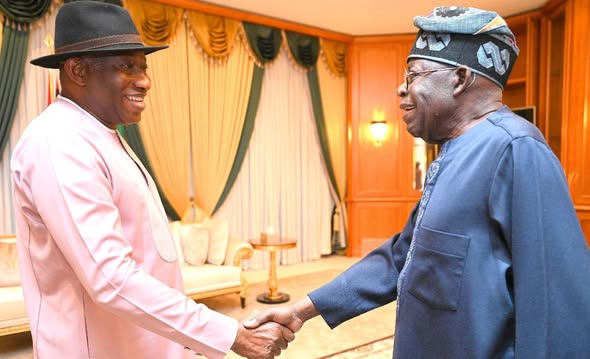
The African Policy and Research Consortium (APRC) has called on President Bola Ahmed Tinubu, to place before the international community the candidacy of former President Goodluck Ebele Jonathan for the position of Secretary-General of the United Nations (UN).
The group, in a statement by its Convener, Professor Edward Agbai, said that as the UN is poised to change its Secretary General, António Guterres of Portugal, the question before the member-states of the world body should not just be who occupies the exalted position but what kind of leadership the present age requires.
Professor Agbai noted that “humanity is navigating a turbulent landscape marked by armed confrontation, strategic rivalry, climate pressures, widening disparities, population displacement, democratic strain, technological upheaval, and a growing sense of disillusionment with international institutions.”
In view of this, he said that the personality needed for the job should be one “whose understanding of world affairs has been tempered by real encounters with complexity, whose judgment has been tested in demanding circumstances, and whose public life reflects the capacity to reconcile competing interests without surrendering principle.”
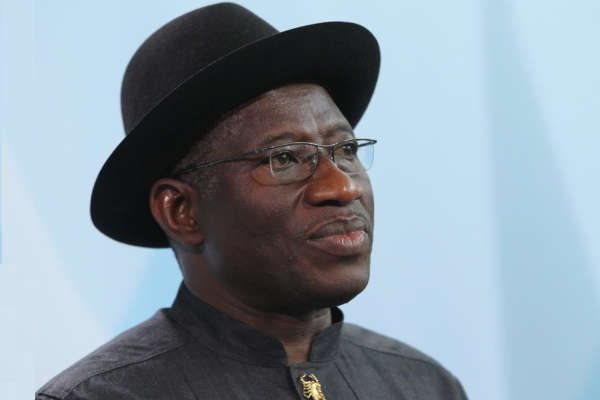
According to the group, Dr. Jonathan fits this description and merits serious consideration for the position, also “because his public journey brings together qualities rarely found in a single statesman: executive experience, democratic stewardship, continental engagement, conciliatory diplomacy, and a demonstrated preference for peaceful political settlements.”
They further pointed out that Jonathan served as Vice President of Nigeria from 2007 to 2010 and as President from 2010 to 2015 and understands the burdens of national leadership from the inside. “His rise from Bayelsa State to the highest constitutional office in Nigeria carries a significance that reaches beyond biography. It speaks to the capacity of individuals from historically overlooked communities to enter the center of national and international affairs and to transform the circumstances of their origins into a source of broader understanding.
“His story is a reminder that the world’s most consequential leadership can emerge from places once regarded as peripheral to the architecture of power.
“One of the most consequential chapters of Dr. Jonathan’s public service was the manner in which he handled Nigeria’s 2015 presidential election. His acceptance of the electoral outcome and the subsequent peaceful transfer of authority represented a consequential moment in the country’s democratic journey. In a continent where political competition has, at times, generated institutional turbulence and prolonged uncertainty, that decision demonstrated a fundamental distinction between the pursuit of office and the preservation of the nation. It affirmed that the dignity of democratic leadership is not measured solely by the determination to win, but also by the wisdom to recognize when the larger interests of the country require restraint, composure, and fidelity to constitutional processes.
“That episode deserves to be viewed not merely as a Nigerian political event, but as a contribution to the evolving philosophy of democratic governance in Africa. The peaceful transition underscored the proposition that political institutions acquire durability when those entrusted with power are prepared to subordinate personal ambition to national cohesion. At a time when democratic systems across the world are experiencing unprecedented pressure, this experience offers an instructive example of political maturity and institutional responsibility.
“Dr. Jonathan’s relevance to the proposed United Nations role, however, extends well beyond his years in the Nigerian presidency. His post-presidential service has demonstrated a continuing willingness to deploy his experience in the service of democratic development, electoral credibility, conflict prevention, and regional stability. Through engagements associated with the African Union, the Economic Community of West African States (ECOWAS), and the West African Elders Forum, he has been called upon to enter politically delicate environments where competing narratives, entrenched interests, and fragile institutions demand patience and careful judgment.

“His involvement in election observation and mediation assignments across Africa has reinforced his reputation as a global leader capable of engaging divergent political constituencies without inflaming existing tensions. His leadership of continental election observation efforts involving the African Union, COMESA, and IGAD illustrates the breadth of confidence placed in his capacity to assess complex political circumstances and encourage credible democratic processes. His engagement in the Guinea-Bissau political crisis similarly demonstrated the importance of sustained conversation when constitutional order is under pressure and political actors are divided by competing claims of legitimacy.
“These experiences illuminate an aspect of Dr. Jonathan’s statesmanship that deserves particular attention: his instinct is to create room for engagement where others may see only confrontation. He has repeatedly demonstrated an inclination toward listening before pronouncing, consultation before escalation, and mediation before rupture. In an international system increasingly burdened by polarization, suspicion, and strategic competition, such dispositions are not signs of weakness. They are instruments of sophisticated statecraft.
“The office of the United Nations Secretary-General requires precisely this kind of temperament. It calls for a nationally well-known and internationally respected statesman who can move between capitals and communities, between governments and civil society, between powerful states and developing nations, and between competing visions of the international order. It requires the ability to recognize that global peace is rarely secured by declarations alone, but is cultivated through patient engagement, credible mediation, institutional confidence, and the gradual reconstruction of trust.
“Dr. Jonathan’s experience provides him with a distinctive lens through which to view these challenges. He has governed within a country of immense ethnic, religious, regional, and socioeconomic diversity. He understands the pressures created by environmental vulnerability and developmental inequality. He has experienced the intricacies of democratic succession. He has engaged political actors with competing interests and has worked within regional frameworks designed to prevent local crises from becoming wider conflagrations.
“The APRC therefore believes that his record aligns meaningfully with the demands of an international system searching for equilibrium. His public persona is characterized by measured engagement rather than theatrical confrontation; by reflection rather than impulsiveness; and by the conviction that durable settlements are more often built through sustained dialogue than imposed through force.
“For Africa, this moment carries an additional dimension.
“The continent has contributed enormously to the work of the United Nations through peacekeeping operations, diplomatic initiatives, humanitarian commitments, development programs, and multilateral cooperation. Yet Africa’s participation in the international system must increasingly be accompanied by greater strategic agency. The continent should not remain primarily a contributor to global institutions while others disproportionately determine their direction.
“The consideration of Dr. Jonathan’s candidacy would therefore carry a significance larger than the advancement of one Nigerian statesman. It would provide an occasion for Africa to articulate a more confident conception of its place in the global order. It would affirm that African political experience, democratic transitions, peacebuilding traditions, and indigenous approaches to reconciliation possess knowledge of genuine value to the international community.
“The APRC accordingly calls upon President Bola Ahmed Tinubu to give serious and favorable consideration to nominating Dr. Goodluck Ebele Jonathan as Nigeria’s candidate for Secretary-General of the United Nations and to initiate the necessary diplomatic consultations with African governments and international partners.
“We further urge the Federal Government of Nigeria to approach this undertaking with strategic imagination and continental purpose. The objective should be to build a broad coalition around a candidacy that reflects not only Nigeria’s national interests but also Africa’s aspirations for a more balanced and representative international system.
“The APRC recognizes that the selection of a United Nations Secretary-General is determined through a complex intergovernmental process requiring extensive consultations and international support. Nevertheless, every consequential diplomatic endeavor begins with the courage to identify a candidate whose record deserves to be placed before the world.
“We believe Dr. Goodluck Ebele Jonathan is such a candidate.
“Indeed, his record offers a compelling combination of national executive experience and continental service. His democratic legacy provides a meaningful point of reference at a time when institutional confidence is under strain. His engagement in African diplomacy demonstrates a capacity to work within politically charged environments without surrendering the pursuit of peaceful outcomes. And his personal journey carries a message of possibility for communities and nations whose voices have too often remained outside the central chambers of global decision-making.
“The APRC therefore sees this not simply as a question of succession at the United Nations. It is a question of whether Africa is prepared to recognize and advance its own statesmanship with confidence. It is a question of whether Nigeria is willing to translate its demographic, diplomatic, and geopolitical weight into purposeful international leadership. And it is a question of whether the global community is prepared to embrace a conception of leadership rooted in reconciliation, restraint, inclusion, and the conviction that dialogue remains indispensable even in an age of profound disagreement.
“Africa’s moment in global affairs cannot be postponed indefinitely.
“The continent must move beyond symbolic representation toward consequential participation. It must move beyond occupying a place in international institutions toward helping determine the direction those institutions take. It must move beyond being consulted about the world’s problems toward helping formulate the solutions.
“The APRC believes that the candidacy of Dr. Goodluck Ebele Jonathan provides Nigeria and Africa with an opportunity to make that transition with dignity, purpose, and strategic clarity.
“Once again, we therefore respectfully call upon President Bola Ahmed Tinubu to nominate former President Goodluck Ebele Jonathan for the position of Secretary-General of the United Nations and to champion a diplomatic effort capable of mobilizing broad African and international consideration of his candidacy.
“This is a moment for Nigeria to think beyond the immediate.
“This is a moment for Africa to recognize the weight of its own experience.
“And this is a moment for the world to consider whether the next chapter of multilateral leadership should be written by a statesman whose life has been shaped by the realities of diversity, democratic transition, regional diplomacy, and the search for peaceful coexistence.
“The APRC believes the answer deserves a resounding consideration of Goodluck Ebele Jonathan.”