Sowing seeds for peace: Why the world must treat hunger as a global security threat By H.E. Julius Maada Bio

When the world discusses global security, we often focus on armed conflict, terrorism, or nuclear tensions. Yet for hundreds of millions of people, the greatest and most immediate threat to their survival is far more fundamental: hunger. Today, food insecurity is driving instability, fueling grievances, and deepening fragility in ways that demand urgent global attention.
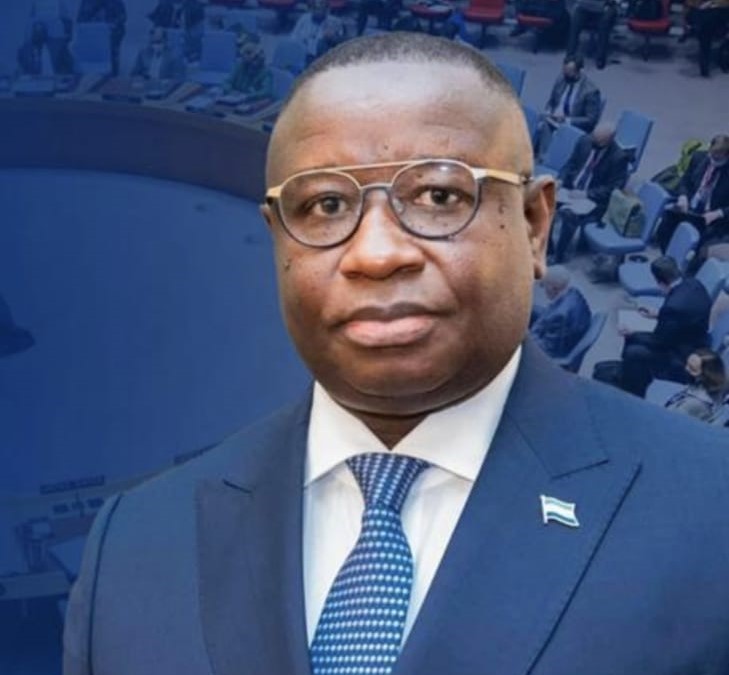
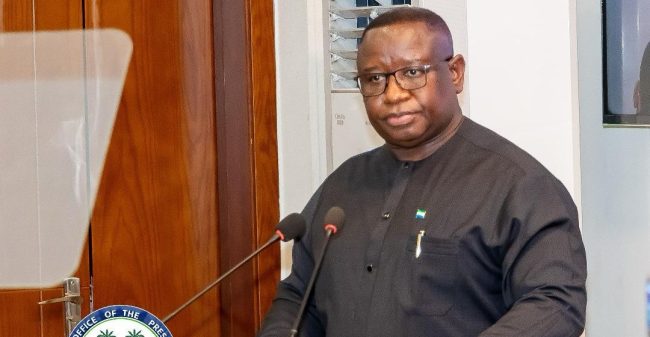
It is for this reason that, as Sierra Leone assumed the presidency of the United Nations Security Council this November, I chose to place food security at the heart of the global peace and security agenda. On November 17, I presided over a high-level open debate on “Framing the Global Dialogue: Addressing Food Insecurity as a Driver of Conflict and Ensuring Food Security for Sustainable Peace.” Across our world, from Sudan to Gaza, from the Sahel to Haiti, food insecurity has become both a product of conflict and a trigger of further violence. The Food and Agriculture Organization and the World Food Programme estimate that most of the acutely food insecure people live in countries affected by conflict. War destroys farms and markets, disrupts supply chains, displaces families, and obstructs humanitarian access. At the same time, geopolitical tensions are driving global food price volatility that hits low-income countries the hardest.
When people cannot feed their families, desperation takes root. Hunger fuels unrest. It erodes social cohesion and undermines democratic stability. In recent decades, food price spikes have contributed to riots, instability, and even the collapse of governments. This is a global pattern, and one the international community can no longer ignore.
We must act together to break this cycle.
The Security Council has taken important steps, including Resolution 2417 (2018), which rightly condemns the use of starvation as a method of warfare. But the
continued weaponization of hunger and the widespread destruction of food systems in conflict zones make clear that more must be done. We need greater accountability, guaranteed humanitarian access, and stronger protection for food systems as civilian infrastructure.
We must also look beyond emergency assistance. Sustainable peace requires resilient, inclusive, and climate-smart food systems. This means investing in agriculture as a foundation for stability, creating jobs for young people, empowering women, and revitalizing rural economies.
Africa is showing ambition. The Kampala CAADP Declaration lays out a bold pathway for transforming food systems by 2035: increasing production, tripling intra-African agrifood trade, reducing malnutrition, and cutting extreme poverty in half. These goals, when achieved, will not only drive economic growth but will also strengthen peace across the continent.
Sierra Leone brings its own experience to this global discussion.
As a nation that endured a brutal civil war, we understand intimately how hunger, exclusion, and hopelessness can ignite conflict. This is why Sierra Leone is choosing a different path. One where food systems become engines of peace and national resilience. A country once associated with the tragedy of blood diamonds is now demonstrating how food and agricultural transformation can help build a peaceful, stable, and prosperous nation.
But no country can do this alone. Hunger is a global threat that requires global action.
My message to the international community is simple: food security is human security. We cannot achieve lasting peace while millions remain hungry. The world must recognize the right to food not only as a moral imperative, but as a strategic investment in global stability.
The seeds of peace must be sown in the soil of human dignity. Addressing hunger everywhere is not only the right thing to do, but also the surest path to a more
prosperous and peaceful world.
H.E. Dr. Julius Maada Bio is the President of the Republic of Sierra Leone and Chairman, Economic Community of West African States (ECOWAS)