By Franca Ofili
Abuja, Sept. 3, 2026
The World Health Organization (WHO), says the Ebola epidemic in the Democratic Republic of Congo has surpassed 6,000 reported cases and 3,000 deaths, warning that the outbreak is spreading rapidly.
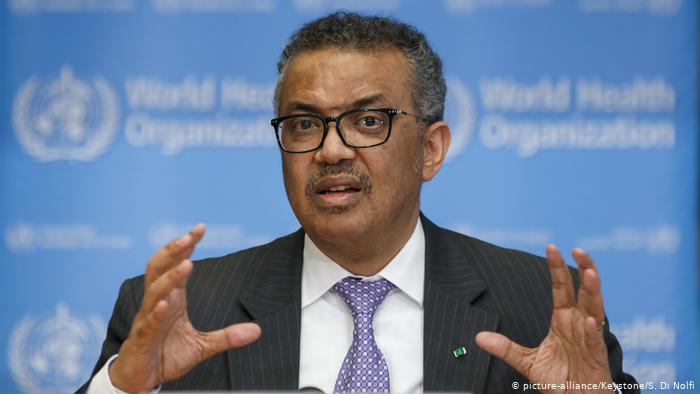
The WHO Director-General, Tedros Ghebreyesus raised the alarm during a news conference shared on the Organisation’s website on the Ebola update at Kinshasa.
He said the outbreak was now the second-largest Ebola epidemic recorded and the fastest-moving outbreak WHO had ever seen.
“The epidemic affects 60 health zones across six provinces, covering a vast geographic area and creating significant challenges for response teams.
“Ituri province remains the epicentre, accounting for 85 percent of reported cases and 88 percent of deaths.
“Most Ebola deaths are occurring in communities rather than treatment centres, raising concerns about undetected transmission and delayed access to care,” he said.
According to him, many people who die are not being safely buried, a situation WHO says is fuelling continued transmission of the virus.
He said that many deaths also involve people who were not identified as known contacts, indicating that unknown transmission chains remain active.
The organisation’s boss warned that the epidemic would continue until every transmission chain was identified and broken.
“The ongoing outbreak poses a threat not only to the Democratic Republic of Congo but also to neighbouring countries and the wider region.
“The Ebola response is unfolding amid conflict, displacement, poverty and hunger, making disease control more difficult for affected communities.
“Communities are also facing diarrhoeal diseases, malaria, malnutrition and conflict, contributing to mistrust about the international focus on Ebola,” he said.
Ghebreyesus said rebuilding and maintaining community trust and ownership remained the most important factor in changing the epidemic’s trajectory.
“Under government leadership, WHO, Africa CDC and partners are scaling up surveillance, laboratory testing, treatment, isolation and other response activities.
“WHO has shipped more than 330 tonnes of emergency supplies and deployed more than 300 experts to support the response.
“Laboratory capacity has expanded from one national reference laboratory to 24 laboratories closer to affected communities.
“Testing capacity has increased to 3,000 tests daily, while treatment and isolation capacity has reached more than 1,300 beds,” he said.
According to him, the organisation and partners plan to triple treatment capacity to 3,000 beds across the Democratic Republic of Congo within three months.
“Clinical trials are also advancing, with the partners’ trial enrolling more than 300 Ebola patients to assess two treatments.
“Another trial is testing obeldesivir among high-risk contacts to determine whether it can prevent Ebola after exposure to the virus.
“Two new vaccines against Bundibugyo virus are undergoing safety trials in the United Kingdom and Canada,” he said.
He said that the organization has also issued emergency guidance on using an approved Zaire Ebola virus vaccine during Bundibugyo virus outbreaks.
“We plan to advance three vaccines into efficacy trials in the Democratic Republic of Congo, beginning in October or November, he said.
He appealed for increased international support, saying the government-led six-month response plan required 1.3 billion dollars.