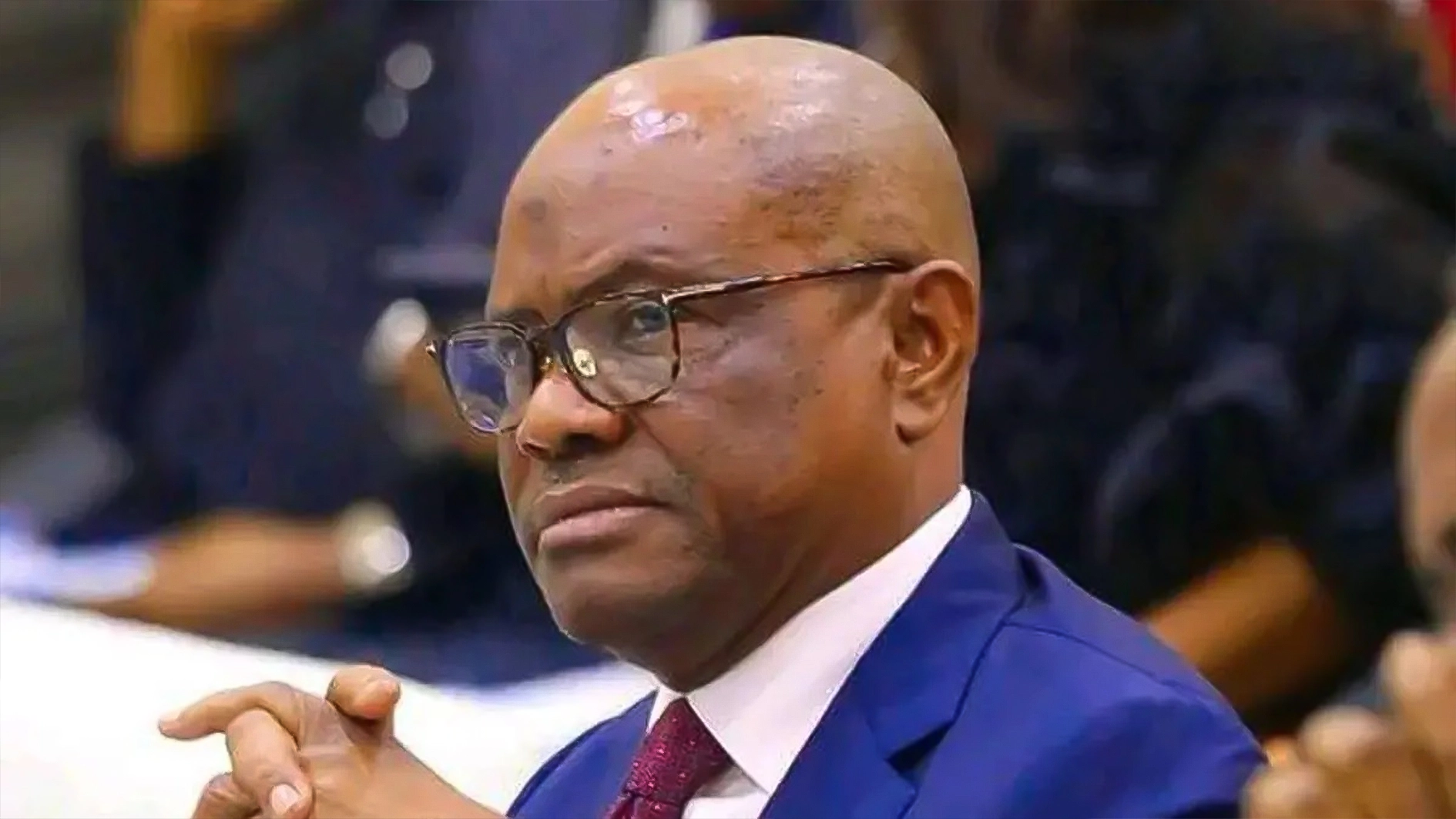
Minister of the Federal Capital Territory (FCT), Nyesom Wike
August 8, 2026
This week’s reflection on Abuja @ 50 is on “How the builders of Nigeria’s capital still have no permanent home, and why Minister Wike must finish what Obasanjo and el-Rufai started in 2007.
A capital without a home…
On October 1st, 1960, Nigeria became a nation. On February 3rd, 1976, General Murtala Mohammed announced that a new Federal Capital Territory would be built at the centre of the country, to replace Lagos. On December 12, 1991, Abuja was formally declared the capital when General IBB formally relocated the seat of power.
On February 3, 2026, we marked 50 years since that proclamation. Abuja now has 6-lane expressways, a light rail not fully functional, the National Assembly, the Presidential Villa, 17 ministries, 1000s of estates, and billions in real estate.
But the institution that plans, builds, regulates and maintains all of this — the Federal Capital Territory Administration, FCTA — does not have a permanent office complex. After 50 years, the builders of Abuja are still tenants of some sorts. The Area 11 FCTA Secretariat isn’t a permanent and befitting edifice for the builders. The current Minister expressed this the day he assumed office in 2023.
This piece is a reminder to the current FCT Minister, Mr. Nyesom Wike, CON, that in the midst of all his achievements for Abuja@50, there is one monumental unfinished business he can complete: give the FCTA a permanent home.
It is also a story of how politics, law, and personal interest stalled a national project in 2007 — and why 2026 is the time to correct it.
The Dream of 2007 – Obasanjo, el-Rufai And The Foundation Stone
By 2003, President Olusegun Obasanjo had appointed Mallam Nasir el-Rufai as Minister of the FCT. El-Rufai came with a bulldozer mentality. Abuja was full of illegal structures, land racketeering, and a bureaucracy operating mostly from rented apartments and temporary FCTA Secretariat. The vision was clear: if Abuja was to be a world-class capital, the government that runs it must also have a world-class headquarters. Not scattered offices. Not rented buildings. One permanent secretariat in the Central Area. But he procrastinated on the secretariat project.
And so sadly, for 17 years, that foundation stone has sat there, gathering dust, while FCTA staff continue to operate from over 15 different rented locations across Garki, Wuse, Maitama and Area 11.
What happened between May 27th and May 29th, 2007?
‘The court injunction that killed a capital’s project’
According to court records and media reports from that period, shortly after the foundation laying, a businessman and contractor, Alhaji Ismaila Isa Funtua, through his company Bulet Construction Company, approached an FCT High Court and obtained an injunction restraining the FCTA from continuing work on the plot.
Funtua’s claim, in summary, was that he had prior interest in the plot of land for the FCTA Secretariat because he kept his equipment there. The plot wasn’t allocated to him. Bulet Construction had previously built the Ministry of Foreign Affairs and Head of the Civil Service of the Federation offices and had other dealings with government. The details of the suit were never fully litigated to conclusion in the public space. But the effect was immediate: work stopped. Interestingly, the Chief Judge of the FCT then Justice Mohammed Lawal Hassan Gummi (2004-2013) granted the injunction against the FG and FCT. This happened at a delicate political moment. President Yar’Adua, who succeeded Obasanjo, was also from Katsina State — the same state as Ismaila Funtua. Both men were influential figures in Northern politics and in the PDP at the time.
In the Nigerian context, when a powerful individual obtains a court order and shares a political-geographic base with the President, the bureaucracy tends to freeze. No one wants to be accused of disobeying court or of ‘harassing elders.’
And so, the file was moved from table to table. Attorneys advised caution. Ministers came and went. The injunction was never vacated. The plot of land was never released.
In 2020, the very powerful Ismaila Funtua passed away. With him went the principal claimant. But the injunction, like many things in Nigerian bureaucracy, outlived the man. As of 2026, no administration has moved to formally vacate the order, settle the estate, or compulsorily acquire the land in public interest. The result: a capital city with no capital office.
The cost of homelessness – 50 years of rent and dysfunction.
1. Financial cost
FCTA currently rents many office spaces for departments including: Land Administration and AGIS, Development Control, Satellite Towns Development Agency (STDA), Transportation, Education Secretariat, etc. Estimates from budget documents and FCDA sources put annual rent expenditure at more than N5 billion.
Over 17 years since 2007, that is about N85 billion spent on rent. With that money, FCTA could have built two permanent secretariats and still had change.
This is the definition of capital flight — not to Dubai, but to private landlords in Abuja.
2. Administrative cost
A minister cannot hold one meeting with all directors. Files move across town in traffic. Citizens looking for C of O in one secretariat are sent to another 8km away. Morale is low. There is no corporate identity. Compare this to Lagos State Secretariat in Alausa. To Kano. To Rivers. Every serious sub-national has a headquarters. Only the federal capital does not have a befitting one even as it is still building for others.
3. Symbolic cost
Abuja@50 is about legacy. We are celebrating bridges, roads, and parks. But what does it say that the institution that approved those projects does not have its own significant address? It says we are a nation that celebrates infrastructure but not institutions. That we can build for others but not for ourselves.
The political economy of why it stalled.
This is not just about one court case. It is about four (4) structural problems that mirror the crisis of Nigerian governance:
The ‘powerful person’ problem
When an individual with political capital obtains a court order, the state pauses. Even when public interest is clear. The FCTA case shows how private interest can hold a national project hostage for 17 years. It is curious and tragic.
The ‘transition’ problem
The foundation was laid two days to handover. New governments in Nigeria inherit projects but not commitment. Without a legal and budgetary lock-in, projects die at transition.
The ‘no data, no pressure’ problem
Because no one has consistently published how much FCTA spends on rent, there has been no public outrage. The media depends on FCTA ads. So, the story is not told even to appropriation authorities.
The ‘succession’ problem
With Funtua’s death in 2020, the legal obstacle should have become easier. Estates can be settled.
Compensation can be paid. But without a champion in government, files sleep. This is why leadership matters. And this is why the arrival of Hurricane Nyesom Wike as FCT Minister in 2023 presents a unique window that is still open.
Why Wike? Why now? Abuja@50
Minister Wike has, in 3 years, done what many thought impossible: revived stalled road projects, completed the Vice President’s residence, cleaned up parks, restored street lights, and given Abuja a sense of pride again. His style is “action, not talk.” His politics is “finish what you start.” That is his signature.
Abuja@50 is his moment.
And so, nothing will be more monumental, more symbolic, more legacy-defining than this: “I gave the builders of Abuja a permanent home.” Here is why it is possible now:
The legal obstacle has changed: The principal claimant is deceased. The estate can be engaged. The FCT Legal Secretariat can file a motion to vacate or negotiate a settlement. Public interest doctrine is on FCTA’s side.
The political will exists: Minister Wike does not shy away from tough decisions. He has already shown he can demolish, reclaim, and rebuild.
The timing is perfect: 50 years. Donors, contractors, and the National Assembly are all looking for signature Abuja@50 projects. A secretariat is shovel-ready.
The economics is clear: Spend N50bn once to build, instead of N5bn every year to rent. In 7 years, the building pays for itself.
This will not be about erasing Funtua’s name. It will be about honoring the original intent of Obasanjo and el-Rufai completing it for the people of Abuja. And Tinubu and Wike will harvest the glory.
A 6-point roadmap for the Minister
To turn this from essay to action, here is what FCTA under Wike can do in the next 12 months:
1. Legal audit and motion to vacate
Direct the FCT Legal Services Secretariat to trace the suit from 2007. File for abatement, settlement with the estate, or compulsory acquisition under the Land Use Act in public interest. Pay fair compensation if needed.
2. Publish the rent bill
Release a white paper: “How much FCTA has spent on rent 2007-2026.” Let Nigerians see the waste. Transparency creates pressure and budget support.
3. Re-validate the 2007 design
The Obasanjo/El-Rufai design can be reviewed by Nigerian architects. Make it greener, smarter, lower-energy. But keep the location in Central Area.
4. Budget and PPP
Put N30bn in 2027 budget as first tranche. Invite PPP: “Build-Operate-Transfer” for parts of the complex. Or get support from Abuja@50 sponsors.
5. Name it Right
Call it “The FCTA Unity House” or “Abuja@50 Secretariat.” Not after any individual. After the city and the people.
6. Groundbreaking Before December 2026. If foundation is laid before the end of Abuja@50 year, it becomes part of the 50th anniversary story forever.
What Nigeria can learn
The FCTA secretariat story is a microcosm of Nigeria. We start projects with fanfare. Powerful interests stall them. Bureaucracy buries them. And 20 years later we wonder why nothing works.
Countries that work do three (3) things differently:
1. They protect public projects from private injunctions through expedited public-interest courts.
2. They publish the cost of inaction so citizens can demand change.
3. They give leaders legacy projects that outlive them.
If Minister Wike finishes this, students in 2076 will read: “In 2026, during Abuja@50, Minister Wike built the permanent home of FCTA.”
That is how you move from a “performing minister” to a “founding father of modern Abuja administration.”
Here is my letter to the future, Mr. Minister
Honourable Minister, FCT, the people who approve your building plans have no building. The people who collect your ground rent pay rent themselves. The people who design Abuja’s skyline work from scattered bungalows. This is not sustainable. It is not dignified. And it is not necessary. You have barely one year left in this first term. You have political capital. You have Abuja@50.
On May 27th, 2007, a foundation was laid and abandoned. In August 2026, we are asking you to lay a new one — and this time, finish it. Let history record that when Abuja turned 50, its builders finally got a home. That will be more monumental than any road.