
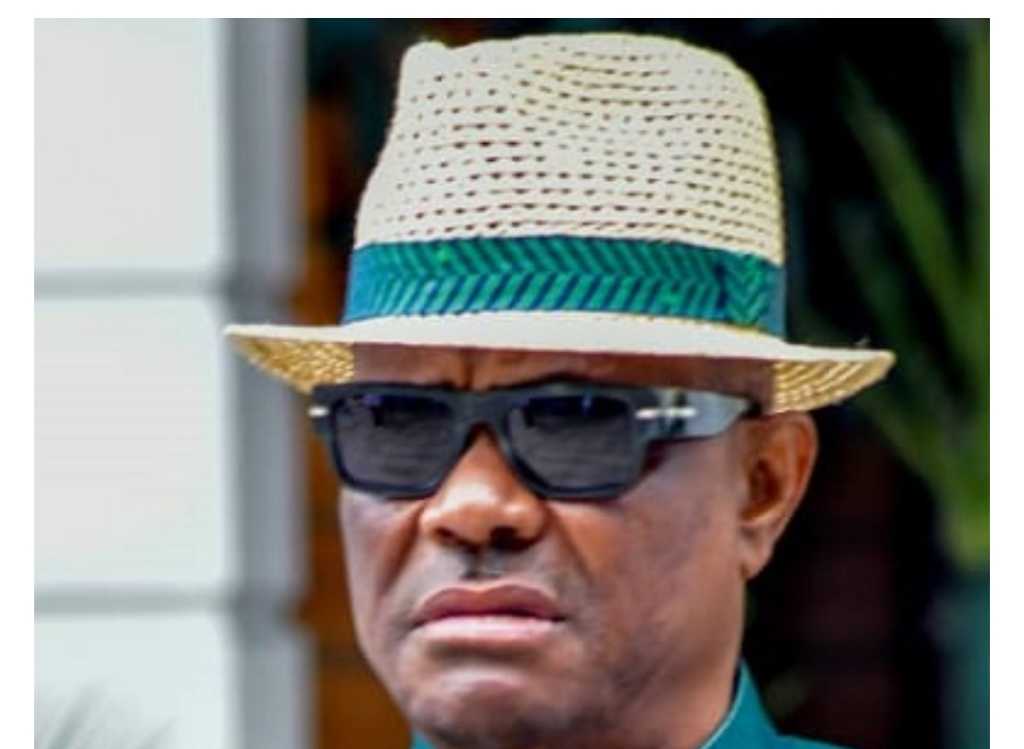
In popular parlance, “this Naija na cruise” is a Nigerian phrase meaning anything goes.
Sometimes, I am tempted to laugh at the absurdities, shake my head, and move on. Other times, the sheer volume of nonsense threatens to overwhelm one into silence. After all, how many issues can one person address? How many times will we ask the same questions of a country seemingly determined to offer the same disappointing answers?
However, I refuse to keep silent. I will speak, ask questions, and write. Not because I enjoy lamenting an entrenched national malaise, but because asking questions is better than accepting quiet resignation. We must continue to demand accountability.
I am rooting for a Nigeria that works because beneath my frustration lies a stubborn belief in what this country ought to be—and because silence, when absurdities become normalised, is a luxury we cannot afford. There was a time when what kept public officials from crossing certain lines was fear of consequences: an investigation, public accountability, professional embarrassment, or difficult questions before law enforcement institutions.
Increasingly, I wonder whether some of our public officials still consider these possibilities before they speak or act. When a serving minister, former governor, and lawyer publicly promises millions of naira to state actors on the condition of delivering a particular electoral outcome, and subsequently defends the promise as political mobilisation, I am compelled to ask: where is the fear of consequences?
Political Mobilisation or Something Else?
Wike has defended his statement, maintaining that the proposed payments are rewards for political mobilisation and hard work rather than vote-buying. He argues that he has not instructed councillors to distribute money to voters in exchange for their ballots.
He has compared the proposed rewards to incentives offered to athletes for winning competitions and to promises parents make to children for outstanding academic performance. The National Chairman of the All Progressives Congress, Nentawe Yilwatda, has also defended the arrangement, arguing that payment would follow the election.
Let us examine these arguments fairly. Political mobilisation is a legitimate component of democratic competition. Political parties spend money organising rallies, training agents, communicating policies, advertising, and encouraging citizen participation.
There is nothing inherently improper about paying individuals for lawful campaign work. However, a key distinction must be made: paying someone to carry out legitimate campaign activities differs fundamentally from promising personal financial rewards on the condition of securing a specific electoral outcome.
One compensates labour; the other creates a direct financial stake in the outcome. A councillor might organise meetings, engage residents, distribute campaign materials, and persuade thousands of citizens to vote. Yet under the arrangement Wike announced, if the ward votes for another candidate, the councillor receives nothing.
What, then, is being rewarded? The work or the result? And if the result is the determining factor, what safeguards exist to ensure that the pursuit of the reward does not compromise the freedom of voters? These are legitimate questions. They deserve answers beyond assurances of political mobilisation.
The Law Does Not Stop at the Voter
Regarding the legal framework, another aspect of this controversy is particularly noteworthy. Much of the public defence relies on the assertion that Wike did not offer money directly to individual voters. But is direct payment to a voter the only form of electoral inducement recognised under Nigerian law?
It is not. Section 125(1)(a) of the Electoral Act 2026 addresses corrupt offers or promises intended to induce a person to procure votes or secure a candidate’s election. Subsection (3) provides an exception for bona fide lawful election expenses. The distinction matters. The law recognises that electoral corruption need not always involve someone standing outside a polling unit handing cash to voters; it also covers conduct involving intermediaries and promises intended to secure electoral outcomes through corrupt means.
Does Wike’s announcement satisfy the legal elements of an electoral offence? That requires a proper examination of the facts, the intended purpose of the payments, the proposed funding arrangements, and the applicable law. I am not suggesting that a newspaper article should substitute for an investigation or a court judgement. But describing a payment as political mobilisation should not automatically place it beyond scrutiny.
A politician’s explanation is relevant evidence, but it is not a judicial determination of legality. The argument that payment after an election removes the possibility of inducement is equally flawed. A promise made before an election can influence conduct before voting, even if the funds arrive afterwards.
Indeed, the promise itself creates the incentive. If I promise someone ₦10 million today on the condition that a specific outcome occurs tomorrow, the fact that payment follows the event does not erase the promise’s influence.
The relevant question is not simply when the money changes hands. It is what the promise seeks to achieve and whether the means of achieving it comply with the law.
Whose ₦620 Million?
Then there is the question of money. Where would the promised funds come from? Would Wike finance the rewards personally? Would the APC fund them? Would private political supporters contribute? Would any public resources be involved? The announcement and subsequent explanations have not established the source of the proposed payments. We should not assume, without evidence, that public funds would finance them.
Yet citizens have every right to ask. Wike occupies an office entrusted with substantial public responsibilities and resources. His position makes transparency surrounding the funding of such a commitment vital. If the funds are private, citizens deserve clarity about their source and compliance with campaign finance regulations. If party funds are involved, relevant accounting and disclosure obligations must be examined. If public resources are involved, entirely different legal and constitutional issues arise.
The Code of Conduct for Public Officers restricts conflicts between personal interests and official duties. An arrangement offering personal financial rewards to elected councillors warrants scrutiny regarding how those incentives intersect with public responsibilities. Public office is a trust, not a private mechanism for distributing political favours.
And where public authority intersects with substantial financial promises, transparency should precede payment, not follow public outrage.
A Councillor Represents a Ward. A Councillor Does Not Own Their Votes.
The phrase “deliver your ward” deserves closer examination. It has become standard political lingo in Nigeria. Governors deliver states; political leaders deliver local governments, and councillors deliver wards. But what exactly are they delivering? A ward is a community of citizens with independent minds, interests, and political preferences.
Some residents will support President Bola Tinubu. Others will prefer another candidate. Some will remain undecided until election day. A councillor’s responsibility to those residents does not depend on their political allegiance.
Yet when a councillor stands to receive ₦10 million for securing a particular outcome, an obvious tension arises. What happens when the councillor’s personal financial interest conflicts with the freely expressed preferences of the people represented?
What happens when a ward refuses to be delivered? Will the residents’ decision be respected? The concern is not that every councillor who offered a reward would engage in wrongdoing. We have no basis for such an accusation. Rather, the concern lies in the incentive structure this arrangement creates. Citizens are entitled to choose their leaders; representatives do not choose for them.
Where Are the Institutions?
Nigeria has an electoral commission, law enforcement agencies, anti-corruption institutions, courts, and professional bodies. Laws govern elections, public conduct, campaign financing, and public officers’ responsibilities. We need tosociety governed by institutions; it is an argumenthen questions arise involving people with considerable political influence. INEC should examine the announcement against the applicable electoral provisions and clarify its position.
Relevant investigative authorities should assess whether the facts warrant further inquiry, including into the proposed funding arrangements. The legal community, bar associations, and public officers who are lawyers also share a responsibility to uphold electoral legality.
None of these steps requires a predetermined finding of guilt. They require institutions willing to ask questions. Indeed, an investigation aims to establish whether there is a case to answer. If the arrangement is lawful, a credible examination would help establish why. If it violates the law, the appropriate consequences should follow. The rule of law loses credibinstitutions’ty when the ierson involved determines whether questions are asked at all.
Where Is the Fear of Consequences?
I return to the nagging question: where is the fear of consequences vanishing? This is not an argument for a socinstitutions’y governed byargument for a society in which public officials understand that authority comes with accountability. A society in which a minister knows that a controversial financial promise will attract institutional scrutiny. In which a councillor understands that public responsibilities cannot be subordinated to personal financial incentives. In which political parties recognise that electoral competition has boundaries. And in which the ordinary citizen sees evidence that the law applies beyond those without power.
Nigeria is approaching another general election. The credibility of that election will depend partly on institutional action long before citizens reach the polling units. Electoral integrity begins with the rules governing political competition, the conduct of public officials, the transparency of campaign financing, and the willingness of institution in to interene when legitimate concerns arise.
Let Nyesom Wike support President Tinubu. He has the right to do so. Let him campaign vigorously, defend the administration’s record [or lack thereof], and persuade Nigerians of the merits of another term. Let every other political actor exercise the same freedom. But let the money, the promises, and the conduct of everyone involved remain subject to the same law.
And let us remember something fundamental. The 2027 elections belong to Nigerians. They do not belong to ministers, governors, political godfathers, or councillors. The people owe no politician an electoral win. Nigeria must become a country where the powerful fear breaking the law more than ordinary citizens fear demanding accountability.
Until then, perhaps the most revealing thing about a public promise of a potential ₦620 million for electoral victory in Abuja is not the amount involved. It is the arrogant confidence with which the promise was made, and the question it leaves behind: where, indeed, is the fear of consequences?
Ukoh, a PhD student at Columbia University, New York, and co-author of Built By The Ancestors, writes from the United States.