
Nigeria’s education system has, for decades, struggled with recurring industrial disputes between governments and teachers over salaries, allowances, welfare packages and other conditions of service. These disputes, often culminating in strikes by the Nigerian Union of Teachers (NUT) and other education-sector unions, have repeatedly interrupted the academic calendar, leaving millions of schoolchildren at the mercy of circumstances beyond their control.
While the demands of teachers for better remuneration and improved working conditions are legitimate, the persistent inability of governments at different levels to meet the financial obligations of the education sector calls for a fundamental reconsideration of how education is delivered in the country. And I suppose it is time for the government to invest seriously in online learning and flexible education as a practical means of protecting children’s right to uninterrupted learning.
Education is too important to the future of any nation to be held perpetually hostage by disagreements between employers and employees. Teachers deserve decent wages, regular payment of salaries, a conducive working environment and respect for their professional contributions. By the same token, children deserve continuity in their education, irrespective of the financial difficulties confronting the government or the outcome of negotiations with organised labour. These two interests should not be treated as mutually exclusive. Rather, Nigeria must develop an educational framework that safeguards teachers’ welfare while it ensures that students can continue learning when conventional classroom instruction becomes impossible for any reason.
The consequences of prolonged school closures are far-reaching. When teachers embark on strikes, pupils and students lose valuable instructional hours, while parents struggle to find productive alternatives for their children. Those preparing for external examinations face additional anxiety as they attempt to cover extensive syllabuses within shortened periods. In many cases, schools respond to lost time by rushing through lessons, reducing opportunities for revision and practical exercises, or compressing an entire term’s work into a few weeks. The result is often superficial learning rather than genuine understanding.
Children from wealthy households may have access to private tutors, online lessons and other supplementary educational services during such disruptions. Their less privileged counterparts, however, are frequently left without any meaningful alternative. This disparity deepens existing educational inequalities and places children from poor and rural communities at a considerable disadvantage. A strike that temporarily closes a public school might, therefore, have consequences that extend far beyond the period of industrial action, particularly for pupils who lack the resources to recover lost learning opportunities.
The situation demands a solution that goes beyond appeals for patience, hurried negotiations or temporary agreements between governments and teachers’ unions. Although dialogue and collective bargaining remain essential to industrial harmony, the country must acknowledge that disputes may continue to occur in the foreseeable future. Governments should consequently establish a dependable system through which teaching and learning can continue, at least in part, whenever schools are physically closed. Online learning and flexible education offer an important opportunity to achieve this objective.
Online learning involves the use of internet-enabled platforms, digital resources, recorded lessons, virtual classrooms and other electronic tools to facilitate instruction beyond the traditional classroom. Flexible education goes further by allowing learners to access educational materials at different times, study at an appropriate pace and combine various methods of instruction according to their circumstances. The two approaches can complement conventional schooling rather than replace it. Indeed, a well-designed system would enable pupils to attend regular classes while they maintain access to learning resources that remain available during holidays, emergencies, teacher strikes and other unforeseen interruptions.
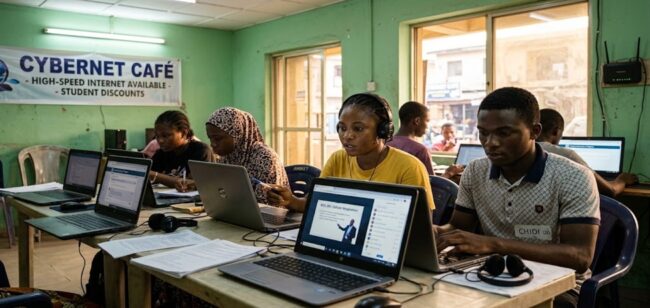
We have often seen a situation in which a public secondary school closes because of an industrial dispute. Instead of leaving students idle for weeks or months, the school could provide recorded lessons, digital textbooks, practice exercises and teacher-guided assignments through an approved learning platform. Students with internet access could participate in virtual classes, submit assignments and receive feedback from their teachers. Those unable to attend live sessions could download materials and study offline, completing exercises when electricity or connectivity becomes available. When classroom activities resume, teachers could assess progress and address areas of difficulty rather than restart instruction from the beginning.
Such a system would not eliminate industrial disputes, nor should it be used to undermine the legitimate bargaining power of teachers. Rather, it would reduce the damage that these disputes inflict on innocent children’s education. It would also create a more resilient system capable of responding to other disruptions, including epidemics, floods, insecurity and temporary school closures caused by environmental or administrative challenges.
For this vision to become a reality, government investment must extend beyond the distribution of computers or the announcement of ambitious digital education policies. Nigeria requires reliable electricity, affordable internet access, appropriate digital devices, secure learning platforms and educational content aligned with approved national and state curricula. Schools need properly equipped digital learning centres, while teachers must receive training in online instruction, digital assessment and the preparation of engaging learning materials.
The financial implications of such an undertaking are significant, but the investment should be viewed in the context of the long-term cost of educational disruption. Every prolonged closure consumes instructional time, weakens learning outcomes and may contribute to examination failure, school dropout and diminished employment prospects. An effective digital learning infrastructure could serve millions of pupils over several years, making it a strategic investment in human capital rather than an avoidable expenditure.
In the same breath, government must recognise the digital divide that exists across Nigeria. Many households cannot afford smartphones, computers, data subscriptions or reliable electricity. Rural communities and underserved urban neighbourhoods would obviously face additional challenges arising from poor telecommunications coverage and inadequate infrastructure. An online education policy that ignores these realities could widen the very inequalities it seeks to address.
Consequently, digital learning should be designed around the needs of disadvantaged learners. Governments could provide subsidized or loaned devices, establish community learning hubs in schools and public libraries, negotiate affordable educational data packages with telecommunications companies, and expand solar-powered facilities in communities with unreliable electricity. Learning platforms should also support downloadable lessons, low-bandwidth access and offline use. Where internet connectivity is unavailable, educational content could be delivered through radio, television, memory cards and other appropriate technologies.
The federal government, state governments and local education authorities must work together to establish clear responsibilities and sustainable funding arrangements. Since public primary and secondary education is largely administered at the state and local levels, state governments should take the lead in integrating digital learning into their school systems, with federal support through national standards, funding mechanisms, technical assistance and curriculum coordination. Partnerships with universities, technology companies, telecommunications providers, educational publishers and development organizations could help reduce costs and improve the quality of available resources.
Teachers themselves must remain central to this transformation. Technology cannot substitute for the professional judgement, encouragement, supervision and personal interaction that effective teachers provide. Young children, especially those in their foundational years, require substantial human guidance, social interaction and direct instruction. Digital resources should therefore complement teachers’ work, not be presented as a cheap replacement for it. Teachers should participate in the design and implementation of online learning programmes and receive appropriate compensation for additional responsibilities associated with preparing digital lessons, monitoring students and providing feedback.
Importantly, investment in online learning must not become an excuse for governments to neglect the financial demands of the Nigerian Union of Teachers. Recurrent disputes over salaries, promotions, pensions, allowances and other entitlements cannot be resolved by technology alone. Governments must improve budgetary planning, prioritize education in public expenditure, honour collective agreements and establish credible mechanisms for resolving disputes before they escalate into strikes. Teachers who are adequately remunerated and treated with dignity are better positioned to contribute to educational innovation and improved learning outcomes.
At the same time, the NUT and other relevant unions should recognise the potential benefits of a carefully negotiated digital education framework. Their involvement would help ensure that online learning arrangements protect teachers’ professional interests, preserve appropriate workload limits and maintain educational standards. A collaborative approach would be preferable to a situation in which technology is introduced unilaterally and perceived as an instrument for weakening organised labour.
Government should begin with pilot programmes in selected public schools across different geographical and socioeconomic settings. These programmes should be evaluated against measurable indicators, including student participation, learning outcomes, affordability, accessibility and the effectiveness of teacher support. Lessons from these trials could inform gradual expansion, allowing policymakers to identify practical challenges and correct weaknesses before committing substantial public resources.
Parents also have a role to play by encouraging responsible use of digital devices, supporting children’s study routines and cooperating with schools to monitor progress. Civil society organizations and private-sector partners can contribute through the provision of educational content, devices, connectivity and technical expertise. However, such contributions should operate within transparent public frameworks that protect children’s privacy, ensure online safety and prevent commercial interests from overriding educational priorities.
Ultimately, Nigeria must move away from an education model in which the closure of a school building automatically brings children’s learning to a halt. The classroom remains indispensable, and the teacher remains central to the learning process, but education should no longer be confined entirely to a physical space or a rigid timetable. A resilient system must be capable of sustaining learning through different delivery methods whenever circumstances make conventional instruction temporarily impossible.
The incessant struggle between governments and the Nigerian Union of Teachers over the financial demands of the education sector should therefore serve as a wake-up call. It should compel policymakers to address the legitimate welfare concerns of teachers while they build alternative channels that protect pupils from the consequences of industrial disputes. Investing in online learning and flexible education is not a panacea for Nigeria’s educational challenges, but it is a practical and increasingly necessary component of the solution.
The future of Nigerian children should not depend entirely on whether the government and teachers reach an agreement before another school term is lost. By combining fair labour practices, adequate education funding, modern technology and inclusive learning opportunities, Nigeria can build a system in which teaching may occasionally be disrupted but learning does not have to stop. That is the kind of educational resilience a country aspiring to economic development, social progress and global competitiveness should pursue.
Chief Sir Asinugo, PhD., M.A., KSC, is a UK-based veteran journalist and author.