One bright day in February 2017, Robert Mugabe’s wife, Grace, told a rally of her husband’s Zanu-PF party: “One day when God decides that Mugabe dies, we will have his corpse appear as a candidate on the ballot paper. You will see people voting for Mugabe as a corpse. I am seriously telling you – just to show people how people love their president.”
Grace was not joking; Mugabe’s wife meant it because that is the true meaning of democracy.
A year and a week ago, 93-year-old President Paul Biya, without the stress of campaign, won Cameroon’s presidential election decisively. Undisturbed, he is enjoying his eighth consecutive term. To God be the glory.
Some six months ago, President Ismaïl Omar Guelleh of Djibouti won his sixth term with 98 percent of the vote. He is 78 and has been president for 27 years.
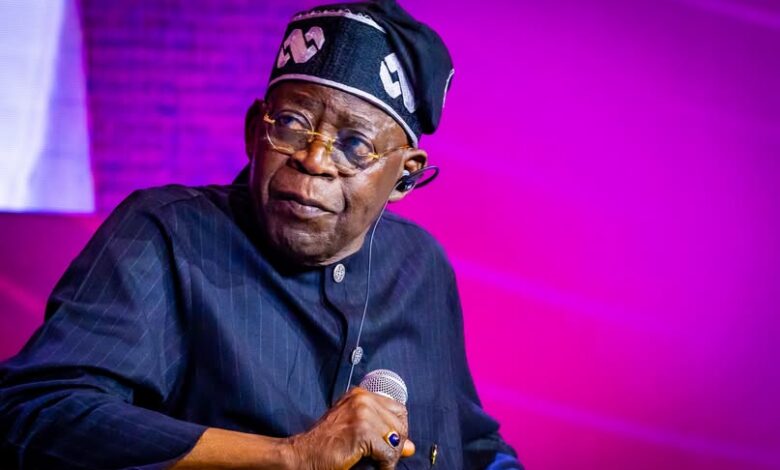
I expect President Bola Tinubu to get 98 per cent of the vote in January next year. The remaining two percent will surely come round as he adds more years to his age.
The people of Djibouti love their president exactly as we love ours. On election day in that country this year, foreign media organisations interviewed voters whose words could have been lifted from our president’s rainbow gathering in Abuja last week. “I’m going to vote for Ismail Omar Guelleh because he has a good programme for young people. I don’t even know what his opponent looks like,” a young man told France24. That is the beauty of democracy: the incumbent’s opponents are always ugly gnomes without faces.
Nigeria is a much luckier country. We are not Zimbabwe that lived under a geriatric Mugabe; we are not Cameroon, married forever to bedridden Biya. We are certainly not Djibouti or any of those other African countries with presidents for life. Our own president is merely at the threshold of a second mandate. Like the charming young man bathing by the village stream, he has every girl around offering him soap and a sponge. What more could an energetic president want?
Now, there is this loud noise that President Tinubu won’t move round all the 36 states to campaign as he did four years ago.
“You will excuse me from going everywhere with you (to campaign), we have bills to pay. The American creditors cannot wait,” the president told his party and non-party leaders on Wednesday. There is no new thing under the sun. Cameroon’s President Paul Biya won the 2025 election after just one public campaign appearance which he made in the far northern city of Maroua on October 7. Because he is young at heart, he had earlier in late September, while away in Europe, launched the missile of an AI-generated campaign video posted on X. That was all he did personally to sell himself to the people. And he won. Our own Tinubu must have learnt from the master when he also said at the Abuja event: “I will still make time to speak directly with Nigerians.” Gen Zs would call that an “audio campaign.” My generation would call it asọ̀rọ̀-má-gbèsì—the one who speaks without allowing a response.
They say the president must move round and personally rally voters. What is rally? As an English word, its long walk began with the Latin ‘alligare’, which means “to bind”. Through ‘ralier’, an Old French word, it became French ‘rallier’, meaning: to reunite, to bring together again. Whether to bind, to unite or to restore order, tell me which of them the president has not already achieved among his political troops? Like Mazisi Kunene’s Shaka, he has merged the regiments.
So, I am with him. Campaign rallies are for beginners; those who still have voters to woo are the ones mounting rostrums. President Tinubu is the master of the game: outside power, he won; inside power, he has won before the match begins. A man has thirty-four and a half governors out of 36, with 109 senators and 360 Reps in Abuja scrambling to deliver their constituencies to him. What does he need a rally for? If he reads novels, his favourite must be Ayi Kwei Armah’s ‘Why Are We So Blest?‘
So, lick your wounds if the messiah skips your state. He will send you WhatsApp voice notes. That should suffice for an ọmọlúàbí.
But children of complaints say the president’s choice reveals his priorities: American creditors will get his cheques; Nigerian voters will get voice notes. They say Nigerians have bills too. And I ask what bills?
Children of anger, if they like, can occupy everywhere, weeping like egbére, the little forest spirit which cries continually with a small mat tucked under its arm. Our leader will never allow the wailing of the rabble to disturb the serious business of paying American creditors. He has enough container carriers to relieve him on the campaign trail. As the Yoruba ask, should one develop a hump from carrying a load when there are people willing to help?
Whatever endorsements we have given to our president in the last one week, there are great approvals for them in royal histories. The French had a king who understood the usefulness of praise. French courtier and memoirist, Duke of Saint-Simon, recalled that Louis XIV’s ministers, generals, mistresses and courtiers competed to feed the king’s appetite for admiration. The king soon became addicted to his own praise. Louis XIV joined the fawners: he sang passages composed in his own praise. The courtiers supplied the music; the king supplied the approval. At public suppers, when the musicians played, he hummed along. Our own president need not even hum. There are governors and senators to sing “On Your Mandate” for him. The president has more than enough volunteer trailers to haul the task ahead.
APC’s multi-party party event in Abuja last week was a spectacle. A kingly senator mounted the rostrum, praised the president’s royalty, then attacked a governor who is angling to enter the Senate next year to contest the leadership. A ‘foreigner’ minister took on APC governors and set them up for disgrace. The president and his friends and family sat through it all; they laughed and grinned. Watching them, I remembered Achebe’s three green bottles: men who thought they owned the country, Kangan, and would not listen to the wise children singing across the street: “Three green bottles hanging on the wall…”
For the president, next year is a walkover. The goal post before him has no goalkeeper. He deserves to win without a contest; he is the ultimate strategist; he has his opponents by the balls. That is what his minders assure him. But the president must have heard the elders’ warning since his childhood: Bí wọ́n bá ń tàn ọ́, má tan ara rẹ (if they are deceiving you, do not deceive yourself). In David Hume’s telling of the Danish king, Canute’s legend, courtiers assured the king that everything would obey him. Whatever he wished for was his. The king had his chair placed by the sea and ordered the rising tide to retreat. It soaked him. Wise Canute used the occasion to teach his flatterers the limits of royal power and the wisdom to resist flattery. Our president should keep that story handy. Courtiers offering to carry his chair to the 2027 waterfront will not necessarily stay around to dry his clothes when the tide comes.
I have offered the president three allusions: Louis XIV, King Canute and Achebe’s green bottles. At age 76, the first king died of flattery and of gangrene in his left leg; the second was wise enough to shake off praise singers by exposing the folly of flattery. The president should find time to look up “the three green bottles” of Achebe. If I, however, have opened my mouth too wide here, he should please forgive me. Ọmọdé ló ń ṣe mí—it is childishness that won’t let me be.
A vote-seeking president should campaign publicly and physically in every state of his country to hear something his courtiers won’t tell him. A campaign should bring the man seeking a renewal of mandate within questioning distance of those who must live with it. Scholars Lynette Fourie and Neeltje du Plessis, writing on election campaigns in South Africa, identify the duty to “empower the electorate to make informed voting decisions.” Their argument supplies a test for our president’s proposed audio campaign: will Nigerians merely receive his message, or will they be allowed to question it? They should be able to put their own voices beside the president’s: explain this hunger; analyse these bills; he should tell the voter physically how another term will produce a different result from today’s pains.
What I am saying is that Nigerians in all states must have an opportunity to challenge the content of Candidate Tinubu’s message. When the president says he has bills to pay, I, from Osun, should have the opportunity of asking him what he bought from the Americans on my behalf; the market woman in Ebonyi should be close enough to tell him what has happened to her own bill. Campaign rallies present an opportunity to present her invoice. The pensioner in Kebbi should be able to raise their hand and ask whose obligations deserve the president’s urgency: Americans’ or Nigerians’?
“Expose thyself to feel what wretches feel,” Shakespeare’s King Lear says. Tinubu should come out, see and hear the people. Hunger is physical. The bills are physical. The man asking for the people’s votes should make himself physically available in all the 36 states; he cannot choose 10 or 12 super states to peck and kiss. Or is there something we are not being told or allowed to see? If there is, what is it? The president’s health and physical fitness? The case the village head hides from the village will ultimately be settled by the village.
Also published in the Nigerian Tribune on Monday, 19 October, 2026.