
Once, on the trembling threshold of a bleeding continent, when the thunder of foreign boots desecrated our sacred soil, it was not the invader alone who made history tremble. It was the indomitable sons of the Ijaw Nation, the stalwarts of Grand Bonny whose spirits were steeped in salt and fire, and the seafarers of Opobo whose lungs inhaled the tempest, that led the charge at the vanguard of imperial warfare. In 1874 at Amoaful, and again in the Ekpeye War of 1899, they did not cower or crawl. They surged forward, bearing arms not to defend freedom but to serve an empire cloaked in deceit.
These warriors were not conscripted out of chaos. They were deliberately chosen, one hundred from Bonny and fifty from Opobo, not for their submission but for their legendary valor, their precision in battle, and their ancient mastery of water and war. Their blades, once guardians of ancestral altars and riverine sovereignty, were harnessed to uphold foreign conquests. It was a betrayal dressed in ceremony. It was loyalty manipulated into servitude. But history, like the mangrove root beneath the tide, remembers.
That reluctant alliance now stands as an unburied truth. The Ijaw were never subjects of empire. They were sovereigns in spirit, warriors of order, architects of commerce, and custodians of a maritime legacy that transcended colonial imagination. The treaties they signed with imperial powers, 334 in number, were not tokens of defeat. They were declarations of nationhood. They recognized our borders. They affirmed our dominion over waters, minerals, and destiny. They were written in ink but forged in ancestral blood.
These covenants were not erased by Nigeria’s independence. They remain untouched, intact, and unrevoked. In 1997, the Nigerian state, desperate to assert its claims against Cameroon, summoned these very treaties as sacred evidence before the International Court of Justice. This act became an unintentional confession that the Ijaw Nation was not a shadow of history but a sovereign entity concealed beneath a contrived republic.
Let the world take heed. Let every son and daughter of Ijaw awaken from the long slumber and reclaim this sacred inheritance. What our ancestors secured through courage must not be lost through complacency. What was signed in trust must not be buried in silence. The tide is rising with memory and justice. And this time, the Ijaw shall not march to glorify another’s dominion. We march to restore our own.
So what then is this federation that emerged in 1960, constructed without plebiscite, without consultation, and without the consent of the Ijaw Nation? By what moral calculus does one justify the annexation of an entire people through silence, presumption, and the cunning instruments of statecraft? What warped logic dares to suggest that the sons and daughters of the Ijaw Nation, whose resources sustain a tottering nation, must beg for recognition?
What is unjust in asking for two additional, monogenous states, Toruebe State and Oil Rivers State, when the Ijaw people have long been the unthanked lifeblood of the Nigerian economy? Is it not blindingly evident that without the oil and gas extracted from Ijaw lands, Nigeria would collapse into economic ruin? This is not a petition for charity. It is a rightful demand for restitution. It is not a plea for inclusion. It is an unapologetic declaration of moral and historical entitlement.
To demand two additional states is not an act of political greed but a righteous call for structural redress, a sacred and overdue compensation for centuries of betrayal, exploitation, and sacrifice. And to assert the right to self-determination is not to dismantle the union but to dignify it. It is not disintegration. It is reformation. It is not secession. It is the sacred restoration of what was always ours. The Ijaw, like a lion long shackled under the myth of defeat, now awaken, not with chaos but with divine clarity. Their voice is not laced with vengeance but with unshakable moral vindication. Their yearning is not for conquest but for the restoration of dignity, to shape their destiny not with borrowed pens but with ancestral authority engraved in truth.
As the Ijaw men of Bonny once led the imperial advance into foreign wars with unmatched courage, so must their descendants now lead a spiritual and political renaissance. A people whose history has been twisted into chains must now wield that same history as the blade of liberation. The oil that gushes from their ancestral earth has fertilized dynasties and fortified distant capitals, yet the land remains desolate, the rivers are choked with death, and the people are condemned to systemic poverty.
The Ijaw quest for self-determination is not a policy preference. It is a sacred imperative. It is a holy echo from the mangrove cathedrals, from sacred altars drenched in the prayers of our foremothers and the blood of our forefathers. It is the trumpet of renewal, a spiritual revolt and a geopolitical awakening. Like the Niger River breaking free from colonial tributaries, the movement has become a force that can no longer be caged.
Let it be written across every ledger of power: the treaties still whisper with sacred resolve. The land still remembers the promises broken. The ancestors still march through the dreams of the living. The Ijaw demand for two states must never be dismissed or delayed. It is not a suggestion. It is a reckoning.
And the time is no longer deferred to tomorrow. It is now. Now, when silence is a betrayal of truth. Now, when memory becomes mandate and history demands action. Now, when those who were the first to rise in defense of foreign empires must be the last to bow before false republics.
The Ijaw nation, rooted in antiquity and anointed by struggle, shall no longer be written over by the pens of others. It shall now write anew, with ink drawn from justice, and quills carved from destiny.
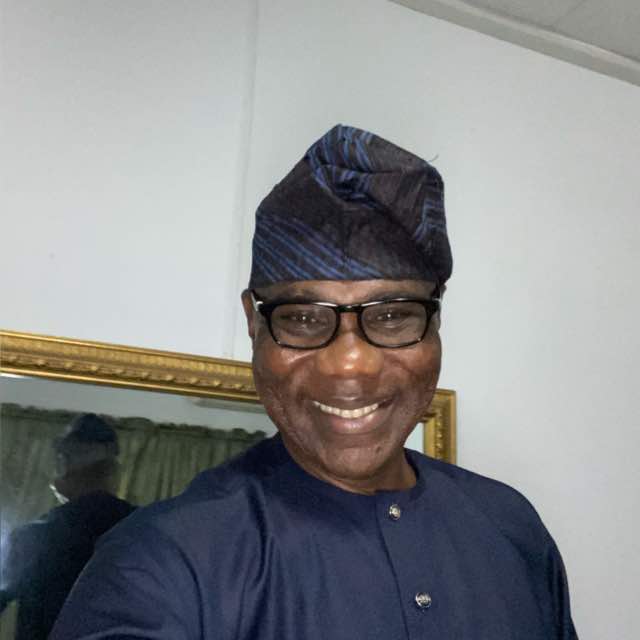
Professor (Amb.) Gold, FEBS, FCILG, PhD, PhD is Chairman, Ijaw Diaspora Council & Amadabo of Ijaw Diaspora
Inductee, Nigerian Hall of Fame and Recipient of the United States President’s Lifetime Achievement Award