
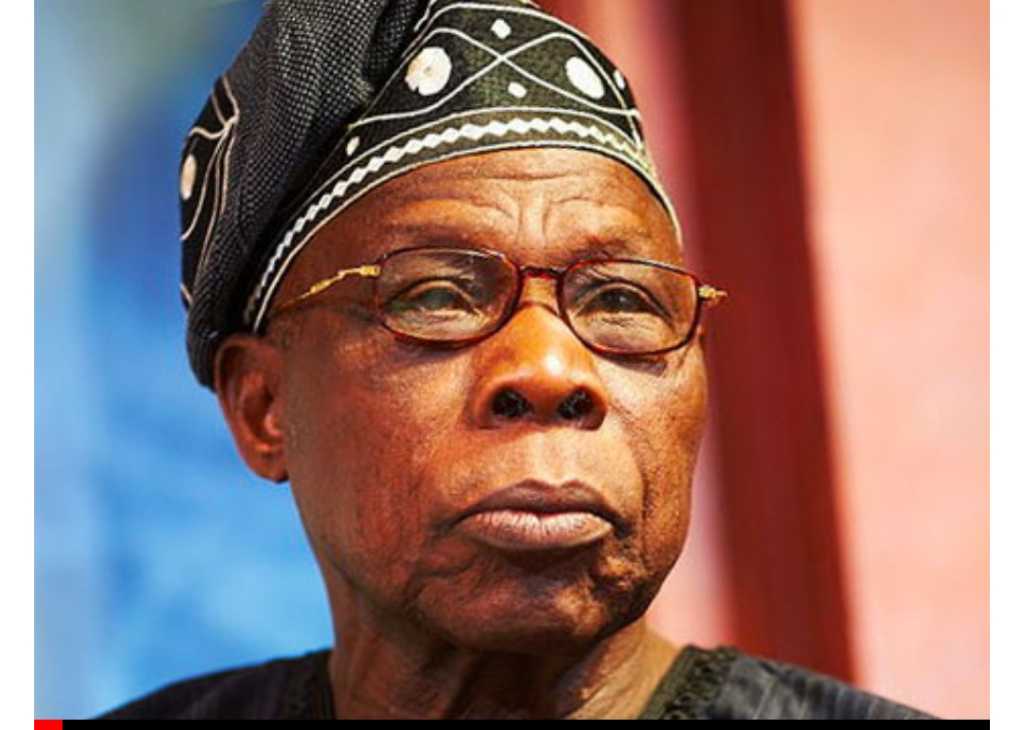

I first met Chief Olusegun Obasanjo in 1990, when my mother was a Fellow of the Africa Leadership Forum at his farm estate in Ota, Ogun State. My brother Yemi and I joined him for lunch. I remember the pounded yam and efo riro, his warmth and the witty jokes he made as he called the two of us the future of Nigeria.
I was too young then to appreciate the significance of the man sitting across the table. He had been Nigeria’s military Head of State and had handed power to a civilian government in 1979. He had since established the Africa Leadership Forum, bringing people together to discuss leadership and the future of the continent.
I met him again in 2004, when he was President of Nigeria and I was working with the United Nations Development Programme. More than three decades after that first lunch in Ota, I found myself thinking about those encounters while reflecting on the groundbreaking ceremony for the Dangote refinery project in Lamu, Kenya, on 30 September 2026.
President William Ruto had invited Obasanjo to the ceremony, where the former Nigerian president recounted how he had encouraged Aliko Dangote to move from importing cement to manufacturing it in Nigeria. President Ruto also remarked on how closely Obasanjo had followed Dangote’s industrial projects.
I found myself thinking about the relationship between political leadership and private enterprise, and about the role Obasanjo played in encouraging a generation of Nigerian entrepreneurs to think beyond trading and invest in production.
From importing to manufacturing
Nigeria had long imported substantial quantities of cement. Dangote was already a successful businessman, but Obasanjo encouraged him to consider a different opportunity: producing cement locally rather than relying on imports.
It was a conversation between a president and a businessman, but its implications extended beyond the two men. Cement is essential to construction, housing and infrastructure. Building domestic production capacity offered Nigeria an opportunity to reduce its dependence on imported cement, develop industrial skills and create employment.
Manufacturing at scale requires substantial capital, reliable energy, transport infrastructure, technology and access to markets. It also requires an entrepreneur willing to commit resources over many years before the full returns become apparent.
Dangote took that risk and went on to build one of Africa’s most prominent industrial groups. His cement business became a major force in the Nigerian market, and his subsequent investments in fertiliser and petroleum refining have extended his industrial ambitions into other sectors.
Obasanjo did not build these businesses. Dangote’s commercial judgement, willingness to take risks and ability to execute large projects were central to their growth. But the story Obasanjo told at Lamu offers an insight into how he approached the relationship between government and business. He was not simply encouraging an entrepreneur to make more money. He was challenging him to invest in an activity that could change Nigeria’s productive capacity.
I have often thought about the difference between an economy that makes money from moving imported goods and one that develops the capacity to produce what its people and businesses need. Both trading and manufacturing have their place. But a country that imports goods it could produce locally misses opportunities to build skills, create industrial jobs and retain more value within its economy.
The Dangote story is a useful example of what can happen when entrepreneurial ambition meets a political leadership willing to encourage investment in production.
The entrepreneurs of the Obasanjo years
Between 1999 and 2007, Nigeria experienced significant changes in its economic landscape. Telecommunications liberalisation opened the market to rapid expansion. Banking consolidation altered the structure of the financial sector. Privatisation and other reforms sought to expand the role of private capital, while the debt-relief agreement with the Paris Club in 2005 and 2006 eased a major burden on public finances.
These reforms did not create Nigerian enterprise from nothing. Many of the businesspeople who became prominent during this period had been building their companies for years. But the reforms changed the environment in which they operated and created opportunities for some to expand into new sectors and operate at a much larger scale.
The banking consolidation led by the Central Bank of Nigeria under Charles Soludo is one example. The minimum capital requirement was raised to ₦25 billion, encouraging mergers, acquisitions and new capital raising. The number of banks fell from 89 to 25. The resulting institutions had greater potential to mobilise capital and finance larger transactions, although the reform also brought disruption and new challenges for the sector.
Telecommunications underwent a similarly important transformation. The expansion of mobile networks changed how Nigerians communicated and conducted business. It also created opportunities for enterprises across distribution, technology and financial services.
Alongside these developments, indigenous businesses expanded in construction, cement, oil and gas, hospitality and other sectors. Some of their founders would go on to become billionaires and influential figures in Nigeria’s economic life.
I believe there is a case for examining Obasanjo’s presidency through the experience of this generation of entrepreneurs. His administration presided over reforms that changed the conditions for investment, but his role was not limited to economic policy. The account of his engagement with Dangote suggests that he also took a personal interest in encouraging certain business leaders to pursue investments that could serve wider national objectives.
The distinction between these two roles is worth exploring. Governments can improve the conditions for enterprise through policy, regulation and infrastructure. Individual leaders can also use their influence to encourage entrepreneurs to consider opportunities they might otherwise overlook.
Neither approach guarantees success. The entrepreneur must still make sound commercial decisions, and the state must ensure that its engagement with business does not become favouritism or undermine competition. But where the relationship works well, the benefits can extend beyond the individual company.
The limits of economic success
There is no need to romanticise the Obasanjo years to recognise their significance. The reforms were uneven, privatisation attracted controversy, and the expansion of large businesses did not resolve Nigeria’s problems of poverty, unemployment or inadequate infrastructure.
Nor should the rise of a class of billionaires be treated as proof that an economy is working for everyone. A country can have some highly successful businesses while many of its citizens struggle to find decent jobs, access reliable electricity or afford basic necessities.
The more useful question is what these businesses contribute to the wider economy. Do they develop local supply chains? Do they create skilled employment? Do they help Nigerian firms enter regional and international markets? Do they invest in productive capacity that remains in the country for generations?
These questions matter because Nigeria needs more than wealthy entrepreneurs. It needs businesses capable of producing goods competitively, employing people at scale and building industries that can withstand changes in government and fluctuations in commodity prices.
The role of government is to create the conditions for this to happen, while maintaining the institutions that ensure competition, accountability and a fair return to society. Encouraging an entrepreneur to build a factory is one thing. Ensuring that the resulting industry serves the broader economy is another.
Obasanjo’s engagement with Dangote offers a starting point for this discussion. It raises the possibility that presidential leadership can do more than remove obstacles to investment. It can also challenge business leaders to consider what their capital could contribute to the country.
A Nigerian whose interests extended beyond his own region
My reflections on Obasanjo are not confined to his economic record. Throughout his career, he has presented himself as a Nigerian first, with a strong commitment to the unity of the country. His political career has been controversial, and his actions have not always matched the expectations of those who have supported him. Yet his place in Nigeria’s national story cannot be separated from the question of how a diverse country holds together.
As a senior military commander, Obasanjo played a role in the final phase of the Nigerian Civil War and accepted the surrender of Biafran forces in January 1970. The war ended, but the pain and grievances it left behind have continued to shape the country.
His engagement with Africa’s political future has also extended well beyond Nigeria. He participated in the Commonwealth Eminent Persons Group’s efforts to address apartheid in South Africa and has undertaken mediation and peace initiatives in different parts of the continent.
The Africa Leadership Forum, where I first met him, reflected an interest in leadership that predated his return to the presidency. It provided a platform for Africans to discuss governance, development and the responsibilities of those who lead.
His record in these areas deserves examination on its own terms. But taken together, they help explain why Obasanjo has remained a prominent figure in African public life long after leaving office.
What the Lamu story means for Africa
The refinery project in Lamu brings the discussion back to industrialisation. Kenya is seeking to build domestic and regional capacity in petroleum refining, while the wider East African market offers opportunities for investment, trade and industrial development.
The project is also a reminder that African industrialisation need not be confined within national borders. A large investment can serve several countries, create regional supply chains and support businesses in transport, logistics, engineering and other services.
For this to happen, African governments must think beyond the announcement of major investments. They must work on infrastructure, skills, access to finance and the movement of goods across borders. Businesses, in turn, must look beyond protected domestic markets and develop the capacity to compete across the continent.
The African Continental Free Trade Area provides an opportunity to build these connections. But the agreement alone will not create regional industries. Governments must make trade easier in practice, and businesses must be prepared to invest in production rather than depend solely on the movement of imported goods.
This is where the experience of the Obasanjo years is relevant. The task facing African leaders is not to select a few businessmen and hope they will transform their economies. It is to create conditions in which entrepreneurs can invest at scale, while engaging them in a serious conversation about the industries their countries need.
When I think back to that lunch in Ota in 1990, I remember a warm and witty man who called my brother Yemi and me the future of Nigeria. I could not have known then that I would meet him again as president, or that decades later I would be reflecting on his relationship with some of the entrepreneurs who have helped shape Nigeria’s economy.
The Lamu ceremony brought these memories together in an unexpected way. A former Nigerian president was recounting how he had encouraged a Nigerian businessman to move from importing cement to producing it, while a Kenyan president looked to that experience as his country embarked on a major industrial project.
For me, the story is about the relationship between leadership, enterprise and national ambition. Obasanjo did not create Dangote’s business success, and no president can manufacture entrepreneurial talent. But leaders can challenge entrepreneurs to think beyond the opportunities immediately in front of them.
African enterprise will be judged by whether businesses can do more than generate wealth for their owners. They must also produce goods, create jobs, train people and build stronger links between African economies.
That is the question I took away from the ceremony in Lamu. It is also a question worth asking of every African leader and entrepreneur.