September 2026
Introduction
As I read the Nigerian press regarding next year’s presidential election, I cannot help but reflect on a politician’s remarkably clear summary of our current national stalemate: President Tinubu cannot win a fair contest, yet former Vice President Atiku Abubakar lacks the leverage to seize power. Standing at the vantage point of 74 years old and looking forward to my 75th birthday next year, I paused to contemplate what Nigeria once was versus what it has become. To my surprise, I realized that both states amount to the exact same thing.
The modern state of Nigeria stands as one of the most complex geopolitical constructs in sub-Saharan Africa. Home to hundreds of distinct linguistic groups, its current struggles with national cohesion, systemic corruption, and regional friction are frequently analyzed through the lens of contemporary governance. However, the root of these challenges lies deeper than modern policy failures or individual leadership deficits. A rigorous structural and historical analysis reveals a stark, undeniable reality: Nigeria was never conceived as an organic union, and its foundational blueprint was intentionally engineered to fracture rather than unite.
The contemporary crisis of Nigerian statehood is rooted in a historical framework where colonialism did not merely conquer territories, but perfected a demonic administrative infrastructure. This apparatus was built on extraction, subjugation, and institutionalized division. Because the foundation lacked a democratic or unified ethical mandate, post-independence leaders inherited institutions designed for control rather than public service. Today, that infrastructure remains completely intact because a coalition of domestic elites and external foreign interests is mutually satisfied to keep the nation as an object of looting, while perpetuating a mirage of perpetual reform.
- The Artifice of Forced Amalgamation
Before the arrival of British imperial forces, the geographical area known today as Nigeria was not a singular entity, but a vast region of distinct kingdoms, empires, and autonomous communities. These societies possessed unique governance models, legal systems, and spiritual traditions tailored to their specific cultural realities. In the north, the Sokoto Caliphate operated as a highly centralized Islamic empire governed by a structured administrative hierarchy and Islamic jurisprudence. To the southwest, the Yoruba kingdoms existed as advanced constitutional monarchies featuring intricate systems of checks and balances between rulers (Obas) and traditional councils. Meanwhile, the decentralized Igbo societies of the southeast utilized highly democratic, egalitarian, and segmentary systems that prioritized consensus-building and individual autonomy over centralized monarchs.
These disparate societies operated independently, interacting through trade and diplomacy, but never viewing themselves as part of a singular national consciousness. The turning point in the region’s history occurred with the 1914 amalgamation of the Northern and Southern Protectorates by Lord Frederick Lugard. This merger was not a visionary nation-building initiative aimed at uniting diverse peoples under a shared moral framework. Rather, it was purely a matter of administrative and economic convenience for the British Empire.
The British sought to use the budgetary surpluses of the economically vibrant South to subsidize the administrative deficits of the North, thereby reducing the financial burden on the British Treasury. By forcing vastly different populations into a single political framework without their consent or input, the colonial administration created a state completely devoid of a unified moral or civic consensus. From its very inception, the structural architecture of Nigeria was engineered to extract resources rather than cultivate an equitable or righteous society. Railway lines, deep-sea ports, and administrative centers were built primarily to move cash crops and mineral wealth from the interior to the coast for export to European markets, setting the stage for a state where human welfare was permanently subordinated to resource extraction.
- Institutionalized Syncretism and the Weaponization of Faith
To maintain control over this vast economic enterprise without facing a unified rebellion, the colonial apparatus relied heavily on a policy of divide and rule, fundamentally altering the spiritual and social fabric of the region. Rather than fostering genuine spiritual synthesis or peaceful coexistence, the colonial government introduced a system where religion was institutionalized as a tool for political dominance. It forced a marriage of convenience between spirituality and statecraft, introducing new administrative frameworks that allowed local elites to weaponize faith.
The foundational blueprint for this religious fracture was laid through Britain’s administrative strategy of Indirect Rule. Needing to govern an expansive territory with minimal European personnel, the British utilized vastly different administrative and cultural tactics in different regions, creating an enduring regional and religious imbalance:
- The Islamic North: The British heavily relied on the existing northern Islamic administrative structures, striking an accord with the caliphate elites. Traditional emirate authorities were preserved, and Christian missionary activity was strictly restricted in the core north to prevent social unrest and preserve feudal stability.
- The Christian South: In stark contrast, the colonial administration encouraged Christian missionary education throughout the south. Southern communities embraced Western education and Christianity, which quickly became vehicles for social mobility and bureaucratic employment within the colonial state.
By structurally segregating the educational, legal, and administrative realities of the North and South along religious lines, the British ensured that the emerging educated elites of both regions would view each other not as compatriots, but as distinct, competing cultural factions. Under this system of institutionalized syncretism, traditional spiritual allegiances, regional identities, and imported global faiths became deeply intertwined with state power. Religion ceased to function solely as a moral compass or a personal path to the transcendent; instead, it was transformed into a pragmatic tool for securing territorial sovereignty, political leverage, and economic resources. To gain access to the colonial government or to protect local autonomy, leaders had to assert their authority through these state-sanctioned religious boundaries. Piety became synonymous with political positioning.
III. The Machinery of Control and the Calculus of Instability
When Nigeria gained independence in 1960, the celebratory lowerings of the Union Jack masked a fundamental systemic contradiction: post-independence leaders inherited an infrastructure designed for control rather than public service. The colonial state was never structured to protect human rights, deliver equitable social services, or foster citizen-led democracy. Its primary functions were the pacification of local populations, the enforcement of imperial law, and the efficient extraction of wealth. Because the foundation lacked a democratic or unified ethical mandate, the incoming political class simply stepped into an office of absolute, centralized power. Instead of dismantling the oppressive colonial machinery, successive civilian and military regimes found it highly lucrative to maintain it.
Consequently, the ongoing struggles with systemic corruption, regional insecurity, and communal violence are not historical accidents or temporary anomalies. They are the entirely predictable outcomes of a state apparatus engineered to prevent internal cohesion. In the post-colonial era, the infrastructure of division matured into a destructive system of competing territorial gods. Spiritual and ethnic identity became a shield for ethno-regional dominance, turning the state into an arena of hostile territorial claims rather than a cohesive republic.
This manufactured friction hardened into structural rot across two main fronts:
- Systemic Corruption: With no shared moral consensus or organic civic identity binding the citizenry to the state, public resources are routinely viewed not as a collective trust, but as a colonial-style spoil to be captured and distributed along ethnic or religious lines.
- Regional Insecurity and Violence: Banditry, separatist movements, and sectarian clashes are the direct symptoms of a state that lacks geographic and social legitimacy in the eyes of its people. When the state’s foundational logic is coercion rather than a social contract, security forces are deployed to protect the regime and its extractive infrastructure—such as oil fields—rather than the populace.
- Concluding Remarks: The Mirage of Reform and the Naked Emperor
Every electoral cycle in Nigeria presents a new savior, and every economic crisis births a new policy framework supposedly engineered to finally unleash the nation’s shackled potential. Yet, when we strip away the academic jargon and the theatrical optimism of political campaigns, we are left with a reality that must finally be stated plainly: there are no true reforms that can redeem Nigeria as a nation.
Nigeria does not persist in a state of chronic dysfunction by accident or through a lack of technical expertise. It persists because a coalition of the willing—comprising domestic elites, ethno-regional leaders, and external foreign interests—is mutually satisfied to keep Nigeria as an object of looting and pillaging. For the domestic ruling class, the deliberate maintenance of weak institutions, porous regulatory frameworks, and regional friction ensures that public funds can be systematically diverted with total impunity. This domestic pillaging is actively enabled and legitimized by external foreign interests. International corporate entities, foreign governments, and global financial institutions maintain a deeply transactional relationship with Nigeria’s leaders. So long as the oil flows, raw materials are exported, and debt obligations are serviced, the global community is entirely content to look the other way. The superficial instability of the country is, ironically, the precise environment required to sustain highly profitable, exploitative economic arrangements.
To keep a population of over 200 million people from descending into absolute, systemic rebellion, this coalition must continuously manufacture hope. This is where the illusion of reform and promises of transformation serve their true purpose. “Reform” is the psychological valium administered to the populace to induce compliance. It manifests as anti-corruption committees that never prosecute the powerful, judicial panels that bury evidence, and economic stabilization plans that only stabilize the wealth of the ruling class. These initiatives are never designed to succeed; they are designed to buy time, convincing the citizens that a better nation is just one more election, one more policy shift, or one more foreign loan away.
The tragedy of the Nigerian condition is not ignorance; it is a collective complicity enforced by exhaustion and the desperate need for individual survival. We all know the emperor has no clothes, but we all agree to praise the majesty of its nakedness.
From the highest government offices to the conversations on the street, there is an unspoken acknowledgment that the concept of “Nigeria” as a unified, righteous republic is a myth. The institutions are hollow, the security apparatus is compromised, and the social contract is entirely nonexistent. Yet, the entire ecosystem participates in the charade. The politicians deliver grand speeches about national unity while funding sectarian divisions; the technocrats draft brilliant policy papers knowing they will gather dust in locked cabinets; the international partners praise “democratic progress” during deeply flawed electoral cycles to maintain geopolitical access; and the exploited populace is forced to navigate the rot by seeking individual survival, often cheering for their own regional or religious oppressors in the hope of catching the crumbs of the pillage.
To suggest that a few policy adjustments, a change in political parties, or a new constitutional amendment can fix this reality is to fundamentally misunderstand the nature of the state. Nigeria is not a broken machine waiting for a mechanic; it is a perfectly functioning colonial engine designed for elite enrichment and mass containment. Because the foundational contradictions of its existence are irreconcilable, and because the global and local forces profiting from its misery are entirely aligned, the cycle of managed decay is guaranteed to continue. The illusion of reform is not the solution—it is the very mechanism that keeps the cage locked.
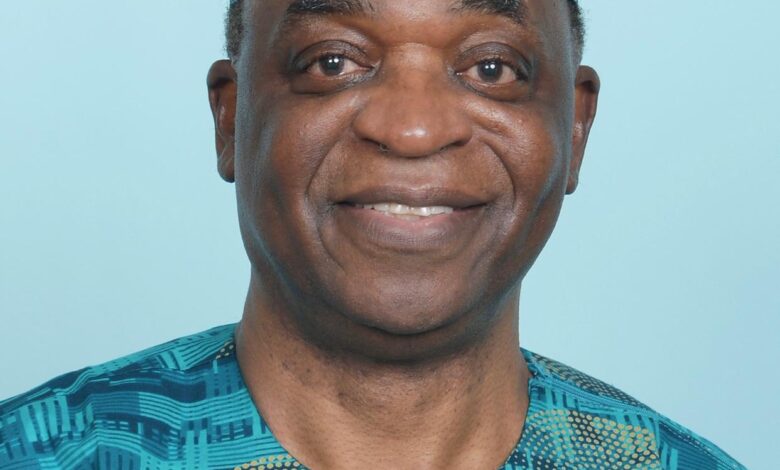
Isaac Megbolugbe, Director of GIVA Ministries International. He is a recipient of Albert Nelson Marquis Lifetime Achievement Award in business and academia in the United States of America. He is retired professor at Johns Hopkins University, Former Vice President at Fannie Mae, Former Practice Leader at PricewaterhouseCoopers, and a Fellow of the Royal Institution of Chartered Surveyors. He is resident in the United States of America.