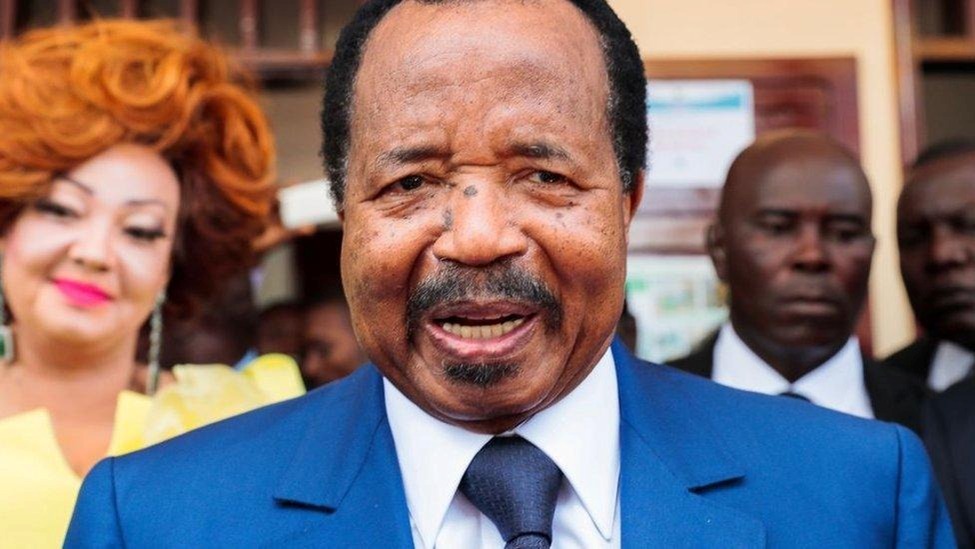
At 92, it is evident that an African leader like the current President of Cameroon, Paul Biya, is too old to effectively preside over that country. His continued hold on to power, despite his failing health condition, represents both the extraordinary endurance in office of one man and the resultant tragic stagnation of a nation that could have achieved far more under a system that truly valued democratic evolution. After more than four decades in power, Biya’s recent reelection for the seventh tenure on Monday 27 October 2025 left so many Cameroonians divided, angry, and protesting. For most Cameroonians, the declaration of his victory of 53.66% of the cast votes, according to the official announcement, was not a cause for celebration, but a grim reminder of how insignificant their votes actually were. The protests that followed across Yaoundé, Douala, and Garoua spoke volumes about the disillusionment of a people who have long yearned for real governance change, only to be told once again that the old order remains immovable.
Paul Biya was born in 1933 in Mvomeka’a, in Southern Cameroon. He rose through the political ranks under the tutelage of the country’s first president, Ahmadou Ahidjo. When Ahidjo suddenly resigned in 1982, Biya, then a mild-mannered technocrat, was handpicked as his successor. It was impossible at the time to have predicted that this quiet, cautious man would later become one of the longest-serving leaders in the world. Over the following decades, Biya built a political machine that combined patronage, fear and constitutional manipulation to secure his grip on power. That was when the once-proclaimed “New Deal” era he championed in the 1980s, which was full of promises of modernization and national unity faded into memory.
To give credit where it is due, Biya’s early years in power were marked by some positive developments. He maintained relative stability in a country of deep ethnic and linguistic diversity as Cameroonians were of Francophone and Anglophone, Christian and Muslim citizenships. Cameroon under Biya was spared the coups and civil wars that ravaged many of its neighbors during the Cold War era. The economy in the 1980s benefited from oil revenue and moderate growth, while Biya sought to present Cameroon as a disciplined, well-governed African state. He also helped steer the country through difficult transitions, such as the introduction of multiparty democracy in the 1990s, though critics argue it was more of a cosmetic change than a genuine reform.
On the international stage, Biya maintained strong diplomatic ties with France and other Western powers, securing aid and investment that kept Cameroon relatively stable. He handled the Bakassi Peninsula dispute with Nigeria through legal channels, leading to a peaceful resolution at the International Court of Justice, It was one of the few African territorial disputes that was settled without going to war. That remains one of his enduring achievements.
Yet, despite the seeming national stability, Cameroon slowly began to decay under Biya’s long rule. Corruption that was once only whispered about, became institutionalized. The country’s infrastructure, its roads, hospitals, schools began to crumble. Billions of francs disappeared annually into the pockets of well-connected elites. Transparency International consistently ranked Cameroon among the most corrupt nations in the world. While a small political class grew richer, millions of Cameroonians survived on less than two pounds a day.
Biya’s style of governance also alienated much of the population. His preference for ruling from a distance, often from luxury hotels in Switzerland where he spent extended stays earned him the nickname “the absentee president.” Many Cameroonians joked bitterly that their leader governed by proxy. Moreover, his government was characterized by aging ministers, recycled appointments, and little innovation. It was a system that was designed to reward loyalty over competence, a system that ensured that no potential rival gained enough influence to challenge him.
The Anglophone crisis, perhaps the greatest stain on Biya’s legacy, tore the nation apart. What began in 2016 as peaceful protests by teachers and lawyers demanding equal treatment for English-speaking regions quickly descended into violent conflict after the government’s heavy-handed response. Security forces cracked down on protesters, arrests mounted, and an armed separatist movement emerged, seeking to create an independent state called Ambazonia. Since then, thousands have been killed, and hundreds of thousands displaced. Entire villages in the northwest and southwest lie in ruins, while the government insists it has everything under control. Biya’s failure to dialogue meaningfully with his own citizens, preferring instead to view dissent as treason, deepened divisions that may take generations to heal.
The recent presidential election has only heightened this sense of hopelessness. Many observers, including opposition candidates and civil society groups, allege widespread fraud. Ballot boxes were reportedly stuffed in government strongholds, while voter turnout figures in conflict zones were implausibly high despite the insecurity that made voting nearly impossible. The Constitutional Council, stacked with loyalists, swiftly validated Biya’s victory. It was a familiar script: the appearance of democracy masking an entrenched autocracy.
For ordinary Cameroonians, the aftermath of the election has been bitter. Demonstrations erupted across major cities, with protesters chanting for change and waving signs that read, “Our future, not his past.” Security forces responded with tear gas, arrests, and gunfire. Human rights groups report several deaths and hundreds of detentions. Meanwhile, Biya, serene and unbothered, appeared on national television to call for calm and national unity, words that have lost their meaning after decades of unfulfilled promises.
At 92, Biya’s age is not just a number. It symbolizes the exhaustion of an era that refuses to make way for new ideas and leadership. The question is no longer whether Biya can govern effectively but whether he should, particularly given his current health conditions. A man of such advanced years cannot possibly relate to the aspirations of a youthful population where more than 60% are under 30 years. The world is changing rapidly, technologically, economically and socially but Cameroon remains trapped in the amber of the 1980s, led by a man whose worldview was formed in the colonial era.
The tragedy of Paul Biya’s reign is that his longevity has robbed Cameroon of renewal. It has stifled the rise of a new generation of leaders who could bring energy and reform to a country brimming with potential. Instead, Cameroon has become a cautionary tale of how power, once seized, is rarely surrendered voluntarily in Africa. The nation’s political institutions have been hollowed out. The judiciary is pliant, the legislature is ceremonial, and the opposition is fragmented, often co-opted or intimidated into submission.
This problem, however, is not unique to Cameroon. Across Africa, a troubling pattern persists. Leaders cling to power long after their effectiveness has waned, rewriting constitutions or manipulating electoral systems to extend their tenure. In Uganda, Yoweri Museveni, now in his late seventies, has been in office since 1986. In Equatorial Guinea, Teodoro Obiang Nguema Mbasogo, who seized power in 1979, remains the continent’s longest-serving ruler. Denis Sassou Nguesso in the Republic of Congo and Isaias Afwerki in Eritrea have similarly overstayed their welcome. Even in Zimbabwe, where Robert Mugabe’s departure in 2017 seemed to mark a new dawn, the cycle of authoritarian continuity persists under Emmerson Mnangagwa.
The consequences of this political stagnation are dire. Stagnation discourages investment, fuels corruption, and alienates young people who see no space for themselves in the governance of their own countries. The result is mass emigration, with thousands of educated Africans seeking opportunities abroad because their own nations offer none. It is a brain drain that weakens the continent’s ability to innovate and compete globally.
Africa’s future depends on breaking this cycle. It is time to rethink the nature of political tenure on the continent. No leader, however visionary, should remain in power indefinitely. A single term of six years or a maximum of two terms totaling eight years should be sufficient for any president to implement meaningful reforms and lay foundations for progress. If a leader cannot deliver within that timeframe, they likely never will. Long tenures breed complacency, arrogance, and disconnection from the people. Shorter, well-defined terms encourage accountability, innovation, and the peaceful transfer of power which are the hallmarks of genuine democracy.
Cameroon, like many African nations, desperately needs that infusion of new blood. The country’s youth are its greatest asset. They are inventive, resilient, and eager to contribute to national development. Yet, they are sidelined, unemployed, or forced to migrate because the political system offers them no future. Universities produce graduates who end up as motorbike taxi riders or street vendors, not because they lack ambition, but because the system is rigged against merit.
Biya’s continued presidency at 92 is not merely an issue of age but of legitimacy. When citizens no longer believe in the sanctity of their vote, the entire democratic project collapses. Elections become rituals devoid of meaning, and the social contract between leaders and the governed disintegrates. Cameroon’s youth, born long after Biya assumed power, have never known another leader. That reality alone is a profound indictment of the political culture. The need for generational change cannot be overstated. Leadership must be viewed as a relay race, not a lifetime entitlement.
Every leader should have the humility to pass the baton to those who come after. The role of a statesman is not only to govern effectively but to nurture successors who can carry the vision forward. Sadly, in much of Africa, succession planning is treated as a threat rather than a duty. Leaders surround themselves with sycophants who cannot question them, and institutions are weakened so that no one else can wield authority. When such leaders eventually depart, often through death or force, their countries descend into chaos, lacking the institutional resilience to sustain stability.
Paul Biya could still choose a different legacy. Instead of clinging to power until the inevitable, he could become a symbol of wise retirement, showing Africa that dignified exit is not defeat but statesmanship. He has had the privilege of shaping his country’s destiny for more than four decades, an opportunity few leaders are given. To end his career by fostering democratic transition and mentoring a younger generation would secure him a far nobler place in history than the one he is currently pursuing.
The onus also lies with the African political class as a whole. It is time to make space for the young. The continent’s median age is under 20, yet the average age of its presidents is over 65. That generational gap is unsustainable. The youth are not only the future, they are the present—vibrant, creative, and restless. Governments that fail to harness their potential risk social upheaval. Training successors should not be an afterthought but a central pillar of governance. Mentorship programmes, youth political inclusion, leadership academies, and transparent succession systems can ensure continuity without stagnation. African leaders owe it to their people to nurture those who will one day replace them, not to suppress them. The great leaders of history—Mandela, Nkrumah, Senghor—understood that leadership is service, not self-preservation.
As Cameroon reels from the latest disputed election, one can only hope that its people’s courage and resilience will eventually triumph over their despair. The protests filling the streets are not just about Paul Biya, they are about a broader yearning for dignity, justice, and renewal. The Cameroonian people deserve leaders who listen, not rule; leaders who serve, not dominate.
At 92, Paul Biya has nothing left to prove. He has had his time, his chance, his era. But his country deserves a future. Cameroon needs a new beginning—one rooted in fairness, accountability, and youth empowerment. For too long, Africa’s destiny has been held hostage by leaders who mistake longevity for success. It is time to let the young lead, to let the continent breathe again, and to remind those who are in power that leadership, like life itself, must have a natural end.
The plea is simple but urgent: African leaders must learn to leave when the applause is still loud. They must build systems stronger than themselves, nurture successors wiser than themselves, and trust the youth to carry the dream forward. The future of Cameroon, and indeed of Africa, might well depend on it.
Chief Sir Asinugo, PhD., M.A., KSC writes from the UK