
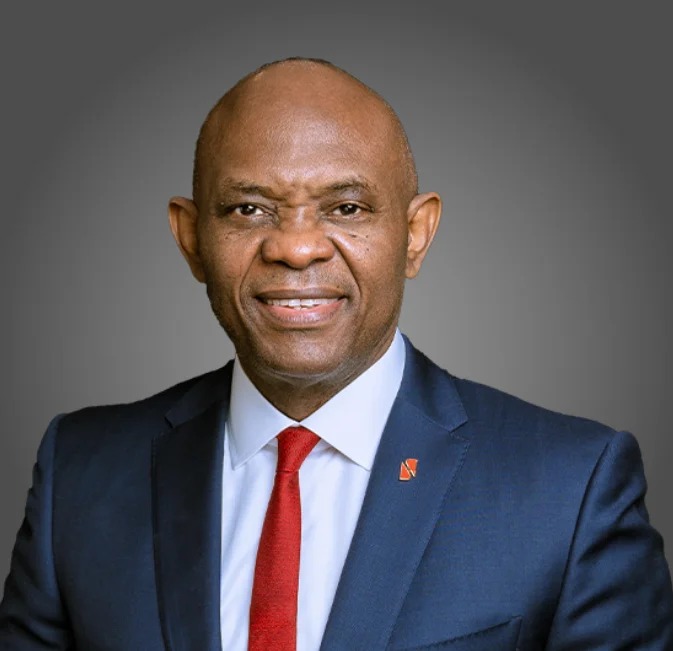
When the numbers flashed across the trading boards of the Nigerian Exchange and the London Stock Exchange, even seasoned market watchers had to pause and take a second look. Across his primary corporate vehicles and personal holdings, Tony Elumelu’s listed stock portfolio experienced a massive surge, crossing the extraordinary threshold of N2.43 trillion and adding over six hundred and eighty-four billion naira in a single quarter alone. To the financial analysts in tailored suits who spend their days tracking tickers and analyzing candlestick charts, this historic milestone was the natural outcome of shrewd asset acquisition and disciplined capital management. But to the ordinary Nigerian walking the bustling streets of Lagos, Kano, Calabar, Owerri or Port Harcourt, these astronomical figures often feel distant, abstract, and disconnected from the harsh realities of daily economic life. Yet, beneath the staggering valuations and corporate jargon lies a narrative that directly touches the future of the nation, revealing how a visionary leader’s calculated economic philosophy is quietly reshaping wealth creation, corporate ownership, and social impact across the African continent.
To understand why this financial fortune expanded so dramatically, one must first look at the bold moves made within the energy sector, where the centrepiece of this portfolio growth unfolded. Through his investment vehicle, Heirs Energies Limited, Elumelu executed a masterstroke by acquiring an additional six million shares of Seplat Energy Plc on the London Stock Exchange at eight pounds and eighty-seven pence per share, representing an investment of over fifty-three million pounds, or approximately seventy-one million dollars. This decisive transaction followed a massive initial acquisition where Heirs secured over one hundred and twenty million shares from the French energy group Maurel and Prom for five hundred million dollars.
Together, these moves consolidated a commanding 21.07% (twenty-one point zero seven percent) voting stake comprising over one hundred and twenty-six million shares. Within less than ten months, that original five hundred million dollar position more than doubled in value, pushing the total worth of the Seplat stake past $1.28 billion (one point two eight billion dollars). This single energy asset now accounts for more than eighty-three percent of Elumelu’s total listed equity valuation, providing a robust shield against domestic currency depreciation due to Seplat’s foreign-exchange-backed earnings, while positioning him to step into the role of Chairman of Seplat Energy come January 2027.
While energy provided the explosive momentum, the banking and conglomerate arms of his empire maintained the structural bedrock. United Bank for Africa, where Elumelu holds approximately six point three one billion shares, served as a steady engine of financial strength, contributing tens of billions of naira in quarterly gains and delivering reliable dividend returns that reinforce investor confidence. Even as Transcorp Group experienced a minor seasonal pullback in its share price due to broader market corrections, its underlying power generation assets and world-class hospitality properties continue to underpin long-term value creation. The combined strength of these three pillars—energy, financial services, and infrastructure—created a financial swell that captured global headlines. Yet, for the average citizen trying to make sense of these figures, the crucial question remains simple and direct: what does any of this mean for the everyday Nigerian, and why should the public care about the expanding balance sheet of one of the continent’s most prominent industrialists?
The answer lies in understanding the core philosophy that drives every naira invested and every corporate entity built within this ecosystem: an economic model that Elumelu himself coined as Africapitalism. For generations, traditional capitalism in developing nations was often viewed with suspicion, characterized as an extractive enterprise where powerful individuals and foreign multinationals extracted resources, accumulated private wealth, and left local communities with little more than environmental degradation and economic neglect.
Africapitalism turns this legacy on its head by asserting that the African private sector must be the primary driver of the continent’s socio-economic transformation, and that long-term financial profit must be inextricably linked to social impact. Under this model, true success is not measured solely by the size of a bank account or the valuation of a stock portfolio, but by the number of jobs created, the infrastructure built, the local supply chains strengthened, and the lives permanently uplifted. When Elumelu invests heavily in domestic energy production, the ultimate goal is not merely to sell oil and gas on foreign exchanges, but to generate the power needed to light up Nigerian homes, keep local factories running, and reduce the reliance on expensive imported fuels that drain the average household budget.
This economic philosophy becomes even clearer when examining how corporate success is deliberately channeled back into societal welfare. Unlike traditional corporate leaders who view philanthropy as an afterthought or a tax write-off, Elumelu has embedded human capital development into the very foundation of his corporate legacy. Through the Tony Elumelu Foundation, founded in 2010, he pioneered an institutionalized commitment to empowering young African entrepreneurs, proving that the most effective way to eradicate poverty and spark continental prosperity is to invest directly in the dreams and ingenuity of young people.
Through a flagship entrepreneurship programme, thousands of young men and women across all fifty-four African countries have received non-refundable seed capital, world-class business mentorship, and intensive training to turn fragile ideas into viable enterprises. Across the agrarian communities of northern Nigeria, the tech hubs of Lagos, and the rural villages of East Africa, young beneficiaries of this initiative have gone on to found businesses that employ their peers, generate local revenue, and solve pressing community challenges ranging from agricultural waste to healthcare access. Beyond direct business seed grants, this commitment to uplifting the next generation extends deeply into educational access and academic excellence. Recognizing that education is the ultimate equalizer, massive scholarship schemes, academic grants, and university intervention programmes have been quietly funded across Nigeria and the wider African continent. These educational initiatives ensure that brilliant young minds from disadvantaged backgrounds are not forced to abandon their academic pursuits due to financial hardship. By paying school fees, providing research grants, funding modern learning facilities, and honouring exceptional academic achievers, the foundation creates a pipeline of intellect and skill that ultimately feeds back into the national economy. When a brilliant student from a modest background receives a full university scholarship, the benefit extends far beyond the recipient; an entire family is lifted out of intergenerational hardship, and a future engineer, doctor, or innovator is gifted to the nation.
This flair for ploughing corporate gains back into public welfare stands in sharp contrast to the historical trend of capital flight, where wealthy elites frequently park their earnings in offshore bank accounts or luxury real estate overseas. Instead, the strategy here represents an unyielding vote of confidence in Nigeria and Africa as a whole. By continuously reinvesting profits back into local banks, domestic power grids, African energy reserves, and young human talent, Elumelu demonstrates a fundamental principle that every Nigerian can appreciate: true wealth is created at home, nurtured at home, and used to strengthen the home. When UBA expands its digital banking footprint to serve millions of unbanked traders in rural markets, or when Transcorp Power pumps vital megawatts into the national grid to support small business operators, the benefits cascade directly down to the street level, creating an ecosystem where private enterprise directly serves the public good.
Therefore, when headlines report that Tony Elumelu’s listed stock portfolio experienced a massive surge, the ordinary citizen should not view it merely as a tale of personal enrichment or elite financial maneuvering.
It represents a living case study of what happens when strategic vision, relentless execution, and local industrialization align. It proves that an African enterprise, led by African visionaries and fueled by African talent, can compete on global stock exchanges, build world-class balance sheets, and command international respect without sacrificing its social soul. The trillions of naira recorded on the stock exchanges are ultimately the fuel that powers the scholarship funds, the seed capital grants, the power plant expansions, and the job creation engines that offer real hope to millions of young Nigerians today. In an economic landscape often fraught with uncertainty and hardship, this surge serves as a compelling reminder that business success and human welfare are not mutually exclusive, but are instead two sides of the exact same coin when guided by a genuine belief in the power and potential of the African people.
Chief Sir Asinugo, PhD., M.A., KSC, is a UK-based veteran journalist and author.